Eco-Friendly Cubes for Sustainable Agrochemical Delivery

Greg Howard
30th July, 2024

Eco-Friendly Cubes for Sustainable Agrochemical Delivery

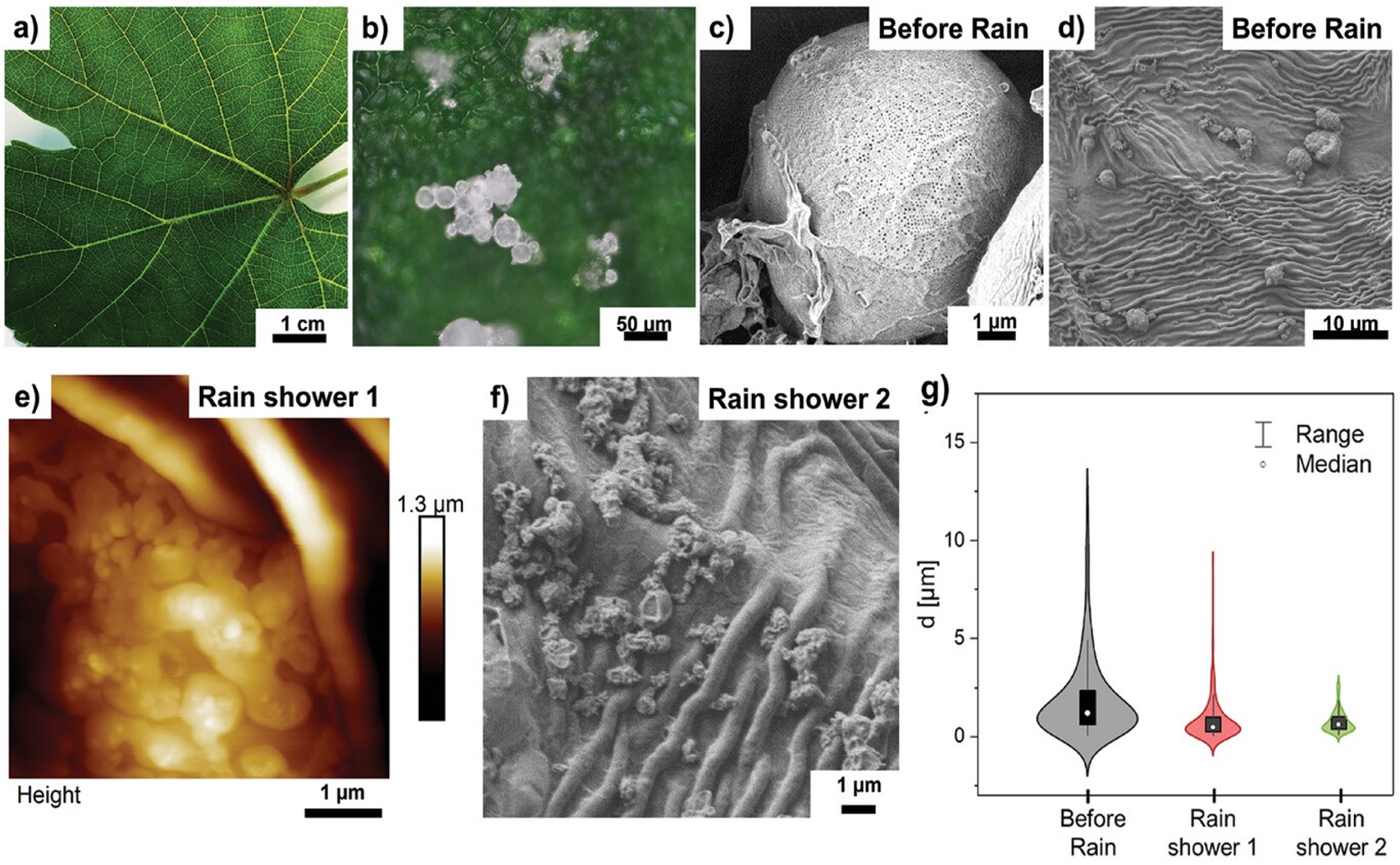
Fungicide-loaded cubosomes show excellent rainfastness on Riesling grape (Vitis vinifera) leaves, with 47% of particles remaining after simulated heavy rain (f, g), highlighting their potential as a sustainable and effective agrochemical delivery system.

Image adapted from: Azhdari et al. / CC BY (Source)

Key Findings

  • Researchers at the University of Münster developed fully degradable porous polymer cubosomes (PCs) for controlled release of agrochemicals
  • These PCs can carry and release both hydrophilic and hydrophobic substances effectively, including the fungicide tebuconazole
  • The PCs demonstrated significant antimycotic activity against the plant pathogen Botrytis cinerea and adhered well to leaves even after simulated rain
  • The PCs degrade into environmentally benign byproducts, addressing the issue of microplastic pollution in agriculture
Microplastic pollution and the increasing demand for sustainable agricultural practices have driven research towards developing new, environmentally friendly carriers for agrochemicals. Traditional carriers often contribute to microplastic contamination and are not always efficient in delivering active ingredients. A recent study from the University of Münster has introduced a novel solution: fully degradable porous polymer cubosomes (PCs) for controlled release of agrochemicals[1]. Polymer cubosomes are colloidal particles with a highly ordered internal structure of water-filled channels surrounded by a bilayer membrane. These structures offer several advantages, including high loading capacity for both hydrophilic and hydrophobic substances, and excellent mechanical and chemical stability[2]. The study leverages these properties by using block copolymers (BCPs) to create degradable PCs that can effectively carry and release agrochemicals. The researchers synthesized these PCs using a straightforward self-assembly method in water, employing fully degradable block copolymers, specifically poly(ethyl ethylene phosphate)-b-polylactide (PEEP-b-PLA). This process resulted in PCs with highly ordered internal structures and open pores averaging 19 ± 3 nm in diameter. The PCs were loaded with the hydrophobic fungicide tebuconazole during the self-assembly process, which involved the transformation of polymersomes into PCs by enriching the hydrophobic polymer domain and altering the BCP packing parameter. The resulting fungicide-loaded PCs demonstrated significant antimycotic activity against Botrytis cinerea, a common plant pathogen responsible for grey mold. These PCs adhered well to Vitis vinifera Riesling leaves even after simulated rain, ensuring that the fungicide remained effective in field conditions. Moreover, the PCs provided a continuous release of the fungicide over several days, offering different release kinetics compared to traditional solid particles. One of the key advantages of these PCs is their complete degradability. Upon hydrolysis, the PCs break down into lactic acid and phosphate derivatives, which are environmentally benign. This characteristic addresses the issue of microplastic pollution, making these PCs a promising alternative for sustainable agriculture. The concept of using block copolymers for creating ordered structures is not new. Previous studies have shown that BCP self-assembly can yield a wide range of morphologies, including spheres, cylinders, and vesicles, which have various applications in materials science and nanotechnology[3]. However, the current study takes this a step further by focusing on the creation of mesoporous microparticles specifically designed for agrochemical delivery, an area that has been largely unexplored until now. The findings build on earlier research into bioplastics and their potential for contributing to a circular economy. Bioplastics, made from bio-based polymers, can have lower carbon footprints and offer advantageous material properties compared to fossil-based plastics. However, they also come with challenges, such as competition with food production and unclear end-of-life management[4]. The degradable PCs address some of these challenges by offering a clear end-of-life scenario where they break down into harmless byproducts, thus avoiding the pitfalls associated with traditional bioplastics. In summary, the study from the University of Münster presents a significant advancement in the field of sustainable agriculture by introducing fully degradable porous polymer cubosomes for controlled agrochemical release. These PCs offer a promising solution to the dual problems of microplastic pollution and inefficient agrochemical delivery, paving the way for more sustainable agricultural practices in the future.

AgricultureSustainabilityBiotech

References

Main Study

1) Fully Degradable Polyphosphoester Cubosomes for Sustainable Agrochemical Delivery.

Published 28th July, 2024

https://doi.org/10.1002/adma.202406831


Related Studies

2) Recent Progress in Polymer Cubosomes and Hexosomes.

https://doi.org/10.1002/marc.202100194


3) Self-assembly of block copolymers.

https://doi.org/10.1039/c2cs35115c


4) Bioplastics for a circular economy.

https://doi.org/10.1038/s41578-021-00407-8


Related Articles

An unhandled error has occurred. Reload 🗙