Unlocking the Biotech Potential of Key Bacteria through Genomic Analysis

Jim Crocker
26th July, 2024

Unlocking the Biotech Potential of Key Bacteria through Genomic Analysis

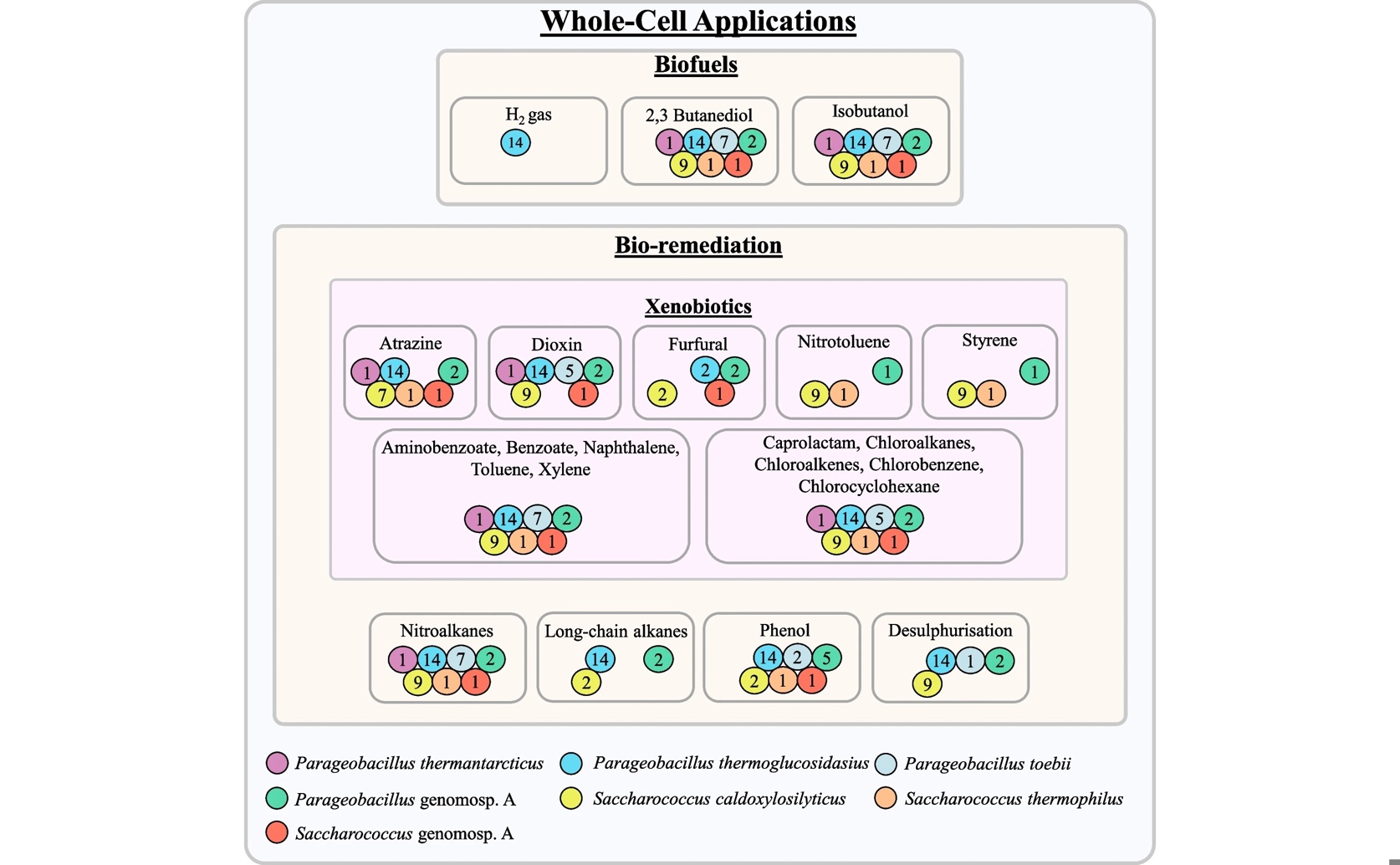
The widespread presence of genes for diverse whole-cell applications, including the bioremediation of various pollutants and the production of biofuels and hydrogen, demonstrates the significant biotechnological potential of species across the genera Parageobacillus and Saccharococcus.

Image adapted from: Mol et al. / CC BY (Source)

Key Findings

  • The study, conducted by the University of the Witwatersrand, focused on the genetic diversity and potential applications of Parageobacillus
  • Researchers identified genes in Parageobacillus that can break down complex carbohydrates, suggesting potential for biofuel production
  • The study also found genes related to thermophilicity, indicating that Parageobacillus could be useful for industrial processes requiring high-temperature enzymes
The genus Geobacillus has long been a subject of interest due to its thermophilic properties and potential industrial applications. These bacteria thrive in high-temperature environments and are known for their ability to degrade plant polysaccharides, making them valuable in biofuel production and other biotechnological applications[2][3][4]. However, their recently delineated sister genus, Parageobacillus, has not received the same level of attention. A recent study conducted by the University of the Witwatersrand aimed to fill this gap by performing pan-genomic analyses on a subset of publicly available Parageobacillus and Saccharococcus genomes to elucidate their biotechnological potential[1]. The study's primary goal was to explore the genetic diversity and potential applications of Parageobacillus, a genus that shares many characteristics with Geobacillus but has been less studied. Pan-genomic analysis involves examining the complete set of genes within a genus, including core genes (common to all strains) and accessory genes (unique to some strains). This approach helps identify genes that could be harnessed for industrial applications. One of the key findings of the study was the identification of several genes involved in the degradation of complex carbohydrates, such as hemicellulose and starch. These genes are similar to those found in Geobacillus, which are known for their catabolic versatility and rapid growth rates, making them ideal candidates for second-generation biorefineries[3]. The presence of these genes in Parageobacillus suggests that this genus also holds significant potential for biofuel production and other industrial processes. The study also revealed the presence of genes associated with thermophilicity, the ability to thrive at high temperatures. These genes are crucial for industrial applications that require robust enzymes capable of operating under extreme conditions. For example, thermostable enzymes from Geobacillus have been widely used in various industries, including food processing and pharmaceuticals[3]. The identification of similar genes in Parageobacillus opens up new avenues for the development of thermostable enzymes for industrial use. Another important aspect of the study was the comparison between Parageobacillus and Saccharococcus genomes. While Saccharococcus is not as well-known as Geobacillus, it shares some genetic similarities with both Geobacillus and Parageobacillus. The comparative analysis helped identify unique genetic traits in Parageobacillus that could be exploited for biotechnological applications. The study also highlighted the adaptive features of Parageobacillus spores, which enable them to survive in various environments. Similar to Geobacillus spores, Parageobacillus spores are highly resistant and can remain viable for long periods, allowing them to accumulate in significant numbers over time[2]. This resilience makes them suitable for applications that require long-term stability and robustness. In summary, the pan-genomic analysis conducted by the University of the Witwatersrand has shed light on the biotechnological potential of Parageobacillus. The study identified genes involved in carbohydrate degradation and thermophilicity, suggesting that Parageobacillus could be a valuable resource for industrial applications similar to its sister genus, Geobacillus. The findings also emphasize the importance of further research into Parageobacillus to fully exploit its potential in various biotechnological fields.

BiotechGeneticsBiochem

References

Main Study

1) Elucidating the biotechnological potential of the genera Parageobacillus and Saccharococcus through comparative genomic and pan-genome analysis

Published 25th July, 2024

https://doi.org/10.1186/s12864-024-10635-1


Related Studies

2) The Geobacillus paradox: why is a thermophilic bacterial genus so prevalent on a mesophilic planet?

https://doi.org/10.1099/mic.0.071696-0


3) The genus Geobacillus and their biotechnological potential.

https://doi.org/10.1016/bs.aambs.2015.03.001


4) A systematic review of the genera Geobacillus and Parageobacillus: their evolution, current taxonomic status and major applications.

https://doi.org/10.1099/mic.0.000945


Related Articles

An unhandled error has occurred. Reload 🗙