Host and Environment Influence Skin Bacteria of Axolotls

Greg Howard
25th July, 2024

Host and Environment Influence Skin Bacteria of Axolotls

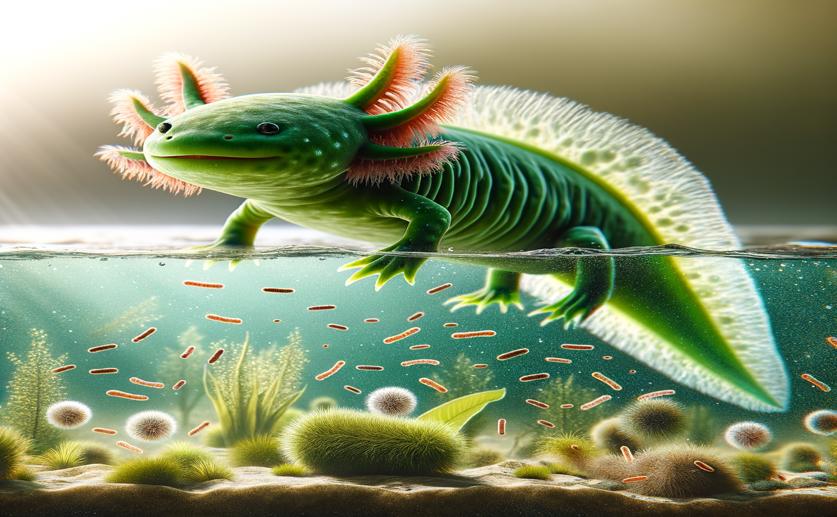
The geographic isolation of the four studied axolotl species—Ambystoma andersoni, A. dumerilii, A. mexicanum, and A. taylori—each in a unique lake within Mexico's Trans-Mexican Volcanic Belt, provides the framework for this study's finding that both host species and environment shape their distinct skin microbiota.

Image adapted from: Soto-Cortés et al. / CC BY (Source)

Key Findings

  • The study focused on the skin microbiomes of four axolotl species in the Trans-Mexican Volcanic Belt
  • Each axolotl species has a unique skin microbiota distinct from their aquatic environment
  • Host species and environmental factors collectively influence the skin bacterial communities more than fungal communities
Amphibians, particularly salamanders, are currently facing significant threats from pathogens like Batrachochytrium dendrobatidis (Bd), which causes the deadly disease chytridiomycosis. Understanding the skin microbiome of these creatures is crucial for developing strategies to protect them. Recent research from Universidad Nacional Autónoma de México[1] has delved into the complex skin microbiomes of four obligate paedomorphic salamander species, commonly known as axolotls (Ambystoma andersoni, A. dumerilii, A. mexicanum, and A. taylori), which are endemic to the Trans-Mexican Volcanic Belt. The study aimed to explore how host species and environmental conditions affect the skin bacterial and fungal microbiota of these aquatic salamanders. Despite their permanent aquatic lifestyle, the research found that each axolotl species possesses a unique skin microbiota that is distinct from general aquatic microbial communities. This discovery builds on previous research highlighting the importance of skin microbiomes in amphibian health and disease resistance[2][3][4]. Researchers identified specific skin-associated microbial taxa unique to each host species using alpha and beta diversity metrics. Alpha diversity refers to the variety of species within a particular area or ecosystem, while beta diversity measures the difference in species composition between ecosystems. The study found that bacterial communities on these salamanders' skin were dominated by the Burkholderiales and Pseudomonadales bacterial orders, and fungal communities by the Capnodiales and Pleosporales orders. These findings are consistent with earlier studies that noted the prevalence of certain beneficial bacteria on amphibian skin[3][4]. Moreover, the study showed that both host species and environmental variables collectively explained more variation in bacterial composition (R2 = 0.46) compared to fungal composition (R2 = 0.2). This suggests that while both bacteria and fungi are influenced by the host and environment, bacteria are more sensitive to these factors. This aligns with previous findings that environmental characteristics significantly influence the skin microbiome structure in amphibians[3][4]. The presence of a core set of microbial taxa shared across all host species with high relative abundances indicates a potential baseline for microbial communities that could be crucial for disease resistance. This core community concept was also observed in earlier studies, where certain bacteria remained stable over time and under different conditions, suggesting a close association with the host[4]. The implications of this study are significant for conservation efforts. By understanding the specific microbial communities associated with different axolotl species, conservationists can develop targeted probiotic treatments to bolster amphibian defenses against pathogens like Bd. This approach has shown promise in laboratory and field trials[2], and the new findings provide a more detailed map of the microbial landscape that can be leveraged for such interventions. In summary, the Universidad Nacional Autónoma de México study enhances our understanding of the factors shaping the skin microbiomes of endangered axolotls. It underscores the importance of both host-specific and environmental influences in determining microbial composition. These insights could be pivotal in developing effective conservation strategies to protect these unique salamanders from emerging infectious diseases.

EnvironmentWildlifeAnimal Science

References

Main Study

1) Host Species and Environment Shape the Skin Microbiota of Mexican Axolotls

Published 24th July, 2024

https://doi.org/10.1007/s00248-024-02411-1


Related Studies

2) Mitigating amphibian chytridiomycosis with bioaugmentation: characteristics of effective probiotics and strategies for their selection and use.

https://doi.org/10.1111/ele.12099


3) Effects of host species and environment on the skin microbiome of Plethodontid salamanders.

https://doi.org/10.1111/1365-2656.12726


4) Microbial community dynamics and effect of environmental microbial reservoirs on red-backed salamanders (Plethodon cinereus).

https://doi.org/10.1038/ismej.2013.200


Related Articles

An unhandled error has occurred. Reload 🗙