How Exercise and Hawthorn Affect Pain Thresholds in Alzheimer's Research

Jenn Hoskins
17th July, 2024

How Exercise and Hawthorn Affect Pain Thresholds in Alzheimer's Research

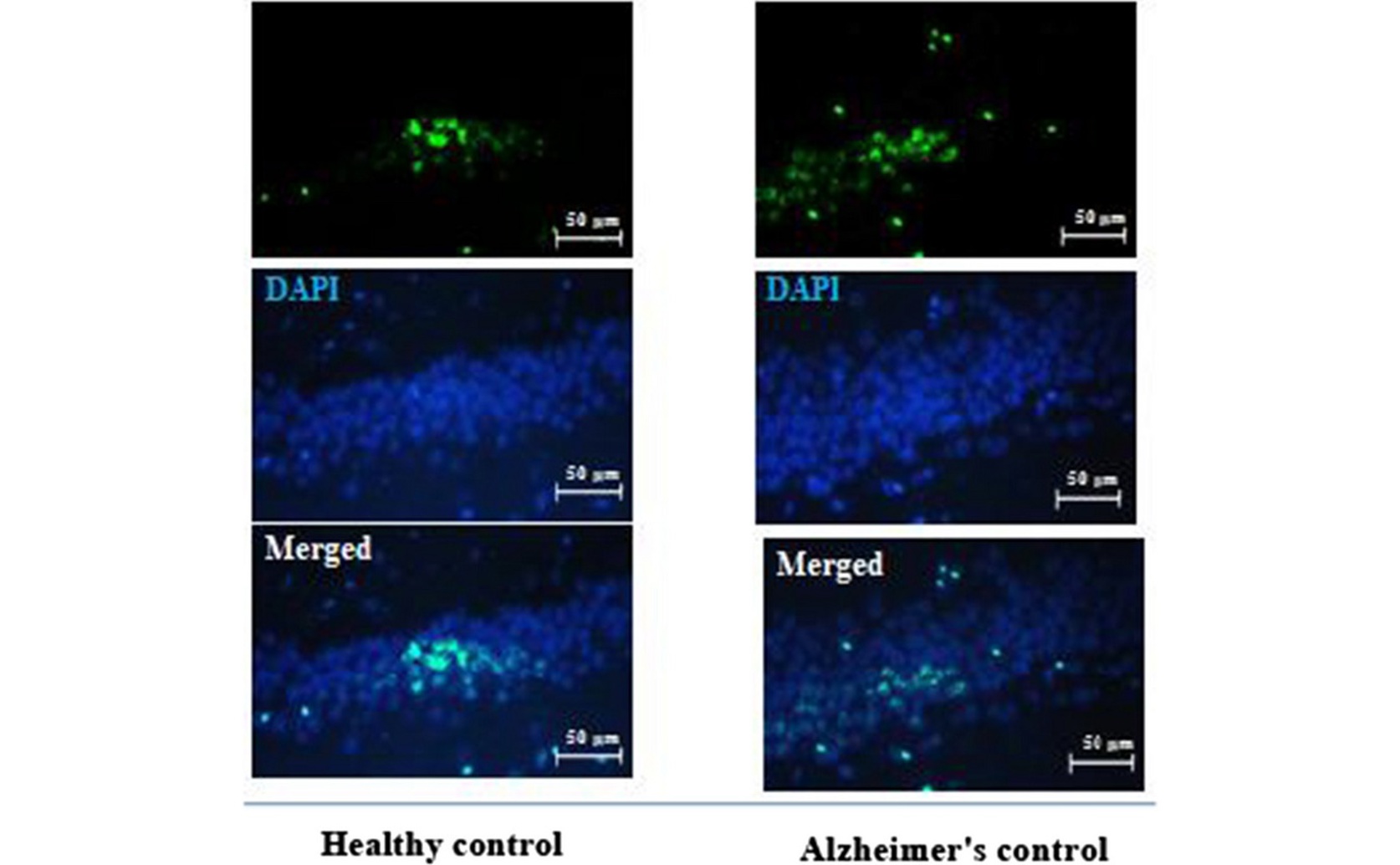
Immunofluorescent imaging confirms that rats treated with trimethyltin chloride to induce an Alzheimer's disease model exhibit significantly higher levels of β-Amyloid plaque expression in the hippocampus compared to healthy controls.

Image adapted from: Almasi et al. / CC BY (Source)

Key Findings

  • The study from Bu-Ali Sina University explored how exercise and hawthorn extract affect pain thresholds in male rats with Alzheimer's disease
  • Alzheimer's disease significantly decreased pain thresholds in rats, making them more sensitive to pain
  • Combining resistance training, swimming exercises, and hawthorn extract significantly increased pain thresholds in Alzheimer's rats, suggesting a potential way to manage pain in Alzheimer's patients
Alzheimer's disease (AD) is a progressive neurodegenerative disorder characterized by cognitive decline and, in many cases, severe neuropathic pain. Understanding and managing this pain is crucial for improving the quality of life for patients with AD. Recent research from Bu-Ali Sina University has explored the potential benefits of exercise and hawthorn extract in modulating pain thresholds in an Alzheimer's disease model[1]. This study aimed to investigate how a combination of resistance training, swimming endurance exercises, and hawthorn extract could affect pain thresholds in male rats with Alzheimer's disease induced by trimethyl chloride. The researchers used three behavioral tests—Tail-flick, Hot-plate, and Formalin tests—to evaluate pain thresholds. The findings revealed that Alzheimer's disease significantly decreased the pain threshold in all three tests. However, the combination of exercise and hawthorn extract had a statistically significant effect in increasing the pain threshold in Alzheimer's rats. This suggests that such a regimen could potentially modulate hyperalgesia, a condition of heightened sensitivity to pain, in individuals with Alzheimer's disease. Previous studies have shown that the neuropathology of dementia, including Alzheimer's disease, affects pain experience differently based on the type of dementia[2]. For instance, Alzheimer's disease often leads to a decrease in the motivational and affective components of pain. This new study builds on these findings by demonstrating that physical exercise and hawthorn extract can counteract some of these neuropathological effects, thereby increasing pain thresholds. Additionally, the study aligns with earlier research indicating that repetitive transcranial magnetic stimulation (rTMS) can improve cognition and reduce inflammation in Alzheimer's models[3]. The combined exercise regimen and hawthorn extract might be working through similar pathways to reduce neuroinflammation and enhance cognitive function, thereby modulating pain perception. Moreover, the study's focus on hawthorn extract adds another layer of complexity. Hawthorn is known for its anti-inflammatory and antioxidant properties, which could be contributing to the observed increase in pain threshold. This is particularly relevant given that neuroinflammation is a key feature of Alzheimer's disease[3]. Interestingly, another study highlighted the role of soluble guanylate cyclase (sGC) in neuropathic pain and suggested that targeting sGC with microRNA could reduce pain in Alzheimer's disease[4]. While the current study did not specifically investigate sGC, the observed benefits of exercise and hawthorn extract could be partially mediated through similar molecular pathways, contributing to a reduction in neuropathic pain. In conclusion, the study from Bu-Ali Sina University provides compelling evidence that a combination of resistance training, swimming endurance exercises, and hawthorn extract can significantly increase pain thresholds in an Alzheimer's disease model. This approach could offer a non-invasive and holistic method for managing pain in Alzheimer's patients, warranting further research to explore its potential in clinical settings.

MedicineHealthFitness And Diet

References

Main Study

1) The interactive effects of different exercises and hawthorn consumption on the pain threshold of TMT-induced Alzheimer male rats.

Published 16th July, 2024

https://doi.org/10.1186/s12576-024-00925-4


Related Studies

2) Pain processing in dementia and its relation to neuropathology.

Journal: The Lancet. Neurology, Issue: Vol 2, Issue 11, Nov 2003


3) Intermittent Theta Burst Stimulation Ameliorates Cognitive Deficit and Attenuates Neuroinflammation via PI3K/Akt/mTOR Signaling Pathway in Alzheimer's-Like Disease Model.

https://doi.org/10.3389/fnagi.2022.889983


4) Post-Transcriptional Regulation of Soluble Guanylate Cyclase that Governs Neuropathic Pain in Alzheimer's Disease.

https://doi.org/10.3233/JAD-190743


Related Articles

An unhandled error has occurred. Reload 🗙