Ancient grains may ease symptoms of irritable bowel syndrome

Jenn Hoskins
22nd December, 2025

Ancient grains may ease symptoms of irritable bowel syndrome

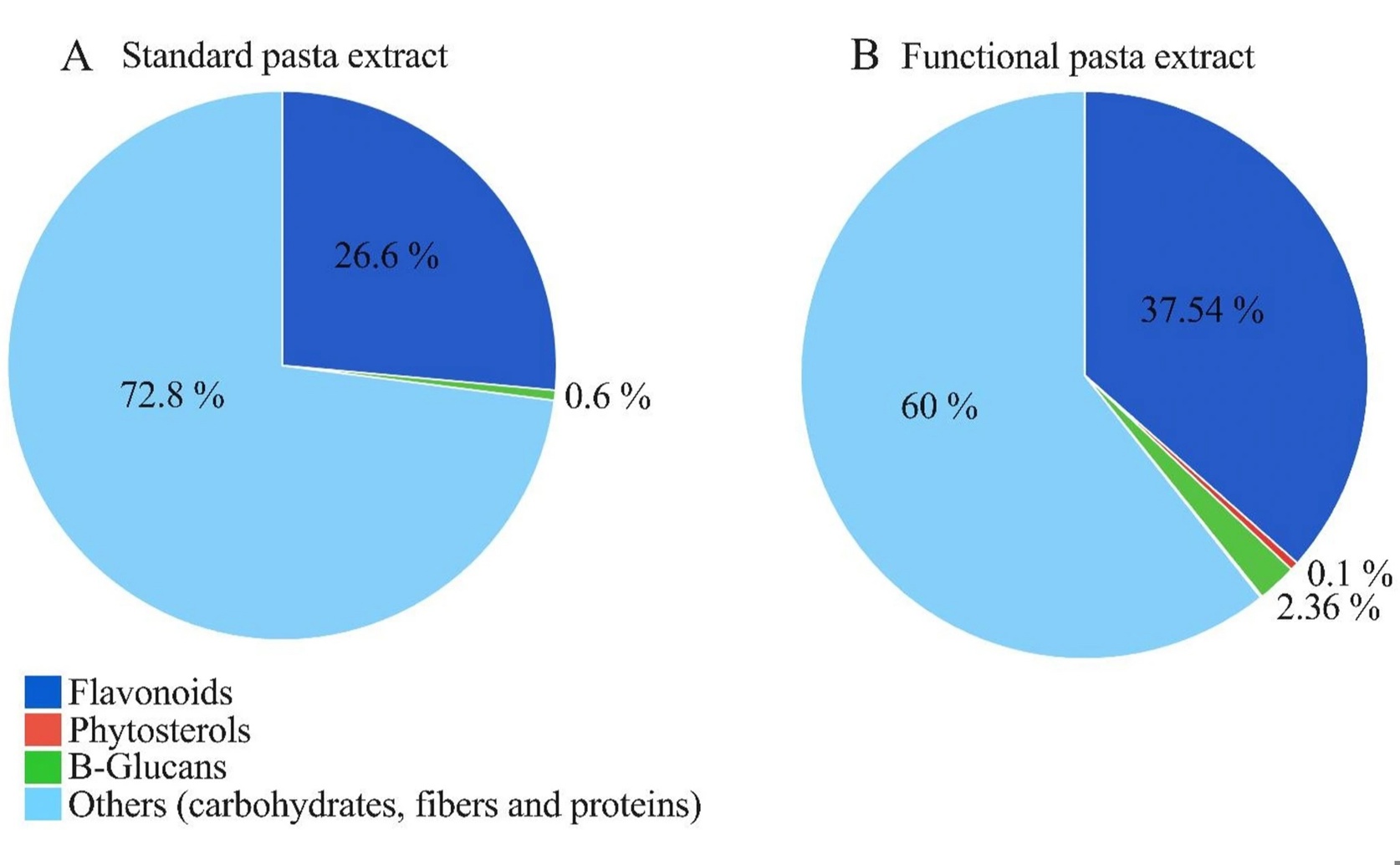
Compared to the standard pasta extract (a), the functional pasta extract (b) is enriched with significantly higher levels of health-promoting compounds, including flavonoids, β-glucans, and the exclusive presence of phytosterols, which provide the basis for its therapeutic effects.

Image adapted from: Maurotti et al. / CC BY (Source)

Key Findings

  • A new pasta made with ancient grains (emmer and rye) was developed in Italy and tested on 42 IBS patients
  • Patients eating the ancient grain pasta experienced a significant reduction in overall IBS symptoms (measured by IBS-SSS score) compared to those eating gluten-free pasta
  • Lab tests showed the ancient grain pasta extract reduced inflammation and oxidative stress in intestinal cells, suggesting a biological reason for symptom improvement
Irritable Bowel Syndrome (IBS) affects a significant portion of the population, causing discomfort and impacting quality of life. Current management strategies often involve restrictive diets, such as the low-FODMAP approach, which can be challenging to maintain long-term. Researchers at University “Magna Græcia” of Catanzaro[1] have investigated a novel dietary intervention using pasta made from ancient grains to alleviate IBS symptoms. This study builds on a growing body of research highlighting the potential of these grains in addressing global food security and nutritional needs[2]. The core problem this study addresses is the need for more effective and tolerable dietary options for IBS sufferers. Traditional gluten-free alternatives often lack nutritional value and can be expensive. Ancient grains, however, offer a potential solution due to their inherent resilience, lower processing requirements, and improved nutritional profiles. The interest in these grains has been increasingly driven by climate change concerns, as they represent a more sustainable food source compared to modern cereals[2]. The research involved forty-two patients diagnosed with IBS. Participants followed a four-week low-FODMAP diet, with half consuming traditional gluten-free pasta and the other half eating a “functional pasta” (FP) made from emmer and rye flour. The primary outcome measure was the change in IBS Symptom Severity Score (IBS-SSS), a questionnaire used to assess the intensity of IBS symptoms. The results demonstrated a significant improvement in IBS symptoms within the FP group. Patients consuming the ancient grain pasta experienced a reduction of 153 points on the IBS-SSS, compared to a reduction of only 83 points in the control group (p=0.044). Crucially, 83% of patients on the FP reported a clinically significant reduction in symptom severity, defined as a score decrease of 100 points or more, while only 35% of the control group achieved this level of improvement (p=0.004). To understand how the FP provided relief, the researchers conducted laboratory tests. They exposed human intestinal cells (Caco-2 and T84 cells) to an extract of the functional pasta (FPE) in a controlled environment. These cells were stimulated with TNF-α, a molecule known to induce inflammation. The results showed that FPE downregulated the expression of two key proteins involved in inflammation and oxidative stress: pErk1/2 and NF-κB. Downregulation means the cells produced less of these proteins, suggesting the pasta extract had an anti-inflammatory effect. This study expands on previous work identifying ancient grains like einkorn, emmer, and spelt as potential sources of genetic diversity and nutritional benefits[3]. While earlier research focused on reintroducing these grains into the food supply as a whole[2], this study specifically investigates their use in a common food product – pasta – to target a specific health condition. The findings align with the broader trend of utilizing underutilized crops, such as quinoa, teff, and millets, for their stress tolerance and nutritional value[4]. The observed reduction in inflammatory markers provides a mechanistic explanation for the symptom relief experienced by IBS patients. This suggests that the ancient grains possess properties that directly impact gut health, offering a natural alternative to conventional IBS management. The use of emmer and rye flour in the functional pasta appears to be key to these benefits, potentially due to their unique composition of fibers, proteins, and other bioactive compounds.

NutritionHealthFitness And Diet

References

Main Study

1) Ancient grain flour consumption as a novel therapeutic approach for irritable bowel syndrome

Published 19th December, 2025

https://doi.org/10.1007/s00394-025-03859-8


Related Studies

2) The Role of Ancient Grains in Alleviating Hunger and Malnutrition.

https://doi.org/10.3390/foods12112213


3) Back to the Future - Tapping into Ancient Grains for Food Diversity.

https://doi.org/10.1016/j.tplants.2016.05.005


4) Review: Shaping a sustainable food future by rediscovering long-forgotten ancient grains.

https://doi.org/10.1016/j.plantsci.2018.01.018


Related Articles

An unhandled error has occurred. Reload 🗙