Herb Leaf Extract as a Rust Preventer for Carbon Steel in Acidic Conditions

Jenn Hoskins
14th July, 2024

Herb Leaf Extract as a Rust Preventer for Carbon Steel in Acidic Conditions

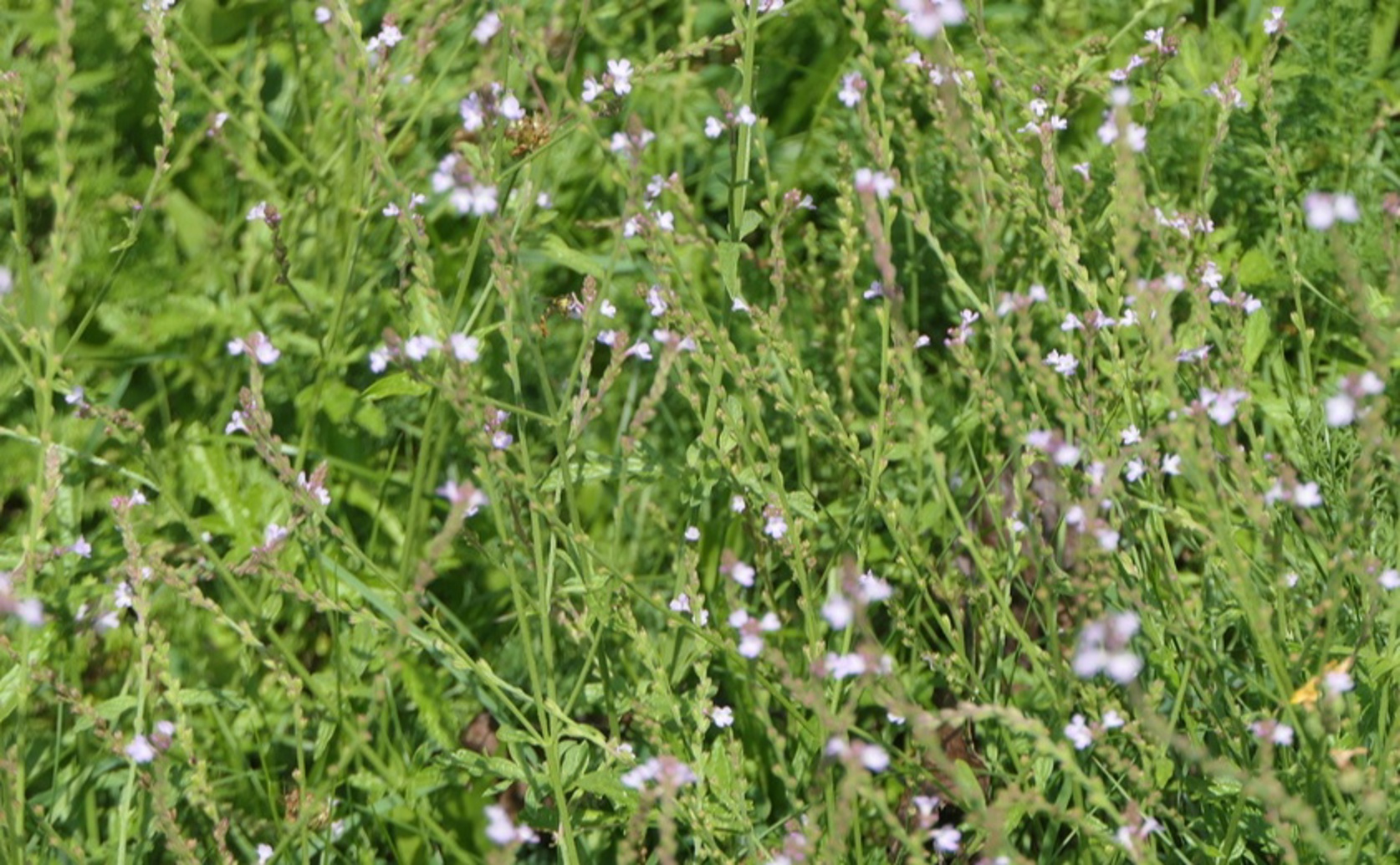
Verbena officinalis

Photo adapted from: Pete Bradshaw / CC BY (Source)

Key Findings

  • Researchers at Mansoura University found that Verbena Officinalis (VO) leaf extract can effectively inhibit corrosion of carbon steel in sulfuric acid
  • The study showed that adding VO leaf extract increased the activation energy, forming a protective barrier on the metal surface
  • Surface analyses confirmed that VO leaf extract creates a smoother, less corroded surface on carbon steel
Corrosion of metals, particularly carbon steel, poses a significant challenge in various industries, leading to substantial economic losses and safety concerns. Traditional corrosion inhibitors often involve toxic chemicals, prompting the search for environmentally friendly alternatives. A recent study by researchers at Mansoura University investigated the use of Verbena Officinalis (VO) leaf extract as a potential green corrosion inhibitor for carbon steel (CS) in a sulfuric acid medium[1]. The study employed several analytical techniques to evaluate the efficacy of VO leaf extract. These methods included mass loss (ML) measurements, potentiodynamic polarization (PDP), electrical impedance spectroscopy (EIS), and surface morphological analyses using atomic force microscopy (AFM) and X-ray photoelectron spectroscopy (XPS). Each technique provided insights into how the VO leaf extract interacts with the carbon steel surface to inhibit corrosion. One of the critical findings was the calculation of the activation energy (Ea*) using the Arrhenius equation. The results showed an increase in activation energy when VO leaf extract was added to the sulfuric acid medium, with a maximum value of 49.9 kJ mol-1 observed for a 1000 mg L-1 concentration. This increase in activation energy indicates that the VO leaf extract effectively hinders the corrosion process by forming a protective barrier on the metal surface. The study also measured the free energy values, which were negative, suggesting that the adsorption of VO leaf extract molecules onto the carbon steel surface was spontaneous and stable. This is consistent with the Langmuir adsorption isotherm model, which describes how molecules adhere to a surface to form a monolayer. EIS measurements revealed a high inhibitory effectiveness of 91.1% for a 1000 ppm solution of VO leaf extract. The data showed that as the concentration of VO leaf extract increased, the double layer capacitance (Cdl) values decreased while the charge transfer resistance (Rct) values increased. These changes indicate that a protective layer formed on the carbon steel surface, reducing the rate of corrosion. Polarization curves from PDP studies indicated that VO leaf extract acts as a mixed-type inhibitor, meaning it can slow down both the anodic and cathodic reactions involved in the corrosion process. This dual action enhances the overall inhibitory effect of the extract. Surface morphological analyses using AFM and XPS further confirmed the protective action of the VO leaf extract. AFM images showed a smoother surface on the carbon steel treated with VO leaf extract, indicating less corrosion damage. XPS analysis provided detailed information on the chemical composition of the protective layer, confirming the presence of VO leaf extract molecules on the carbon steel surface. The findings from this study align with previous research on green corrosion inhibitors. For instance, naturally occurring polysaccharides have been studied for their corrosion inhibition properties, leveraging their macromolecular weights and unique molecular structures to chelate metal ions and form protective layers[2]. Similarly, the use of plant extracts like Biebersteinia multifida root extract (BMRE) has shown promising results in inhibiting corrosion in acidic environments[3]. Moreover, the study's reliance on computational approaches to understand the inhibition mechanisms echoes previous work with pyrimidine-bichalcophene derivatives, which used quantum-chemical and molecular dynamics simulations to correlate experimental results with molecular structures[4]. These computational methods provide valuable insights into the active sites and interactions between inhibitor molecules and metal surfaces, enhancing our understanding of how these inhibitors work. In conclusion, the study by Mansoura University demonstrates the potential of Verbena Officinalis leaf extract as an effective and environmentally friendly corrosion inhibitor for carbon steel in sulfuric acid. By employing a combination of experimental techniques and computational analyses, the researchers have provided a comprehensive understanding of how VO leaf extract inhibits corrosion, paving the way for further exploration of green inhibitors in various industrial applications.

HerbsEnvironmentBiochem

References

Main Study

1) Verbena officinalis (VO) leaf extract as an anti-corrosion inhibitor for carbon steel in acidic environment.

Published 12th July, 2024

https://doi.org/10.1038/s41598-024-65266-z


Related Studies

2) Application of carbohydrate polymers as corrosion inhibitors for metal substrates in different media: A review.

https://doi.org/10.1016/j.carbpol.2015.12.038


3) Insight into the corrosion inhibition of Biebersteinia multifida root extract for carbon steel in acidic medium.

https://doi.org/10.1016/j.scitotenv.2022.155527


4) Novel pyrimidine-bichalcophene derivatives as corrosion inhibitors for copper in 1 M nitric acid solution.

https://doi.org/10.1039/d1ra03603c


Related Articles

An unhandled error has occurred. Reload 🗙