
How Mediterranean Sponges React to Friendly Microbes
Jenn Hoskins
8th July, 2024


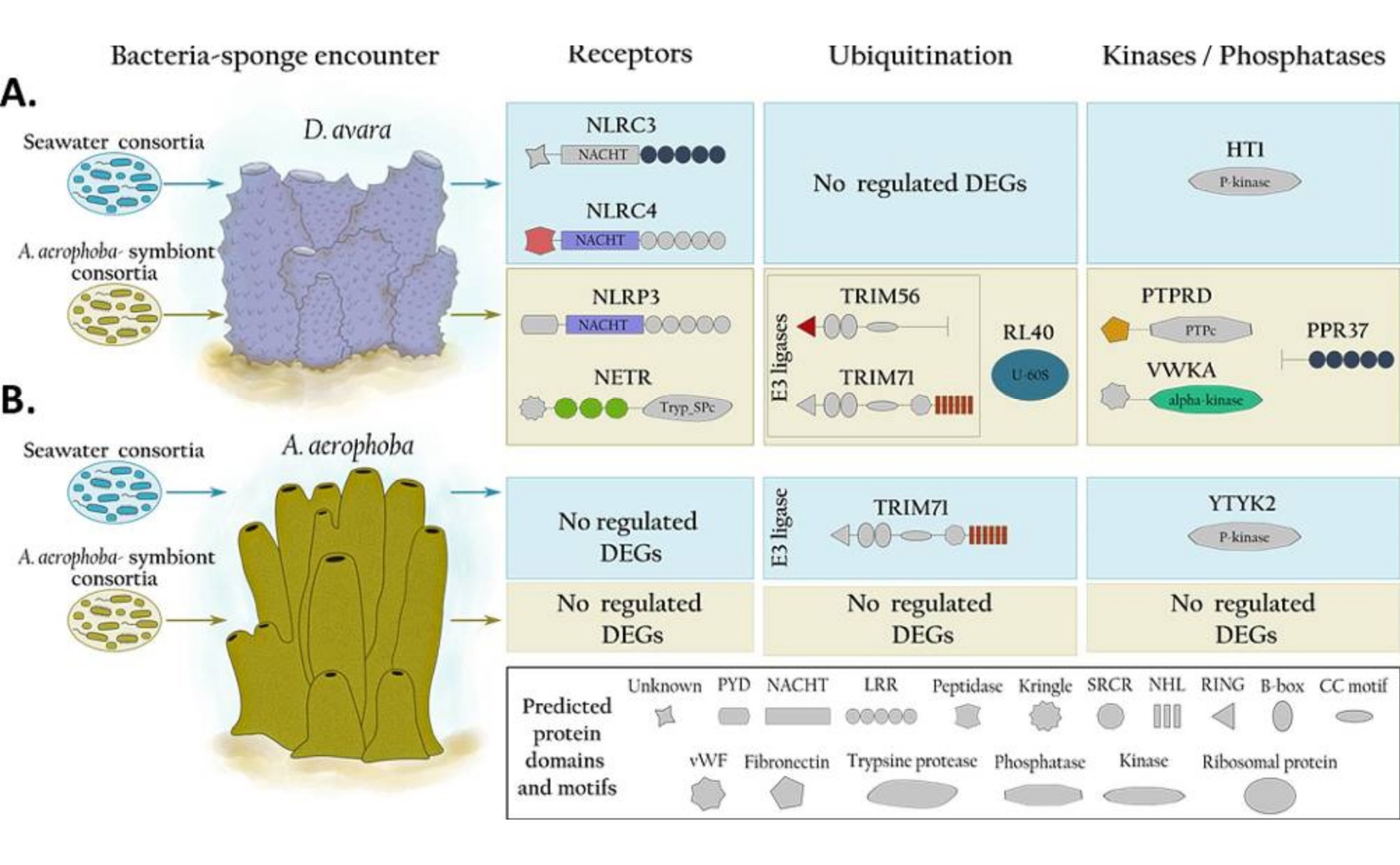
The sponge Dysidea avara mounts a complex transcriptomic response to foreign symbionts from Aplysina aerophoba, involving the differential expression of multiple immune receptors like NLRs (a), whereas A. aerophoba shows a minimal response to its own native symbionts, indicating distinct mechanisms for microbial discrimination (b).
Key Findings
- The study took place at the GEOMAR Helmholtz Centre for Ocean Research Kiel and focused on how sponges differentiate between symbiotic and non-symbiotic microbes
- Sponges use a variety of immune receptors to recognize and respond to different microbial communities
- The ability to distinguish between symbiotic and non-symbiotic microbes helps sponges maintain balance and survive in their natural environment
References
Main Study
1) Transcriptomic responses of Mediterranean sponges upon encounter with symbiont microbial consortia
Published 7th July, 2024
https://doi.org/10.1186/s12864-024-10548-z
Related Studies
2) Animal development in the microbial world: Re-thinking the conceptual framework.
3) The hologenome concept of evolution after 10 years.
4) Animals in a bacterial world, a new imperative for the life sciences.
Related Articles
 6th June, 2024 | Greg Howard