
Natural Variation in Yeast Shows Many Ways to Boost Stress Resistance
Jenn Hoskins
6th July, 2024


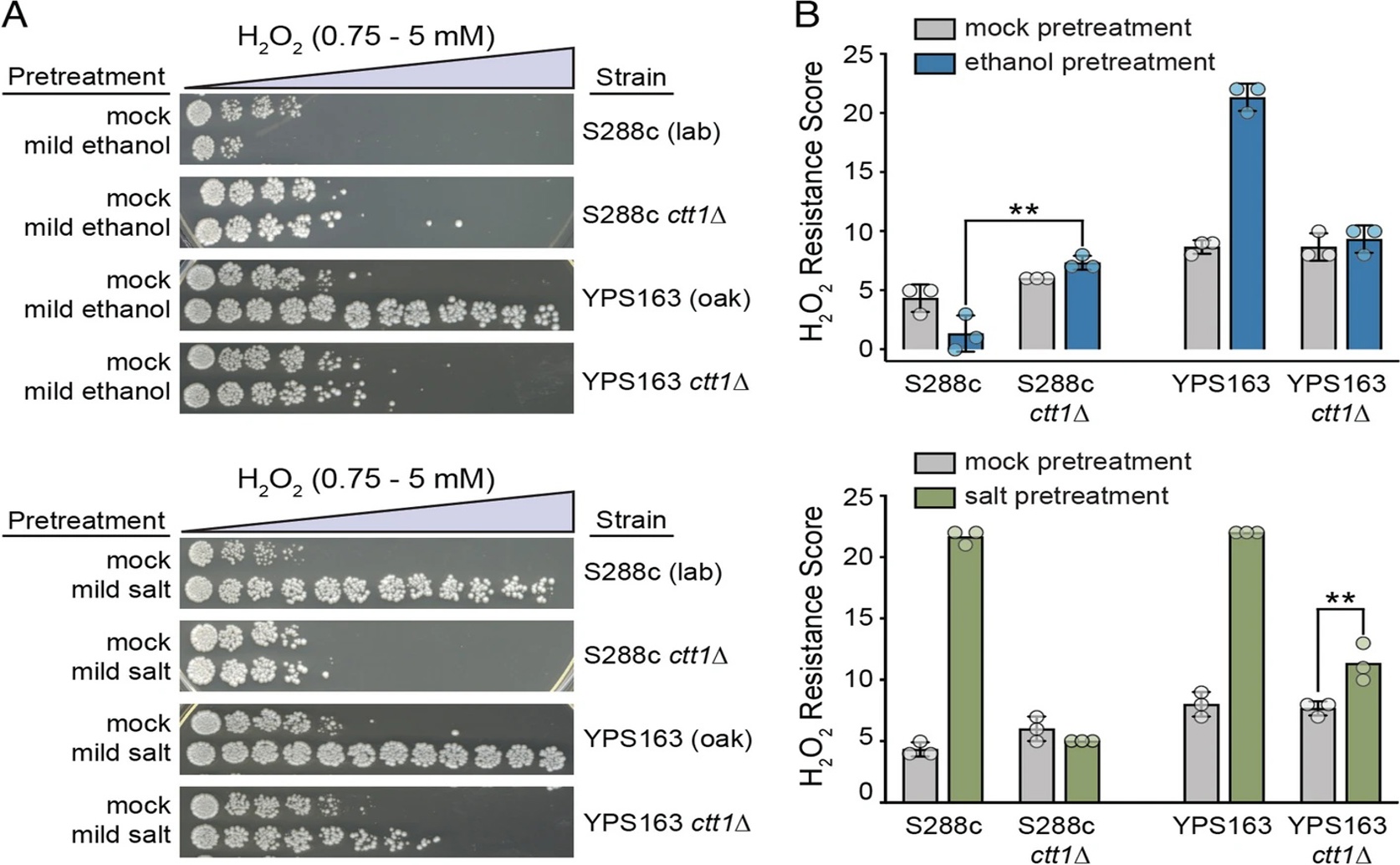
A wild oak strain of Saccharomyces cerevisiae (YPS163) reveals a conditional requirement for the catalase gene CTT1 in acquiring H2O2 resistance, as it is essential following ethanol pre-treatment but only partially necessary after salt pre-treatment (A, B), highlighting the study's finding that different molecular paths can lead to stress resistance.
Key Findings
- Researchers at the University of Arkansas studied how wild yeast adapt to predictable environmental stresses
- Yeast exposed to mild osmotic or ethanol stress showed increased tolerance to severe oxidative stress
- This cross protection mechanism helps yeast survive in fluctuating environments like broken fruit
References
Main Study
1) Natural variation in yeast reveals multiple paths for acquiring higher stress resistance
Published 4th July, 2024
https://doi.org/10.1186/s12915-024-01945-7
Related Studies
2) Abiotic stress, the field environment and stress combination.
Journal: Trends in plant science, Issue: Vol 11, Issue 1, Jan 2006
3) Genomic profiling of fungal cell wall-interfering compounds: identification of a common gene signature.
4) High-resolution chemical dissection of a model eukaryote reveals targets, pathways and gene functions.
Related Articles
 12th June, 2024 | Jenn Hoskins