How Salidroside May Protect Eye Cells from Oxidative Stress: A Molecular Study

Greg Howard
6th July, 2024

How Salidroside May Protect Eye Cells from Oxidative Stress: A Molecular Study

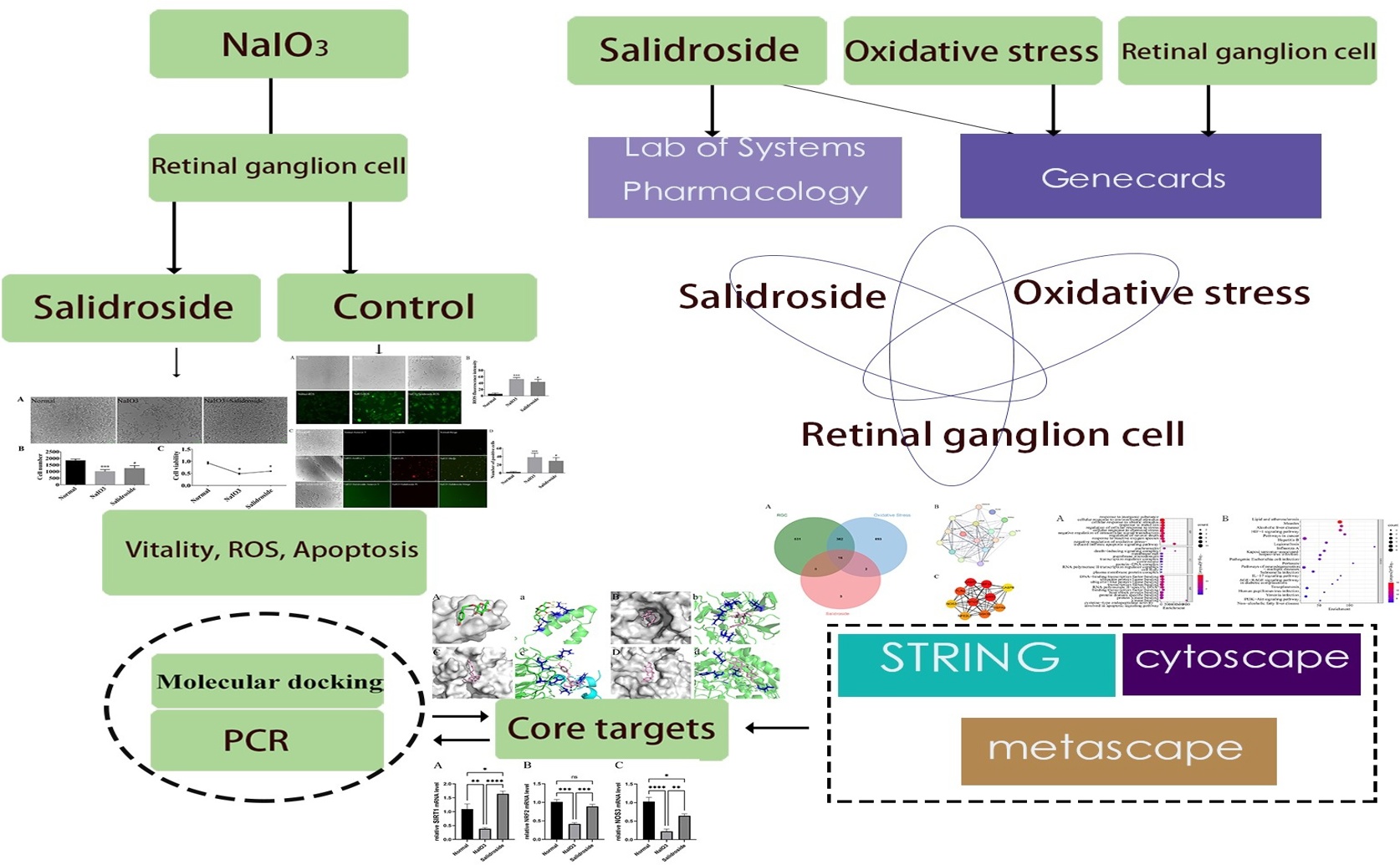
This study's research design integrates in vitro experiments on retinal ganglion cells with network pharmacology and molecular validation to elucidate the mechanism by which salidroside protects against oxidative stress.

Image adapted from: Zhang et al. / CC BY (Source)

Key Findings

  • Researchers at Zunyi Medical University found that Salidroside (SAL) can protect retinal ganglion cells (RGCs) from oxidative stress
  • SAL treatment significantly increased cell activity, reduced harmful reactive oxygen species (ROS) levels, and decreased cell death in RGCs
  • The study identified key genes and pathways through which SAL exerts its protective effects, suggesting potential new treatments for glaucoma and related eye diseases
Oxidative stress is a significant factor in the development of various ophthalmological diseases, including retinopathy, cataract, and glaucoma[2]. It is characterized by an imbalance between the production of reactive oxygen species (ROS) and the body's ability to detoxify these harmful components or repair the resulting damage. ROS, which include molecules like superoxide anion and hydrogen peroxide, can lead to cellular damage and apoptosis (programmed cell death)[3]. This is particularly problematic in retinal ganglion cells (RGCs), which are essential for transmitting visual information from the eye to the brain. The degeneration of RGCs is a hallmark of glaucoma, a leading cause of irreversible blindness[2]. A recent study conducted by researchers at Zunyi Medical University investigated the potential therapeutic effects of Salidroside (SAL), a flavonoid derived from Rhodiola rosea, against oxidative stress in RGCs[1]. SAL is known for its antioxidative, anti-inflammatory, and hypolipidemic properties. The study aimed to explore the mechanisms through which SAL could protect RGCs from oxidative stress-induced damage. The researchers constructed an in vitro model of RGC oxidative stress and assessed cell activity, ROS levels, and apoptosis rates before and after SAL treatment. They used a combination of network pharmacology and molecular docking techniques to identify potential therapeutic targets and mechanisms. Genes related to rhodopsin, RGCs, and oxidative stress were screened from various databases, and a Venn diagram was created to identify common targets. Protein interactions and pathway enrichments were analyzed using multiple bioinformatics tools. The findings revealed that SAL treatment significantly enhanced cell activity, reduced ROS levels, and decreased apoptosis in the RGC oxidative stress model. The researchers identified 16 potential targets of oxidative stress in SAL-treated RGCs, with the top 10 core targets being highlighted through network topology analysis. Gene Ontology (GO) analysis indicated that SAL's protective effects were mainly associated with cellular responses to stress, transcriptional regulatory complexes, and DNA-binding transcription factor binding. KEGG pathway analysis showed that many genes were enriched in cancer pathways and signaling pathways related to diabetic complications, nonalcoholic fatty liver disease, and lipid metabolism. Further validation through qRT-PCR, molecular docking, and molecular dynamic simulations suggested that SAL may exert its protective effects by regulating key factors such as SIRT1, NRF2, and NOS3. SIRT1 is a protein that plays a role in cellular stress responses, while NRF2 is a transcription factor that regulates the expression of antioxidant proteins. NOS3 is an enzyme involved in the production of nitric oxide, a molecule that can have both beneficial and harmful effects depending on its concentration and context. These findings align with previous studies that have highlighted the role of oxidative stress in various eye diseases. For instance, ROS have been implicated in the pathogenesis of diabetic retinopathy, where they promote apoptosis of vascular and neuronal cells and stimulate inflammation and pathological angiogenesis[3]. Similarly, oxidative stress has been shown to contribute to the neurodegenerative changes seen in glaucoma, where it promotes the apoptosis of RGCs and glial dysfunction[2][3]. The current study adds to this body of knowledge by providing a potential therapeutic approach to mitigate oxidative stress in RGCs, thereby offering a new avenue for the treatment of glaucoma and other related diseases. In conclusion, the study by Zunyi Medical University provides compelling evidence that Salidroside (SAL) can attenuate oxidative stress and reduce apoptosis in retinal ganglion cells (RGCs). By doing so, it offers a promising therapeutic strategy for diseases like glaucoma, where oxidative stress plays a crucial role in disease progression. This research not only expands our understanding of the molecular mechanisms involved but also opens up new possibilities for the development of antioxidant therapies in ophthalmology.

MedicineHealthBiochem

References

Main Study

1) Network pharmacology and molecular-docking-based strategy to explore the potential mechanism of salidroside-inhibited oxidative stress in retinal ganglion cell.

Published 5th July, 2024

https://doi.org/10.1371/journal.pone.0305343


Related Studies

2) Biomarkers of inflammation and oxidative stress in ophthalmic disorders.

https://doi.org/10.1080/15321819.2020.1726774


3) The Role of the Reactive Oxygen Species and Oxidative Stress in the Pathomechanism of the Age-Related Ocular Diseases and Other Pathologies of the Anterior and Posterior Eye Segments in Adults.

https://doi.org/10.1155/2016/3164734


Related Articles

An unhandled error has occurred. Reload 🗙