
Genetic Variation of Mosquitoes in Different Climate Zones
Jenn Hoskins
6th July, 2024


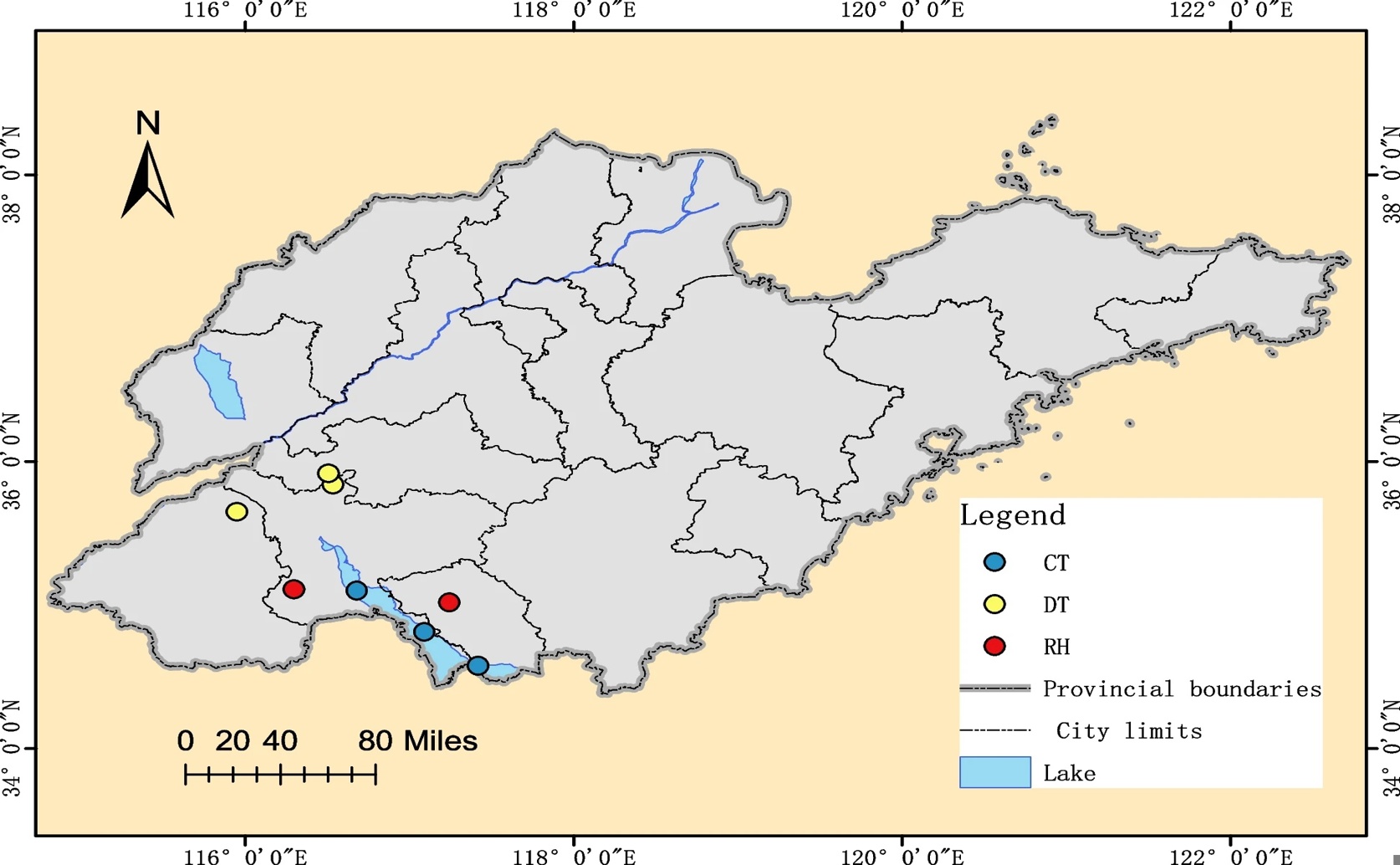
Sampling sites of Culex tritaeniorhynchus populations in different ecological environments in Shandong Province, China. CT Lotus Ponds, DT Paddy Fields, RH Irrigation canals.
Key Findings
- The study focused on Culex tritaeniorhynchus mosquitoes in China, which are primary vectors of the Japanese encephalitis virus (JEV)
- Researchers found significant genetic differences among mosquito populations from different regions, influenced by environmental factors
- Mosquito populations in tropical and subtropical regions showed higher genetic diversity compared to those in temperate regions
References
Main Study
1) Population genetic structure of Culex tritaeniorhynchus in different types of climatic zones in China
Published 5th July, 2024
https://doi.org/10.1186/s12864-024-10589-4
Related Studies
2) Impact of past and on-going changes on climate and weather on vector-borne diseases transmission: a look at the evidence.
3) Zika, Chikungunya, and Other Emerging Vector-Borne Viral Diseases.
4) Fine-scale genetic structure and wolbachia infection of aedes albopictus (Diptera: Culicidae) in Nanjing city, China.
Related Articles
 28th June, 2024 | Jim Crocker