Boosting Cowpea Health: How Melatonin and Gene Networks Help Fight Wilt Disease

Greg Howard
26th June, 2024

Boosting Cowpea Health: How Melatonin and Gene Networks Help Fight Wilt Disease

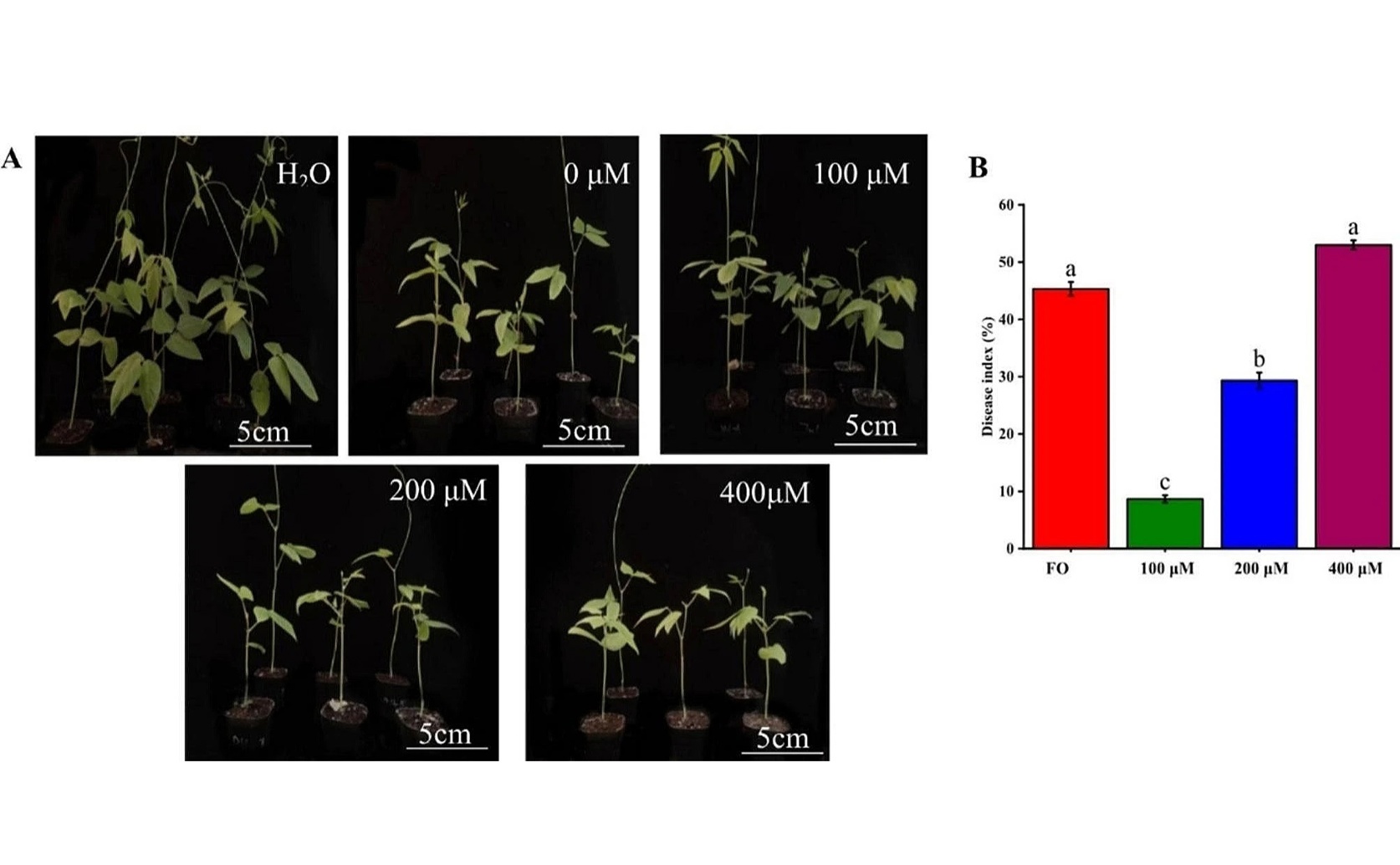
Pre-treatment with 100 µM melatonin most effectively mitigated the visual symptoms of wilt disease (a) and significantly lowered the corresponding disease index (b) in cowpea plants following inoculation with Fusarium oxysporum.

Image adapted from: Gan et al. / CC BY (Source)

Key Findings

  • The study by Jiangxi Agricultural University found that melatonin pretreatment significantly boosts cowpea's resistance to Fusarium oxysporum
  • Melatonin-treated cowpeas showed improved physiological traits like higher chlorophyll content, increased plant height, and greater biomass
  • Biochemical analyses revealed that melatonin increased the activity of defense-related enzymes, helping cowpeas better manage oxidative stress and enhance their defense mechanisms
Cowpea wilt, a disease caused by the soil-borne fungal pathogen Fusarium oxysporum, poses a significant threat to cowpea production. This disease can lead to substantial yield losses, impacting agricultural productivity and economic stability. Recent research conducted by Jiangxi Agricultural University[1] has explored the potential of melatonin in enhancing cowpea resistance to Fusarium oxysporum. This study delves into the physiological, biochemical, and molecular changes in cowpea pretreated with melatonin, aiming to uncover the mechanisms behind its protective effects. Fusarium oxysporum is notorious for causing vascular wilt in various crops[2]. Previous studies have highlighted the pathogen's ability to secrete virulence factors and respond to environmental stresses, complicating efforts to control its spread[2]. In cowpea, resistance to specific races of Fusarium oxysporum has been studied, identifying genetic loci associated with resistance[3]. However, the role of melatonin in cowpea immunity against Fusarium oxysporum remained unexplored until this recent investigation. Melatonin, a well-known regulator of plant immunity, was hypothesized to bolster cowpea's defense mechanisms against Fusarium oxysporum. The researchers at Jiangxi Agricultural University aimed to evaluate how melatonin treatment affects cowpea's physiological and biochemical responses and to elucidate the underlying molecular mechanisms. To achieve this, they employed a weighted gene coexpression network analysis (WGCNA), a method used to identify clusters (modules) of highly correlated genes and their association with specific traits. The study revealed that melatonin pretreatment significantly enhanced cowpea's resistance to Fusarium oxysporum. Physiological indices such as chlorophyll content, plant height, and biomass were positively influenced by melatonin application. Biochemical analyses showed increased activities of defense-related enzymes, including peroxidase and superoxide dismutase. These enzymes play crucial roles in mitigating oxidative stress and enhancing plant defense. At the molecular level, the WGCNA identified several gene modules associated with melatonin-induced resistance. Notably, genes involved in the salicylic acid (SA) signaling pathway were upregulated in melatonin-treated plants. This finding aligns with previous research on chrysanthemum, where Fusarium infection triggered an increase in SA content, suggesting its role in defense responses[4]. The upregulation of SA-related genes indicates that melatonin may prime cowpea's immune system, enhancing its ability to respond to Fusarium oxysporum infection. Furthermore, the study identified differentially expressed genes encoding for terpene synthases (TPSs), enzymes responsible for terpene production. Terpenes are known to have antimicrobial properties and play a role in plant defense[4]. The increased expression of TPS genes in melatonin-treated cowpea suggests that melatonin may enhance the production of these defensive compounds, contributing to the plant's resistance. The research also highlighted the potential for integrating melatonin treatment with traditional breeding approaches. Previous studies have identified genetic loci associated with resistance to Fusarium oxysporum in cowpea[3]. Combining melatonin treatment with marker-assisted selection (MAS) could expedite the development of resistant cowpea cultivars, offering a multifaceted approach to disease management. In summary, the study conducted by Jiangxi Agricultural University provides valuable insights into the protective effects of melatonin against Fusarium oxysporum in cowpea. By enhancing physiological, biochemical, and molecular responses, melatonin primes cowpea's immune system, offering a promising strategy for managing cowpea wilt. This research not only expands our understanding of plant immunity but also opens new avenues for developing sustainable disease management practices in agriculture.

GeneticsBiochemPlant Science

References

Main Study

1) Enhancing cowpea wilt resistance: insights from gene coexpression network analysis with exogenous melatonin treatment

Published 25th June, 2024

https://doi.org/10.1186/s12870-024-05289-w


Related Studies

2) Current progress on pathogenicity-related transcription factors in Fusarium oxysporum.

https://doi.org/10.1111/mpp.13068


3) Genetic and physical mapping of candidate genes for resistance to Fusarium oxysporum f.sp. tracheiphilum race 3 in cowpea [Vigna unguiculata (L.) Walp].

https://doi.org/10.1371/journal.pone.0041600


4) Fusarium oxysporum infection on root elicit aboveground terpene production and salicylic acid accumulation in Chrysanthemum morifolium.

https://doi.org/10.1016/j.plaphy.2022.08.029


Related Articles

An unhandled error has occurred. Reload 🗙