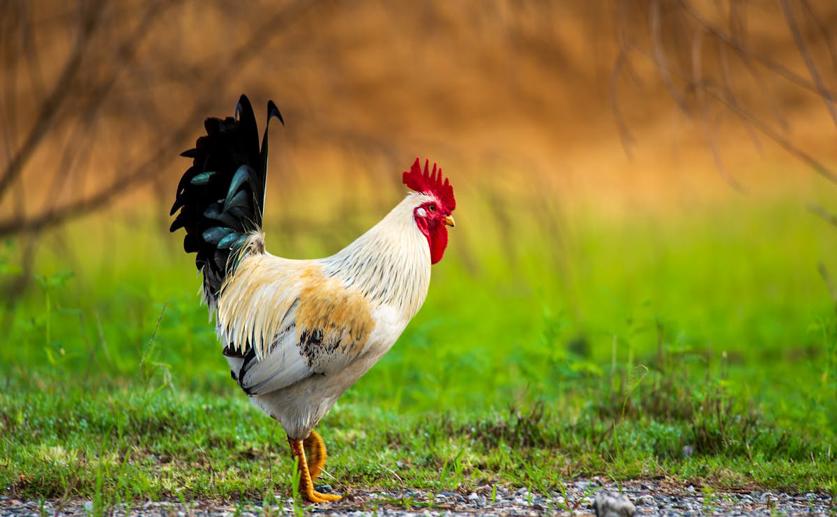
Brown Seaweed and Mushroom Diet Improves Growth and Meat Quality in Roosters

Greg Howard
23rd June, 2024

Brown Seaweed and Mushroom Diet Improves Growth and Meat Quality in Roosters

Key Findings

  • The study by North-West University explored feeding Boschveld roosters brown seaweed inoculated with oyster mushroom spawn (OMS)
  • Birds fed the diet with 40% OMS showed higher body weight gain compared to the standard diet in specific weeks
  • The optimum OMS level for body weight gain was determined to be 20%, based on the quadratic response observed
  • Feeding brown seaweed with OMS improved growth performance and altered physiological responses without compromising meat quality
The use of brown seaweed (Ecklonia maxima) in indigenous chicken diets has been limited due to its high dietary fiber content. A recent study conducted by North-West University explored the potential of improving the nutritional value of brown seaweed by inoculating it with oyster mushroom (Pleurotus ostreatus) spawn (OMS)[1]. This study aimed to assess the impact of feeding brown seaweed spent mushroom substrate (SMS) on the growth performance, physiological responses, and meat quality of Boschveld roosters. In this study, 324 Boschveld roosters, aged four weeks, were divided into 36 pens, with nine birds per pen. The birds were fed a standard grower diet (CON) or a diet containing 150 g/kg of brown seaweed inoculated with varying levels of OMS: 0% (SMS0), 20% (SMS20), 30% (SMS30), 40% (SMS40), and 50% (SMS50). The results indicated that birds fed the CON diet had the lowest feed intake compared to all SMS treatment levels in several weeks. Notably, the SMS40 diet led to higher body weight gain (BWG) than the CON diet in specific weeks. The gain-to-feed ratio improved significantly in weeks 7, 11, and 14, with linear increases observed for slaughter and breast weights as OMS levels increased. The study found quadratic responses for BWG, white blood cells, heterophils, platelets, lymphocytes, monocytes, and relative spleen and large intestine weights as OMS levels increased. Interestingly, the SMS0 diet resulted in higher relative caeca weights than the other diets. However, neither quadratic nor linear responses were observed for breast meat quality parameters. The optimum OMS level was determined to be 20%, based on the quadratic response for BWG. This research builds on previous findings regarding the nutritional aspects of indigenous chickens. For instance, a prior review highlighted the economic, social, and cultural importance of indigenous chickens in Africa, despite their generally poor productivity in terms of egg laying[2]. The review emphasized the need for strategies to preserve and sustain these chickens due to their significant role in improving livelihoods. The current study by North-West University aligns with this goal by exploring innovative ways to enhance the nutritional value of indigenous chicken diets. Earlier research on the dietary inclusion of brown seaweed in Boschveld chickens showed that while it improved feed intake and some internal organ sizes, it did not significantly affect nutrient digestibility, growth performance, or meat quality[3]. The current study expands on these findings by demonstrating that inoculating brown seaweed with OMS can enhance growth performance and alter physiological responses without compromising meat quality. Additionally, another study on the dietary effects of marine red seaweed (Palmaria palmata) in broilers found that seaweed supplementation improved growth performance, nutrient digestibility, and meat quality, while also reducing fecal gas emissions and enhancing intestinal morphology[4]. These findings support the potential benefits of incorporating seaweed into poultry diets, as seen in the current study with brown seaweed SMS. The use of fungi, such as oyster mushrooms, to enhance the nutritional value of lignocellulosic materials like seaweed is supported by research on lignocellulose degradation by fungi[5]. Fungi possess an effective enzymatic system capable of breaking down complex plant materials, making them valuable in biotechnological applications. The current study leverages this capability by using OMS to improve the utility of brown seaweed in chicken diets. In conclusion, the study conducted by North-West University demonstrates that feeding brown seaweed SMS to Boschveld roosters can improve growth performance and alter certain physiological responses without affecting meat quality. These findings suggest that inoculating seaweed with OMS can be a viable strategy to enhance the nutritional value of indigenous chicken diets, contributing to the sustainability and productivity of poultry farming in Africa.

AgricultureNutritionAnimal Science

References

Main Study

1) Dietary incorporation of brown seaweed spent oyster mushroom substrate alters growth performance, physiological responses and meat quality parameters in Boschveld roosters.

Published 22nd June, 2024

https://doi.org/10.1038/s41598-024-65338-0


Related Studies

2) Local Chicken Breeds of Africa: Their Description, Uses and Conservation Methods.

https://doi.org/10.3390/ani10122257


3) Effect of seaweed (Ecklonia maxima) on apparent nutrient digestibility, growth performance, and physiological and meat quality parameters in Boschveld cockerels.

https://doi.org/10.1016/j.psj.2022.102361


4) Supplemental Impact of Marine Red Seaweed (Halymenia palmata) on the Growth Performance, Total Tract Nutrient Digestibility, Blood Profiles, Intestine Histomorphology, Meat Quality, Fecal Gas Emission, and Microbial Counts in Broilers.

https://doi.org/10.3390/ani11051244


5) Lignocellulose degradation: An overview of fungi and fungal enzymes involved in lignocellulose degradation.

https://doi.org/10.1002/elsc.201800039


Related Articles

An unhandled error has occurred. Reload 🗙