Understanding Cannabinoid Levels and Safety in Commercial CBD Oils

Jim Crocker
21st June, 2024

Understanding Cannabinoid Levels and Safety in Commercial CBD Oils

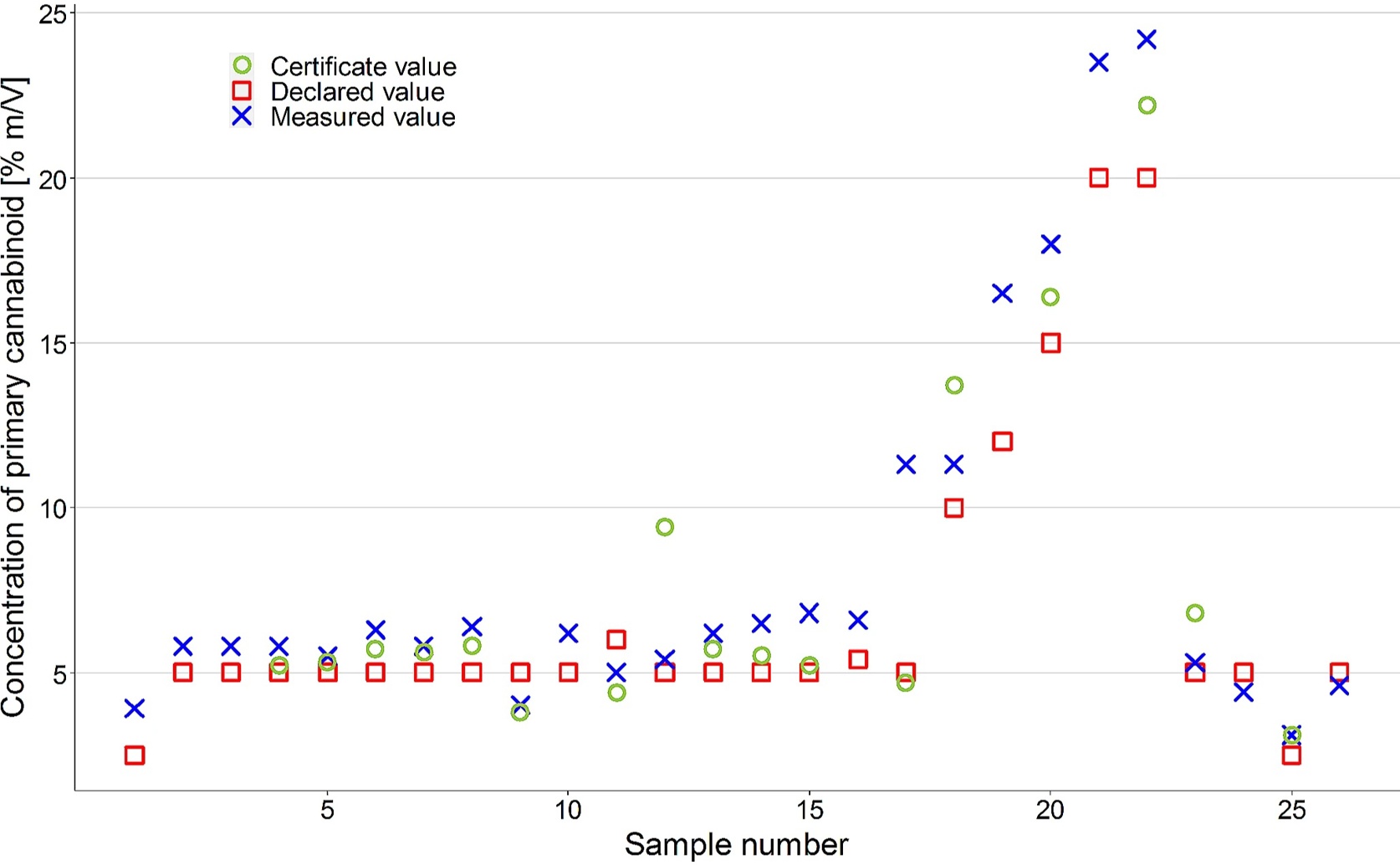
The measured concentration of the primary cannabinoid (CBD, CBG, or CBN) in commercial oils frequently deviated from the labeled amount, with actual values ranging from 81% to 226% of the concentration stated on the product declaration or its accompanying certificate of analysis.

Image adapted from: Lindekamp et al. / CC BY (Source)

Key Findings

  • The study analyzed 26 cannabinoid oil products sold in Germany, including CBD, CBG, and CBN oils
  • Actual concentrations of cannabinoids varied significantly from what was declared on the labels, ranging from 81% to 226% of the stated values
  • Δ9-THC, a psychoactive compound, was found in 20 out of 26 samples, with levels high enough in some products to exceed safety limits with just a few drops
The German Federal Institute for Risk Assessment recently conducted a study to quantify the cannabinoid content in various CBD oils, CBG oils, and CBN oils marketed as food supplements, aroma oils, or cosmetic preparations[1]. This study highlights significant discrepancies between the declared and actual concentrations of these cannabinoids, raising concerns about consumer safety and product regulation. In this study, nineteen cannabinoids, including Δ9-THC (tetrahydrocannabinol) and CBD (cannabidiol), were measured in 22 CBD oils, 2 CBG (cannabigerol) oils, and 2 CBN (cannabinol) oils. The analysis was performed using high-performance liquid chromatography coupled to tandem mass spectrometry (HPLC-MS/MS), a precise method for identifying and quantifying chemical compounds. The declared concentrations of CBD (or CBG, CBN) in the oils ranged from 2.5% to 20%. However, the actual concentrations varied significantly, ranging from 81% to 226% of the declared values. For instance, CBD concentrations of up to 9 mg per drop were found, which is considerably higher than what consumers might expect. One of the most alarming findings was the presence of Δ9-THC in 20 out of the 26 samples, with concentrations ranging from 5 to 1576 mg/kg (mean = 536 mg/kg). Δ9-THC is the primary psychoactive component of cannabis, known for its mind-altering effects. The European Food Safety Authority (EFSA) has set an acute reference dose (ARfD) for Δ9-THC at 1 µg/kg body weight (bw). Considering the highest daily intake suggested by one manufacturer (20 drops) and an average body weight of 70 kg, the measured Δ9-THC concentration in 50% (n = 13) of the products would exceed the ARfD. For seven samples, even just two drops of oil would be enough to surpass the ARfD of Δ9-THC. This study emphasizes the need for stricter regulatory measures and better quality control in the production and labeling of cannabinoid products. The discrepancies between the declared and actual concentrations could pose significant health risks, especially with the increasing availability of these products in the market. The findings of this study align with earlier research highlighting the complexities and potential risks associated with cannabinoids. For example, Δ9-THC and CBD, the two main ingredients of the Cannabis sativa plant, have been shown to have distinct symptomatic and behavioral effects[2]. While CBD can potentially block the psychotic symptoms induced by Δ9-THC, the presence of unregulated amounts of Δ9-THC in CBD oils could inadvertently lead to adverse effects in consumers. Moreover, another study has shown that delta-8 THC, an isomer of Δ9-THC, exhibits similar psychoactive properties and is increasingly present in the illicit drug market[3]. Pediatric exposures to delta-8 THC are on the rise, and the clinical presentation of delta-8 THC exposure is similar to that of Δ9-THC. This further underscores the importance of accurate labeling and regulation of cannabinoid products to prevent accidental ingestion and potential toxicity. Cannabis sativa is a plant with a rich spectrum of phytochemicals, including cannabinoids, terpenes, and phenolic compounds, which have various industrial and pharmaceutical applications[4]. However, the therapeutic and commercial potential of these compounds can only be fully realized if their production and use are adequately regulated to ensure safety and efficacy. In conclusion, the study by the German Federal Institute for Risk Assessment highlights significant discrepancies between the declared and actual concentrations of cannabinoids in various oils marketed as food supplements, aroma oils, or cosmetic preparations. These findings underscore the need for stricter regulatory measures and better quality control to ensure consumer safety and prevent potential health risks associated with unregulated cannabinoid products.

MedicineHealthBiochem

References

Main Study

1) Comprehensive analysis of 19 cannabinoids in commercial CBD oils: concentrations, profiles, and safety implications

Published 20th June, 2024

https://doi.org/10.1007/s00003-024-01513-9


Related Studies

2) Opposite effects of delta-9-tetrahydrocannabinol and cannabidiol on human brain function and psychopathology.

https://doi.org/10.1038/npp.2009.184


3) Sedation and Acute Encephalopathy in a Pediatric Patient Following Ingestion of Delta-8-Tetrahydrocannabinol Gummies.

https://doi.org/10.12659/AJCR.933488


4) Cannabis sativa: The Plant of the Thousand and One Molecules.

https://doi.org/10.3389/fpls.2016.00019


Related Articles

An unhandled error has occurred. Reload 🗙