Key Genes for Oil Production and Storage in Peony Seeds Identified

Greg Howard
16th June, 2024

Key Genes for Oil Production and Storage in Peony Seeds Identified

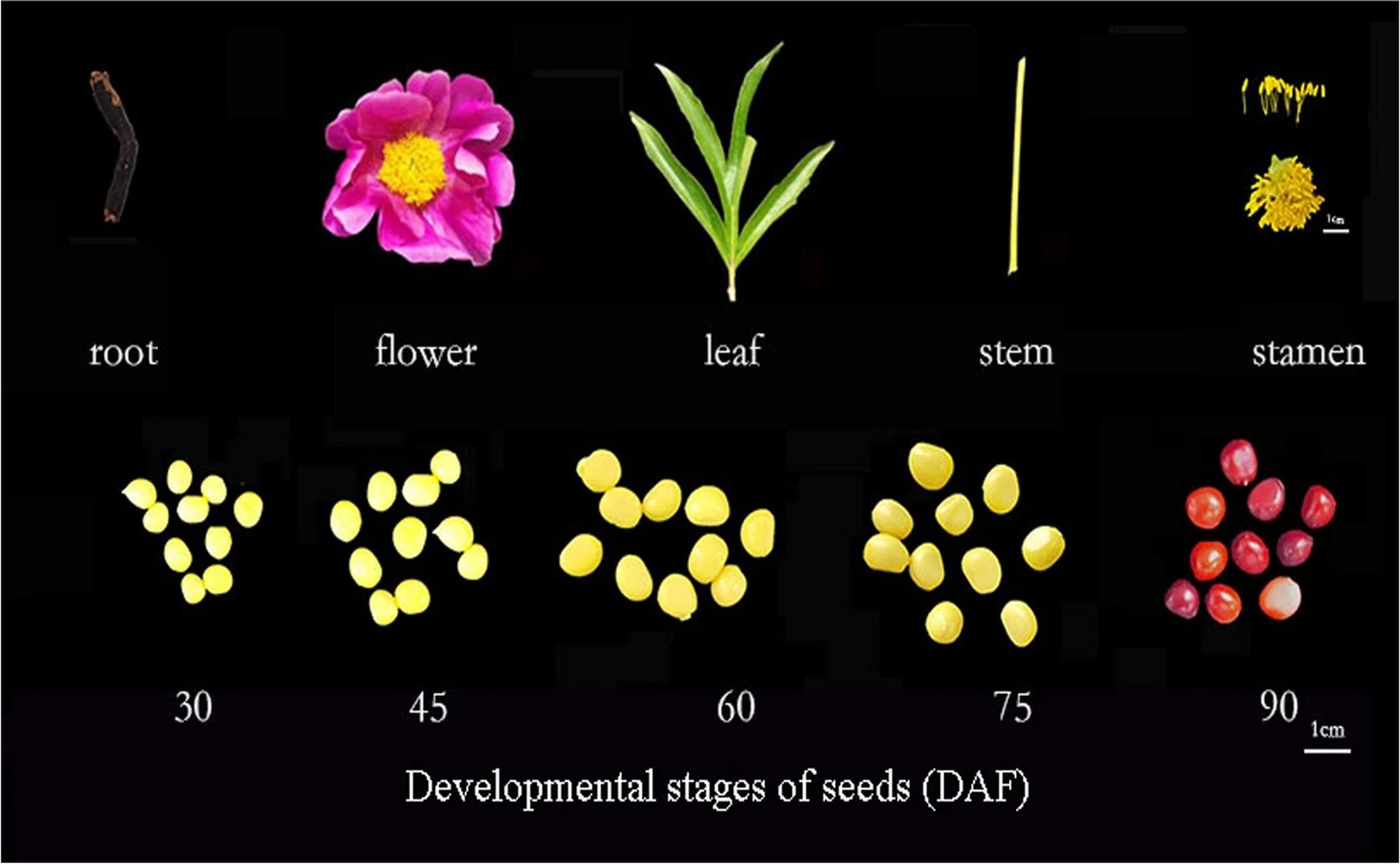
Various tissues from the herbaceous peony, Paeonia lactiflora, were analyzed in this study to reveal that key genes for oil production and storage are most highly expressed in developing seeds compared to other vegetative and floral organs.

Image adapted from: Xu et al. / CC BY (Source)

Key Findings

  • Researchers at Yangzhou University studied the transcriptome of Paeonia lactiflora seeds to understand their gene functions and molecular mechanisms
  • They identified 4905 transcripts linked to lipid metabolism, including key genes involved in triacylglycerol (TAG) biosynthesis and storage
  • The study found that the expression of these genes varied during seed development, providing insights valuable for breeding oil varieties and enhancing oil production
The herbaceous peony (Paeonia lactiflora Pall.) is well-known in China for its medicinal root, Radix Paeoniae Alba. Recently, its seeds have garnered attention for their high content of unsaturated fatty acids, positioning it as a promising oilseed plant. However, the full-length transcriptome sequencing of Paeonia lactiflora has not been thoroughly explored, hindering our understanding of its gene functions and molecular mechanisms. Researchers at Yangzhou University aimed to bridge this gap by conducting a comprehensive study on the transcriptome of Paeonia lactiflora seeds[1]. The researchers obtained 484,931 Reads of Inserts (ROI) sequences and 1,455,771 full-Length non-chimeric reads (FLNC). These sequences were used for various analyses, including CDS prediction, TF analysis, SSR analysis, and lncRNA identification. Gene function annotation and gene structure analysis revealed that 4905 transcripts were linked to lipid metabolism biosynthesis pathways, involving 28 enzymes. Notably, 10 oleosin (OLE) and 5 diacylglycerol acyltransferase (DGAT) gene members were identified after removing redundant sequences. These genes play crucial roles in the biosynthesis and storage of triacylglycerol (TAG), a type of fat found in seeds. The study also analyzed the physicochemical properties and secondary structures of these gene families, finding similarities within each family. Phylogenetic analysis showed that the distribution of OLE and DGAT family members in Paeonia lactiflora was similar to that in Arabidopsis, a model organism for plant biology. Quantitative real-time polymerase chain reaction (qRT-PCR) analyses revealed that the expression of these genes varied during different seed development stages, initially increasing and then decreasing. These findings provide new insights into the molecular mechanism of TAG biosynthesis and storage during the seedling stage of Paeonia lactiflora. This information is valuable for selecting and breeding oil varieties and understanding the functions of oil storage and lipid synthesis-related genes in this plant. The study builds on previous research into the biosynthesis of unsaturated fatty acids in other oilseed plants. For instance, earlier studies on Paeonia lactiflora 'Hangshao' identified key genes involved in fatty acid biosynthesis and oil accumulation, such as MCAT, KASIII, FATA, SAD, FAD2, FAD3, DGAT, and OLE[2]. Similarly, research on Prunus sibirica and Lindera glauca has provided insights into the transport mechanisms and regulatory pathways that enhance oil production in developing seeds[3][4]. These studies collectively contribute to a better understanding of the molecular mechanisms underlying oil biosynthesis in various plant species. By integrating findings from these earlier studies, the current research at Yangzhou University not only expands our knowledge of Paeonia lactiflora but also provides a foundation for future research on oilseed plants. The identification of key genes and their expression patterns during seed development offers valuable information for breeding programs aimed at improving oil yield and quality. Moreover, understanding the molecular mechanisms of TAG biosynthesis and storage can lead to the development of new strategies for enhancing oil production in other economically important oilseed plants. In summary, the comprehensive transcriptome analysis of Paeonia lactiflora conducted by Yangzhou University researchers has shed light on the molecular mechanisms of lipid metabolism in this promising oilseed plant. These findings, combined with insights from previous studies, pave the way for future research and breeding efforts aimed at optimizing oil yield and quality in Paeonia lactiflora and other oilseed plants.

GeneticsBiochemPlant Science

References

Main Study

1) Identification of key genes for triacylglycerol biosynthesis and storage in herbaceous peony (Paeonia lactifolra Pall.) seeds based on full-length transcriptome.

Published 15th June, 2024

https://doi.org/10.1186/s12864-024-10513-w


Related Studies

2) Identification of genes associated with the biosynthesis of unsaturated fatty acid and oil accumulation in herbaceous peony 'Hangshao' (Paeonia lactiflora 'Hangshao') seeds based on transcriptome analysis.

https://doi.org/10.1186/s12864-020-07339-7


3) Comprehensive evaluation of fuel properties and complex regulation of intracellular transporters for high oil production in developing seeds of Prunus sibirica for woody biodiesel.

https://doi.org/10.1186/s13068-018-1347-x


4) Integrated analysis of 454 and Illumina transcriptomic sequencing characterizes carbon flux and energy source for fatty acid synthesis in developing Lindera glauca fruits for woody biodiesel.

https://doi.org/10.1186/s13068-017-0820-2


Related Articles

An unhandled error has occurred. Reload 🗙