
New Feathered Dinosaur Species Discovered from the Late Cretaceous Period
Greg Howard
15th June, 2024


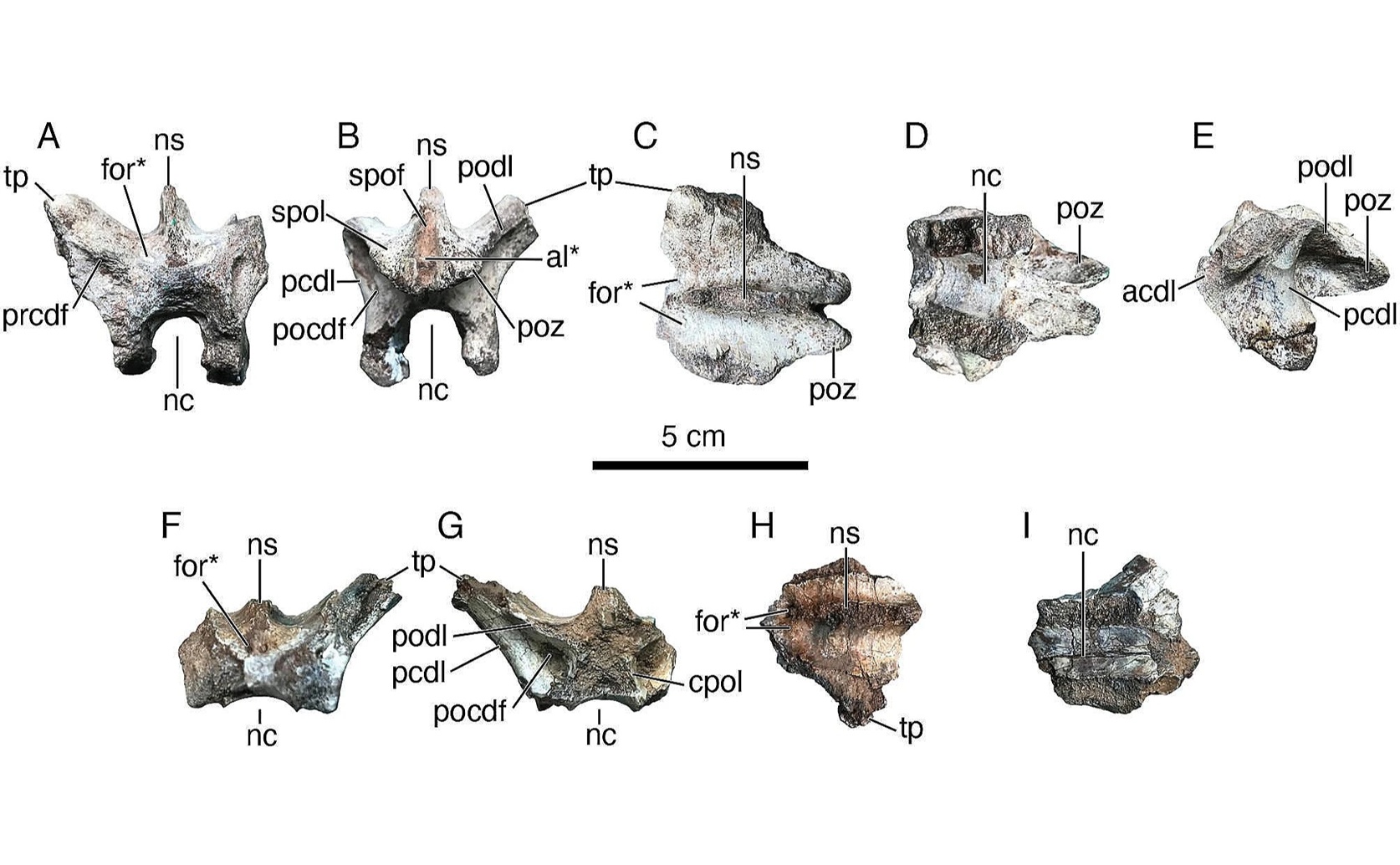
The sacral and caudal vertebrae of Diuqin lechiguanae exhibit unique anatomical features, including paired foramina on the neural arches (a, c, f, h) and a horizontal accessory lamina in the last sacral vertebra (b), that distinguish it as a new dinosaur species.
Key Findings
- The study from Universidad Nacional del Comahue focuses on unenlagiine paravians, a group of theropod dinosaurs from Gondwana
- Researchers found that unenlagiine paravians were more diverse and widespread than previously thought
- The study provides new evidence supporting a unique Gondwanan lineage of dromaeosaurids, crucial for understanding the origin of birds
GeneticsAnimal ScienceEvolution
References
Main Study
1) Diuqin lechiguanae gen. et sp. nov., a new unenlagiine (Theropoda: Paraves) from the Bajo de la Carpa Formation (Neuquén Group, Upper Cretaceous) of Neuquén Province, Patagonia, Argentina
Published 14th June, 2024
https://doi.org/10.1186/s12862-024-02247-w
Related Studies
2) The earliest dromaeosaurid theropod from South America.
Journal: Nature, Issue: Vol 437, Issue 7061, Oct 2005
3) Potential for Powered Flight Neared by Most Close Avialan Relatives, but Few Crossed Its Thresholds.
4) Postcranial skeletal anatomy of the holotype and referred specimens of Buitreraptor gonzalezorum Makovicky, Apesteguía and Agnolín 2005 (Theropoda, Dromaeosauridae), from the Late Cretaceous of Patagonia.
Related Articles
 31st May, 2024 | Greg Howard