Improving drying methods boosts quality of pre-cut onion slices

Jenn Hoskins
13th November, 2025

Improving drying methods boosts quality of pre-cut onion slices

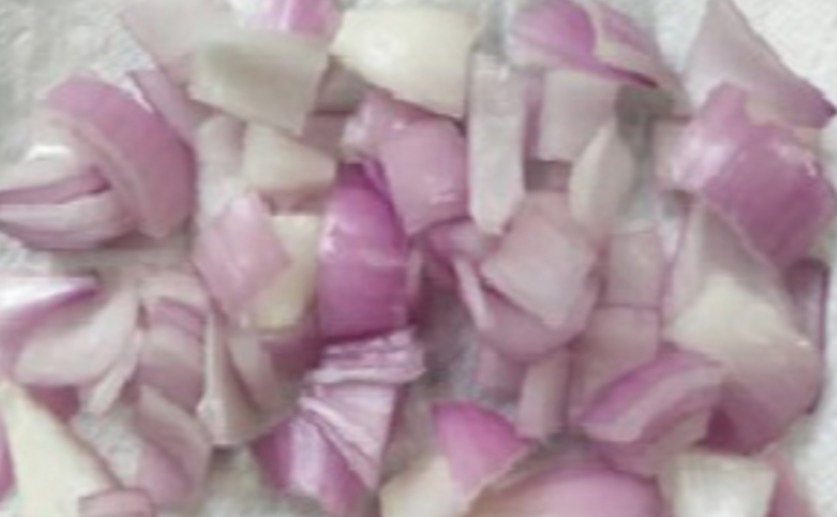
Onion slices from the study.

Image adapted from: Faisal et al. / CC BY (Source)

Key Findings

  • In Kashmir, researchers optimized a fluidized bed drying process for onion slices to improve efficiency and quality
  • A drying temperature of 70°C, 20% salt concentration, and 3mm bed thickness yielded the best results, preserving color, vitamin C, and overall acceptability
  • Storing the dried onions for three months in either LDPE or HDPE packaging maintained quality, with HDPE showing slightly better preservation of nutrients and crispness
Onion dehydration is a common practice to extend shelf life and enable year-round availability, but maintaining quality during the drying process is a significant challenge. Traditional methods can lead to loss of colour, flavour, and nutritional value. Researchers at the University of Agricultural Sciences and Technology, Kashmir, recently conducted a study[1] to find the best way to dry onion slices quickly while preserving their quality, using a technique called fluidized bed drying. Fluidized bed drying involves suspending onion slices in a stream of hot air, which efficiently removes moisture. The study focused on identifying the ideal combination of three key factors: drying temperature, salt (NaCl) concentration, and the thickness of the onion bed. Salt is often used in food preservation, and can affect the drying rate and final product quality. The researchers used a statistical method called Response Surface Methodology (RSM) combined with Central Composite Rotational Design (CCRD) to systematically test different combinations of these factors. RSM allows scientists to efficiently explore a wide range of conditions and identify the optimal settings. The researchers measured several indicators of quality: dehydration ratio (how much water was removed), rehydration ratio (how well the dried onion reabsorbed water), colour change, ascorbic acid content (vitamin C), and overall acceptability based on sensory evaluation. They found that a drying temperature of 70°C, a salt concentration of 20%, and a bed thickness of 3mm produced the best results, achieving a ‘desirability’ score of 0.637 – a metric combining all quality parameters. Under these conditions, the onion slices had a dehydration ratio of 6.76, a rehydration ratio of 5.87, a colour change of 4.85, an ascorbic acid content of 8.06, and an overall acceptability score of 4.02. Faster drying rates were achieved with higher temperatures, higher salt concentrations, and thinner onion beds. This is because increased temperature provides more energy for water evaporation, salt can bind water and alter the drying process, and a thinner bed allows for more direct contact between the hot air and the onion slices. The study also investigated which mathematical model best described how the onions lost moisture over time. Of several models tested, the Page model provided the most accurate fit to the experimental data, allowing for prediction of drying behaviour under different conditions. The findings build upon earlier work investigating different drying methods for onions. For example, studies have shown that pretreating onions with potassium metabisulphite can help preserve colour during drying[2]. This research expands on that by demonstrating how salt concentration can also influence colour retention within a fluidized bed system. Furthermore,[2] found that heat pump drying at 50°C and microwave-assisted convective drying at 240W offered comparatively better quality than convective drying at 60°C, highlighting the importance of temperature control. The current study reinforces this, pinpointing 70°C as optimal within the specific context of fluidized bed drying and salt concentration. To assess long-term preservation, the researchers stored the optimized dried onion slices for three months in packaging made of either LDPE (low-density polyethylene) or HDPE (high-density polyethylene). They monitored moisture content, water activity (a measure of how much water is available for microbial growth), ascorbic acid content, colour change, and crispiness. The results indicated that the optimized drying process effectively maintained the quality of the onion slices during storage, regardless of the packaging material used.

VegetablesAgriculture

References

Main Study

1) Optimization of fluidized bed drying process parameters and quality evaluation of ready to use onion slices

Published 10th November, 2025

https://doi.org/10.1038/s41598-025-25036-x


Related Studies

2) Impact of Pretreatment and Drying Methods on Quality Attributes of Onion Shreds.

Journal: Food technology and biotechnology, Issue: Vol 53, Issue 1, Mar 2015


Related Articles

An unhandled error has occurred. Reload 🗙