Detailed genetic map created for the Spottedtail morwong

Jenn Hoskins
8th November, 2025

Detailed genetic map created for the Spottedtail morwong

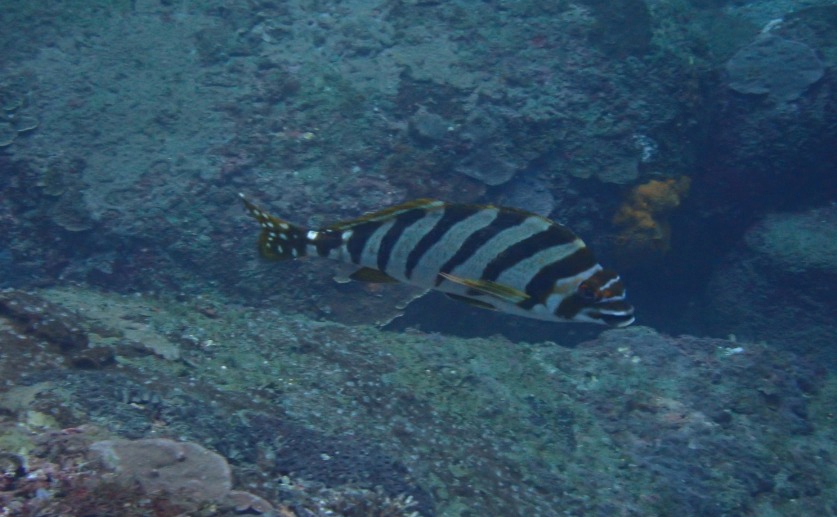
Spottedtail morwong (Cheilodactylus zonatus), a commercially important fish species for which this study presents the first chromosome-level genome assembly.

Photographer: Lu i-chi / CC BY (Source)

Key Findings

  • Researchers created the first complete genetic blueprint (genome) for the spottedtail morwong, a valuable fish in the western Pacific Ocean
  • The genome assembly is highly accurate and complete, containing approximately 26,083 genes with nearly 90% having known functions
  • This new genome will help improve breeding programs for the fish, potentially increasing growth, disease resistance, and flesh quality, and clarify its evolutionary relationships with other species
The spottedtail morwong is a commercially valuable fish species found in the western Pacific Ocean, prized for its flavour and nutritional content. Despite its economic importance, research into its biology and potential for aquaculture has been limited by the absence of a detailed genetic blueprint – a high-quality genome. Understanding the genome of a species is fundamental to improving breeding programs and understanding its evolutionary history. Researchers at Qingdao University have now addressed this gap by creating the first chromosome-level genome assembly for the spottedtail morwong, Cheilodactylus zonatus[1]. The study involved using advanced DNA sequencing technologies, specifically PacBio sequencing and Hi-C technology, to map out the complete genetic material of the fish. PacBio sequencing generates very long DNA reads, which are crucial for assembling large and complex genomes. Hi-C technology then helps to organise these reads into the correct order, corresponding to the fish’s 24 chromosomes. The resulting genome assembly is 612.58 million base pairs in length, with a high degree of accuracy and completeness. To assess this, the researchers used a metric called ‘BUSCO’, which evaluates how well the assembly contains a set of essential genes found in most organisms; the assembly scored 98.2% on this measure. They were able to identify and locate approximately 26,083 genes, with almost 90% of these having a known function. This new genome provides a crucial foundation for future research. It allows scientists to investigate the genetic basis of important traits in the spottedtail morwong, such as growth rate, disease resistance, and flesh quality. This information can then be used to selectively breed fish with desirable characteristics, improving the efficiency and sustainability of aquaculture. Interestingly, the family to which the spottedtail morwong belongs, Cheilodactylidae, has a complex evolutionary history. Previous research using mitochondrial DNA – DNA found in cellular structures responsible for energy production – suggested that several species within this family, including some from South Africa, may be more closely related to a different family, Latridae[2]. This finding challenged the traditional classification of these fish and proposed a potential expansion of the Latridae family to include members of Cheilodactylidae. The genetic distance observed in the earlier study prompted a reassessment of the taxonomic boundaries within these groups. The availability of a complete genome for C. zonatus now allows for a more detailed comparison with other fish species, including those previously considered closely related. By comparing the entire genome, rather than just a few genes, researchers can gain a clearer understanding of the evolutionary relationships between these fish and test the hypothesis proposed in[2]. The genome assembly will also help to clarify the placement of Cheilodactylus species that require taxonomic reassignment, as highlighted in[2]. Furthermore, studies on other commercially important fish, like the giant grouper and leopard coral grouper, have demonstrated the power of complete genome assemblies for advancing aquaculture[3][4]. These studies, like the current one, have leveraged advances in sequencing technology to create high-quality genomes that facilitate genomic breeding programs. The leopard coral grouper genome, for example, revealed gene family expansions related to the immune system, providing insights into disease resistance[4]. Similar investigations can now be undertaken with the spottedtail morwong, potentially leading to the development of more resilient and productive aquaculture strains.

GeneticsMarine BiologyEvolution

References

Main Study

1) Chromosome-level genome assembly and annotation of the spottedtail morwong (Cheilodactylus zonatus)

Published 4th November, 2025

https://doi.org/10.1038/s41597-025-06029-x


Related Studies

2) Molecular phylogeny of the Cheilodactylidae and Latridae (Perciformes: Cirrhitoidea) with notes on taxonomy and biogeography.

Journal: Molecular phylogenetics and evolution, Issue: Vol 30, Issue 1, Jan 2004


3) Telomere-to-telomere gapless genome assembly of the giant grouper (Epinephelus lanceolatus).

https://doi.org/10.1038/s41597-024-04219-7


4) De novo sequencing and chromosomal-scale genome assembly of leopard coral grouper, Plectropomus leopardus.

https://doi.org/10.1111/1755-0998.13207


Related Articles

An unhandled error has occurred. Reload 🗙