Shrimp Group’s Structure and DNA Variation Revealed

Jenn Hoskins
2nd September, 2025

Shrimp Group’s Structure and DNA Variation Revealed
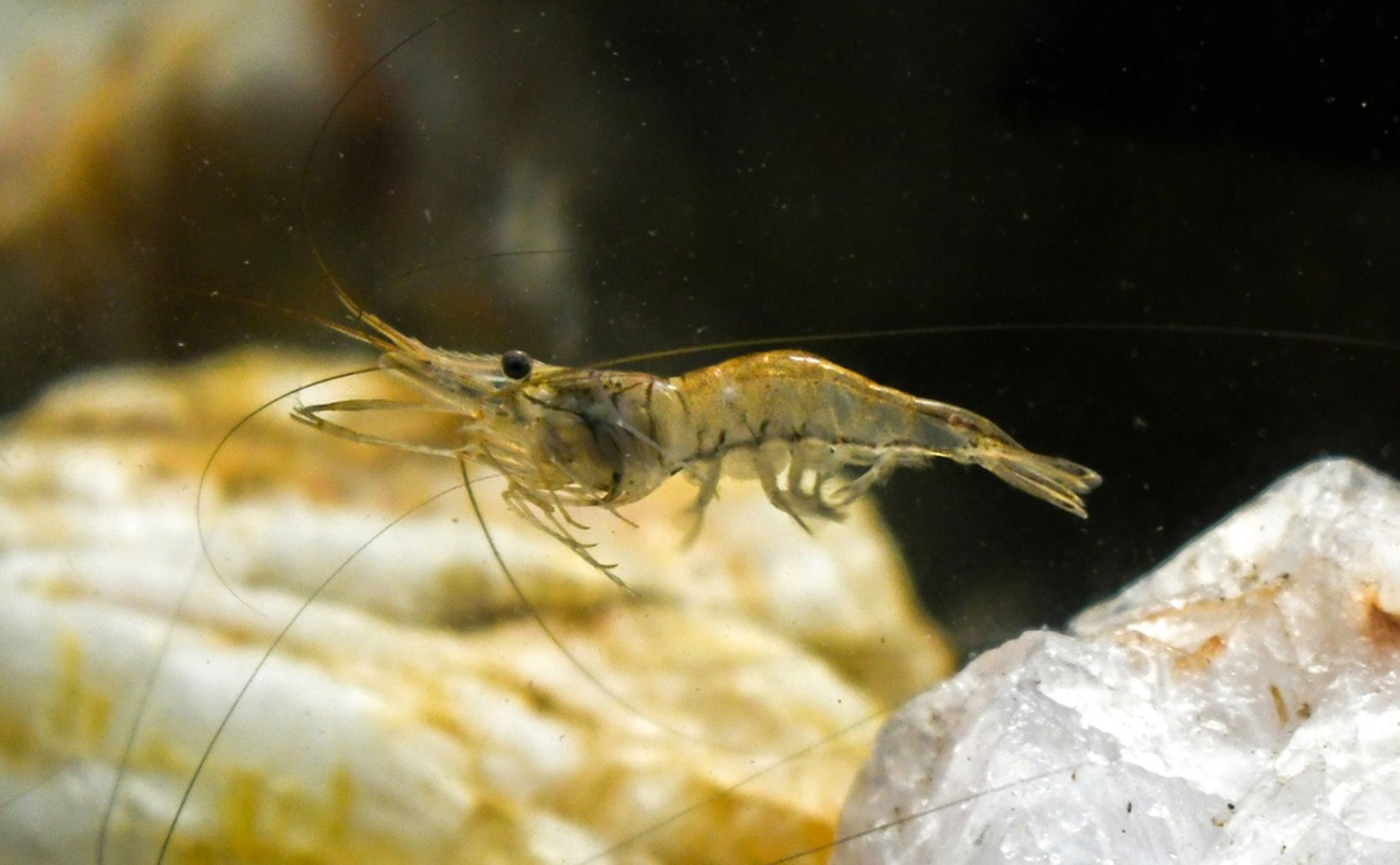
Amazon river prawn (Macrobrachium amazonicum)

Key Findings

  • This study, focused on freshwater prawns in Brazil, confirmed Macrobrachium pantanalense as a distinct species from M. amazonicum using detailed genetic analysis
  • Genetic variations within M. amazonicum itself revealed three distinct lineages, suggesting potential ongoing evolution towards new species
  • Inland and coastal populations of M. amazonicum showed significant genetic differences, indicating limited breeding between these groups and possible reproductive isolation
Freshwater prawns of the genus Macrobrachium are a globally distributed and economically important group of crustaceans, found in a variety of freshwater and coastal saltwater habitats. Identifying the different species within this genus can be challenging due to subtle physical differences and a wide geographical spread, leading to ongoing taxonomic debate. Historically, classification relied heavily on observable physical characteristics, but this approach often proved ambiguous, particularly when dealing with variations within a single species[2]. Recent advances in genetic analysis have begun to clarify these relationships, but for some species complexes, like that surrounding Macrobrachium amazonicum, definitive answers remained elusive. Researchers at the Federal University of Pará[1] recently undertook a study to resolve the taxonomic status of M. amazonicum and a closely related species, M. pantanalense. The core problem was uncertainty surrounding whether M. pantanalense was truly a distinct species, or simply a regional variation of M. amazonicum. Previous studies using mitochondrial DNA – genetic material found in cellular structures – provided conflicting results, making a clear determination impossible. The study focused on analyzing genetic differences between populations of these prawns using a technique called Single Nucleotide Polymorphism (SNP) analysis. SNPs are variations in single building blocks of DNA, and by examining thousands of these across different individuals, scientists can build a detailed picture of genetic relationships. The researchers collected prawns from four distinct locations: Santarém and Mosqueiro in the Amazon region, Bela Vista de Goiás (representing M. pantanalense), and an isolated population in Tucuruí. They then used a method called ddRAD sequencing to identify nearly a thousand reliable SNPs for comparison. The results strongly supported the classification of M. pantanalense as a separate species from M. amazonicum. Unlike previous mitochondrial DNA analyses, the SNP data consistently showed significant genetic differences between the two groups. This provides the first robust molecular evidence confirming its distinct taxonomic status. Furthermore, the study revealed substantial genetic differences within M. amazonicum itself, identifying three distinct genetic lineages (Clades I, II, and III). Interestingly, the genetic structure within M. amazonicum correlated with habitat. Prawns from inland freshwater habitats in the Amazon differed significantly from those in coastal basins, suggesting a degree of reproductive isolation and potential ongoing evolutionary divergence. The researchers propose that Clades I and III of M. amazonicum may be in the process of speciation – the formation of new and distinct species – highlighting the need for further investigation. This research builds upon earlier work that highlighted the complex taxonomy of Macrobrachium species, particularly in regions with diverse habitats like Indochina[3]. The high degree of genetic diversity observed in the Mekong and Chao Phraya river basins demonstrates the potential for ongoing speciation in these environments, mirroring the patterns seen in the Amazon. Similarly, studies on M. olfersii along the Americas[4] demonstrated how morphological variation can mask underlying genetic similarities, emphasizing the importance of molecular data in resolving taxonomic ambiguities. The current study, like the work on the M. pilimanus group[5], utilized multiple genetic markers to provide a more comprehensive understanding of species boundaries and evolutionary relationships. The findings from the Federal University of Pará contribute significantly to our understanding of Macrobrachium evolution and highlight the power of SNP analysis in resolving complex taxonomic issues. The confirmation of M. pantanalense as a distinct species is crucial for conservation efforts and sustainable management of prawn populations in South America.

GeneticsAnimal ScienceEvolution

References

Main Study

1) Structure and genetic diversity of Macrobrachium Amazonicum complex

Published 29th August, 2025

https://doi.org/10.1038/s41598-025-17666-y


Related Studies

2) Molecular Cytogenetic Analysis in Freshwater Prawns of the Genus Macrobrachium (Crustacea: Decapoda: Palaemonidae).

https://doi.org/10.3390/ijms21072599


3) Evidence of cryptic diversity in freshwater Macrobrachium prawns from Indochinese riverine systems revealed by DNA barcode, species delimitation and phylogenetic approaches.

https://doi.org/10.1371/journal.pone.0252546


4) Molecular analysis of the freshwater prawn Macrobrachium olfersii (Decapoda, Palaemonidae) supports the existence of a single species throughout its distribution.

https://doi.org/10.1371/journal.pone.0054698


5) Molecular phylogeny and species delimitation of the freshwater prawn Macrobrachium pilimanus species group, with descriptions of three new species from Thailand.

https://doi.org/10.7717/peerj.10137


Related Articles

An unhandled error has occurred. Reload 🗙