How Different Handling Methods Affect Behavior: Hands vs. Huts and Tunnels

Jim Crocker
20th May, 2025

How Different Handling Methods Affect Behavior: Hands vs. Huts and Tunnels

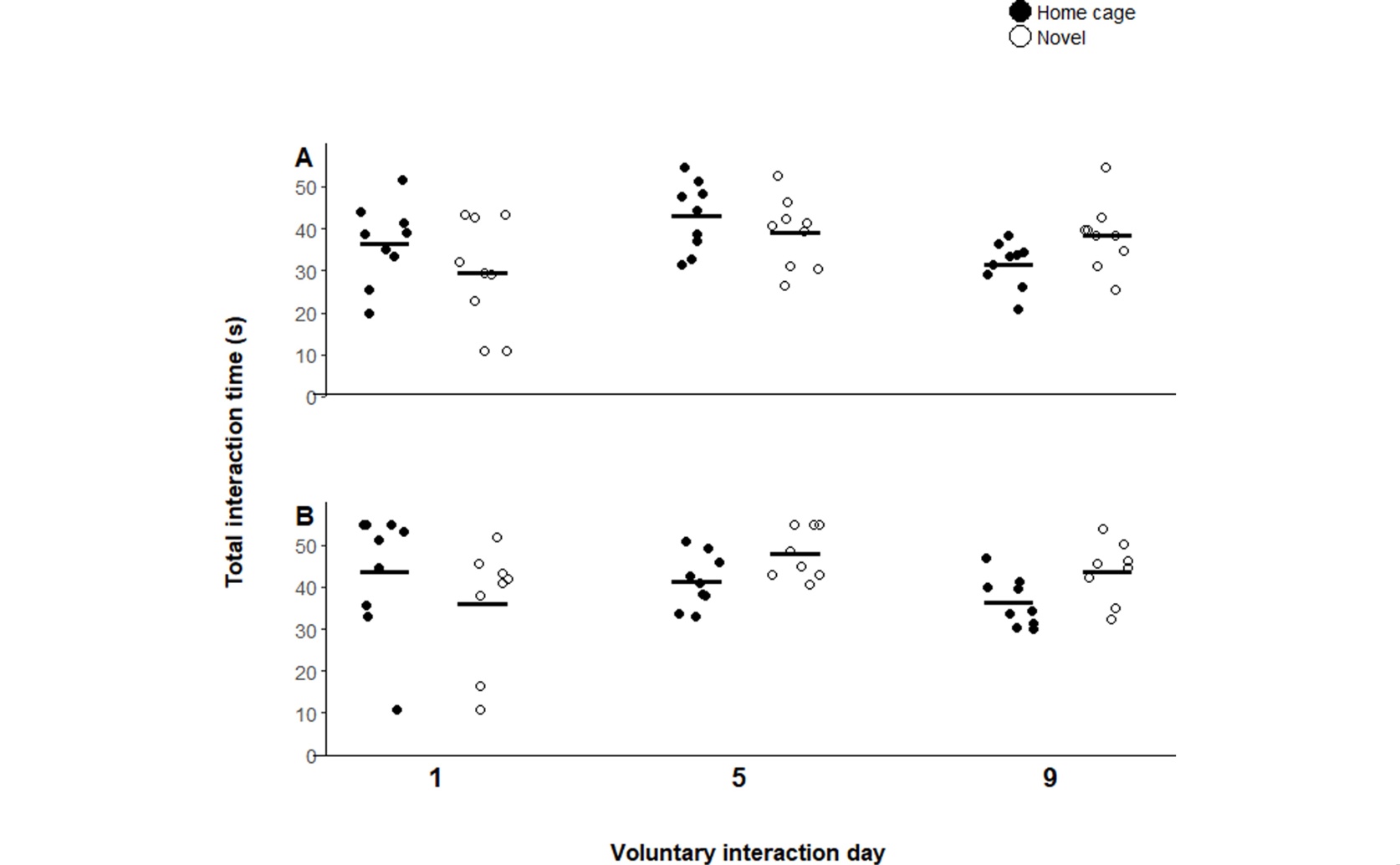
Mice handled with upturned huts (B) displayed greater voluntary interaction with the handler compared to tunnel-handled mice (A), with the use of a familiar home-cage object significantly enhancing interaction levels during the first day of testing.

Image adapted from: Bodnar et al. / CC BY (Source)

Key Findings

  • Researchers in Canada and Japan discovered that using cage huts to handle lab mice improves their interaction with handlers
  • Mice handled with huts showed more voluntary interaction, indicating reduced stress compared to traditional tail handling and other methods
  • All improved handling techniques, including hut handling, maintained similar anxiety levels in mice, supporting better research reliability
Handling laboratory mice is a routine part of scientific research, but the method used can significantly impact both the animals' welfare and the quality of experimental data. Traditional tail handling, where mice are picked up by their tails, has been shown to increase stress and anxiety in these animals[2]. Elevated stress levels can not only compromise the well-being of the mice but also introduce variability in research outcomes, potentially skewing results. To address these concerns, researchers are exploring alternative handling methods that minimize stress and improve animal welfare. A recent study conducted by researchers at the University of British Columbia, Canada, and Tokai University School of Medicine, Japan, investigates the effectiveness of different handling techniques, including a novel method using existing mouse huts, compared to established alternatives like cupping and tunnel handling[1]. The goal was to determine which method best reduces stress and anxiety in mice, thereby enhancing both their welfare and the reliability of scientific data. In previous research, handling mice with a tunnel—a small tube familiar to the mice from their home cages—has been shown to decrease anxiety and increase the willingness of mice to interact with handlers compared to tail handling[2]. Another study highlighted that reducing handling stress can improve the accuracy of metabolic measurements, such as glucose tolerance, by lowering stress-induced variables like blood glucose and corticosterone levels[3]. Additionally, tail handling was found to lead to more anhedonic responses, which are indicative of a depressive-like state in mice, compared to tunnel handling[4]. These findings collectively emphasize the importance of refining handling methods to improve both animal welfare and the integrity of scientific research. The main study expanded on these earlier findings by comparing three handling methods: cupping, tunnel handling, and a new approach using upturned mouse huts. Cupping involves gently scooping mice into a container, while tunnel handling uses a familiar tunnel from the mice's home cage. The hut method utilizes existing structures in the mouse cages, potentially offering a more practical alternative for research facilities already using huts. In the study, 51 mice were randomly assigned to one of the three handling methods over nine days. Additionally, the presence of a tunnel or hut in the cages was varied to assess whether familiar handling objects from the home environment influenced the mice's behavior. The researchers measured the mice's voluntary interaction with handlers and their anxiety levels using the elevated plus maze (EPM) test, a common method for assessing anxiety in rodents by measuring their willingness to explore open arms of a plus-shaped apparatus. The results showed that mice handled with huts spent the most time interacting with handlers, followed by those handled with tunnels and then those cupped. Specifically, hut-handled mice interacted for an average of 41.7 seconds, tunnel-handled mice for 36.1 seconds, and cupped mice for 33.0 seconds. Initially, mice were more willing to interact when handled with familiar objects, such as huts present in their home cages, but this familiarity effect diminished by the fifth day of handling. Interestingly, there was no significant difference in anxiety levels among the different handling methods as measured by time spent in the open arms of the EPM. These findings suggest that hut handling is an effective method for reducing stress and increasing voluntary interaction in laboratory mice, offering a practical alternative for facilities that already employ huts in their mouse cages. Unlike tail handling, which has been associated with increased anxiety and depressive-like behaviors[2][4], hut and tunnel handling promote a more positive interaction experience for the mice. Furthermore, the lack of difference in anxiety levels across handling methods in the EPM test indicates that all refined handling methods, including the new hut method, can effectively mitigate stress-related behaviors compared to traditional tail handling. The study builds on earlier research by reinforcing the benefits of minimizing handling stress. For instance, previous work demonstrated that handling methods like tunneling not only reduce anxiety but also improve metabolic measurements by lowering stress-induced variables such as blood glucose levels[3]. By introducing the hut handling method, the current study provides another viable option for researchers aiming to enhance animal welfare without requiring significant changes to existing laboratory setups. This is particularly important for facilities that prioritize practicality and efficiency alongside ethical considerations. Moreover, the study's findings align with the broader movement in scientific research towards refining animal handling practices to ensure high standards of welfare and data quality. Reducing handling-induced stress is crucial for studies where stress could confound results, such as those investigating metabolic functions or behavioral responses[3]. By adopting handling methods that mice find less stressful, researchers can obtain more reliable and consistent data, ultimately advancing scientific understanding while upholding ethical standards. Incorporating hut handling into laboratory practices could also address some of the practical challenges associated with implementing tunnel handling. Since huts are already a common component of mouse cages, this method does not require additional equipment or significant modifications to existing setups, making it an attractive option for many research facilities. This practicality, combined with the demonstrated benefits in reducing stress and enhancing voluntary interaction, underscores the potential of hut handling as a preferred method in laboratory settings. Overall, the study highlights the importance of refining animal handling techniques to improve both the welfare of laboratory mice and the quality of scientific research. By comparing different handling methods and introducing the hut handling approach, the research provides valuable insights into how simple changes in routine practices can lead to significant improvements in animal well-being and research outcomes. As the scientific community continues to prioritize ethical treatment of research animals, studies like this one play a crucial role in guiding best practices and fostering an environment where both animals and scientific inquiry can thrive.

Animal Science

References

Main Study

1) The effects of handling on mouse behavior: cupped hands versus familiar or novel huts or tunnels

Published 19th May, 2025

https://doi.org/10.1371/journal.pone.0323785


Related Studies

2) Reducing mouse anxiety during handling: effect of experience with handling tunnels.

https://doi.org/10.1371/journal.pone.0066401


3) Mouse handling limits the impact of stress on metabolic endpoints.

https://doi.org/10.1016/j.physbeh.2015.06.021


4) Handling method alters the hedonic value of reward in laboratory mice.

https://doi.org/10.1038/s41598-018-20716-3


Related Articles

An unhandled error has occurred. Reload 🗙