Strawberry Guava Compounds Modulate Human Pain Channels

Jenn Hoskins
27th March, 2025

Strawberry Guava Compounds Modulate Human Pain Channels

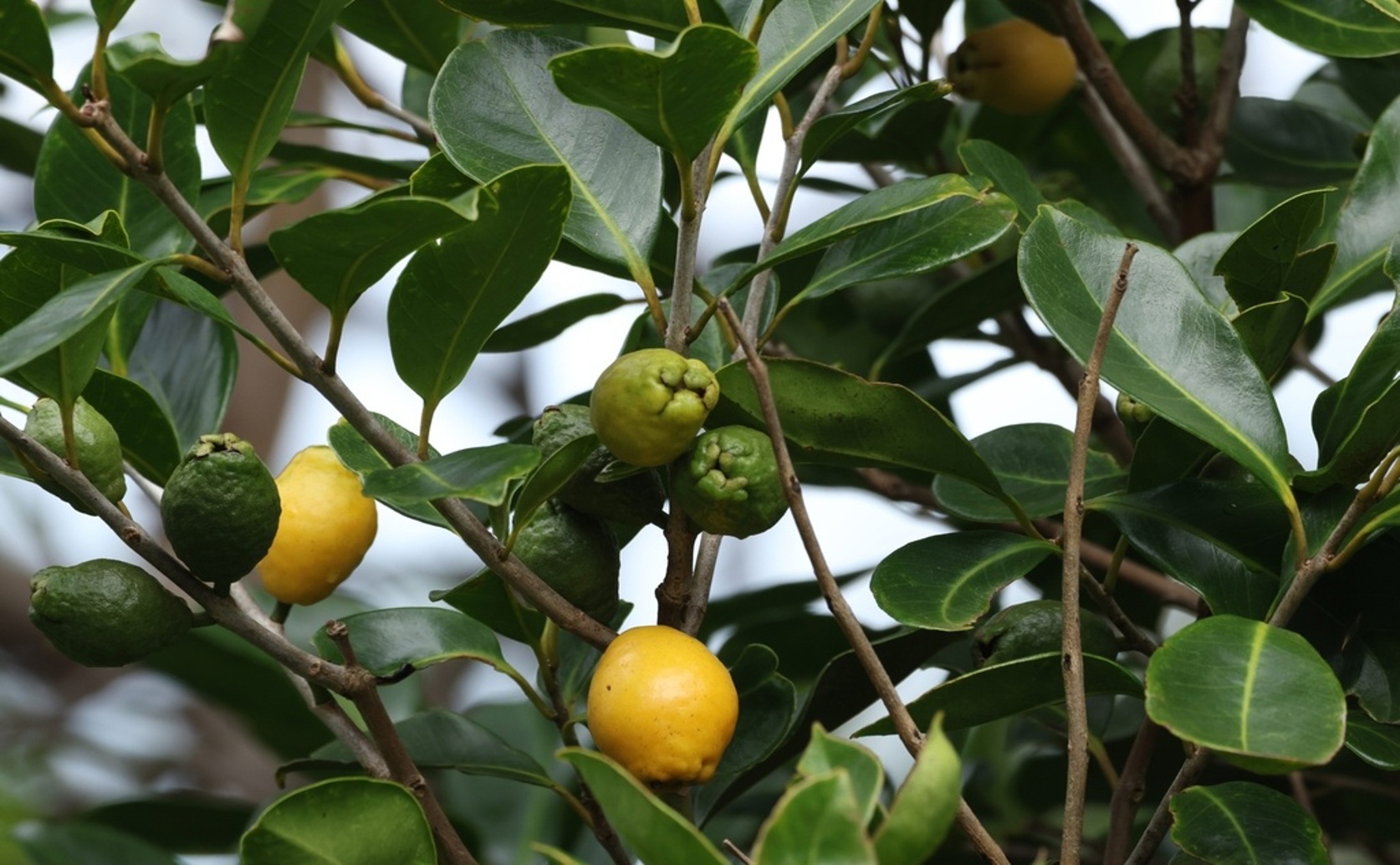
Strawberry-Guava (Psidium cattleyanum)

Photo adapted from: Damien Wallace / CC BY (Source)

Key Findings

  • Researchers in Piacenza, Italy, found that strawberry guava is rich in healthy natural compounds
  • These compounds interact with pain and inflammation receptors, showing potential for pain management
  • The findings suggest strawberry guava extracts could be used to develop new natural pain relief treatments
Psidium cattleianum, commonly known as strawberry guava, has long been recognized for its medicinal properties, including anti-inflammatory, antioxidant, antimicrobial, and antidiabetic effects. However, despite its traditional uses, the detailed phytochemical composition and the specific biological activities of its extracts have not been thoroughly explored. A recent study conducted by researchers at Università Cattolica del Sacro Cuore in Piacenza, Italy[1], seeks to fill this gap by providing an in-depth analysis of the phenolic compounds in strawberry guava and their interactions with cellular receptors involved in pain and inflammation. The researchers employed advanced techniques such as Ultra-High Performance Liquid Chromatography coupled with Quadrupole Time-of-Flight High-Resolution Mass Spectrometry (UHPLC-QTOF-HRMS) to perform an untargeted profiling of phenolic substances in both the leaves and fruits of Psidium cattleianum. This method allows for the identification and annotation of a vast array of metabolites without prior knowledge of their structures. In total, 469 metabolites were identified, predominantly consisting of flavonoids and phenolic acids. These compounds are known for their health-promoting properties, including antioxidant activity, which helps in neutralizing harmful free radicals in the body. Following the chemical profiling, the study proceeded to quantify the different phenolic subclasses and analyze the data using multivariate techniques. This comprehensive approach not only highlights the diversity of phenolic compounds present in strawberry guava but also sets the stage for understanding their specific biological functions. One of the key findings of the study is the interaction between Psidium cattleianum extracts and TRPA1 cation channels. TRPA1 is a type of transient receptor potential (TRP) channel, which plays a crucial role in sensing environmental stimuli and is implicated in pain perception and inflammation. Previous research has highlighted the importance of TRPA1 in pain mechanisms. For instance, a study on the selective TRPA1 antagonist A-967079 demonstrated its potential in alleviating pain without significant side effects[2]. Building on this, the current study investigates how compounds in strawberry guava interact with TRPA1 channels, potentially offering new avenues for pain management. Using HEK-293 cells, which are human cells commonly used in laboratory studies, the researchers tested the effects of both leaf and fruit extracts of Psidium cattleianum on TRPA1 and another TRP channel, TRPV1. They discovered that the extracts activated and then rapidly desensitized the TRPA1 channels in a concentration-dependent manner. This means that higher concentrations of the extracts led to greater activation of the channels, followed by a decrease in responsiveness over time. The effective concentration (EC50) values were 18 μg/mL for the leaf extract and 30 μg/mL for the fruit extract, indicating the potency of these extracts in activating TRPA1. To understand which specific compounds were responsible for this activity, the researchers conducted molecular docking analysis. This computational technique predicts how small molecules, such as the phenolic compounds identified, bind to a target protein—in this case, the TRPA1 channel. Theaflavin 3,3'-O-digallate emerged as the compound with the highest binding affinity, suggesting it plays a significant role in modulating TRPA1 activity. The binding score (S score) of −9.27 Kcal/mol indicates a strong interaction between this compound and the TRPA1 channel. Additionally, molecular dynamics studies demonstrated that theaflavin 3,3'-O-digallate forms a stable complex with TRPA1, reinforcing its potential as an active agent. Interestingly, the study found that other compounds in the leaf extract had weaker binding interactions compared to those in the fruit extract. This suggests that the fruit may be a more potent source of bioactive phenolics that influence TRPA1 activity. Such selective interactions are crucial for developing targeted therapies with minimal side effects. The findings of this study build upon earlier research on related plant species. For example, a study on Ambrosia maritima identified sesquiterpene lactones that act as partial agonists of PPARγ receptors and TRPA1 channels[3]. This highlights a common theme where plant-derived compounds interact with TRP channels, influencing various physiological processes. Additionally, the review of Psidium species essential oils revealed their diverse biological activities, including anti-inflammatory and antioxidant properties[4]. The current study extends this knowledge by pinpointing specific phenolic compounds in Psidium cattleianum that interact with TRPA1 channels, providing a clearer mechanism of action. Moreover, understanding the interaction between natural compounds and TRP channels is essential for developing new analgesic drugs. Traditional pain medications often come with significant side effects, and there is a continuous search for alternatives that are both effective and safer. By demonstrating that compounds in strawberry guava can modulate TRPA1 without affecting other channels, this research points towards the potential for developing targeted pain relief therapies derived from natural sources. In summary, the study from Università Cattolica del Sacro Cuore offers valuable insights into the phytochemical composition of Psidium cattleianum and elucidates the mechanisms by which its extracts interact with TRPA1 channels. By identifying specific phenolic compounds responsible for these interactions, the research not only enhances our understanding of the medicinal properties of strawberry guava but also opens up possibilities for developing new, natural-based pain management strategies. Further in vivo studies will be necessary to fully realize the therapeutic potential of these findings and to translate them into practical medical applications.

FruitsMedicineBiochem

References

Main Study

1) The Phenolic Signature of Psidium cattleianum Fruits and Leaves Modulates TRPV1 and TRPA1 Transient Receptor Potential Channels: A Metabolomics, In Vitro, and In Silico Study

Published 24th March, 2025

https://doi.org/10.1002/fsn3.70075


Related Studies

2) Selective blockade of TRPA1 channel attenuates pathological pain without altering noxious cold sensation or body temperature regulation.

https://doi.org/10.1016/j.pain.2011.01.049


3) Damsin and neoambrosin: Two sesquiterpene lactones with affinity and different activity for PPAR and TRPA1 receptors.

https://doi.org/10.1016/j.bioorg.2024.108032


4) Monoterpenes and Sesquiterpenes of Essential Oils from Psidium Species and Their Biological Properties.

https://doi.org/10.3390/molecules26040965


Related Articles

An unhandled error has occurred. Reload 🗙