
How Light Reflects in Very Salty Waters Throughout the Year
Jenn Hoskins
8th March, 2025


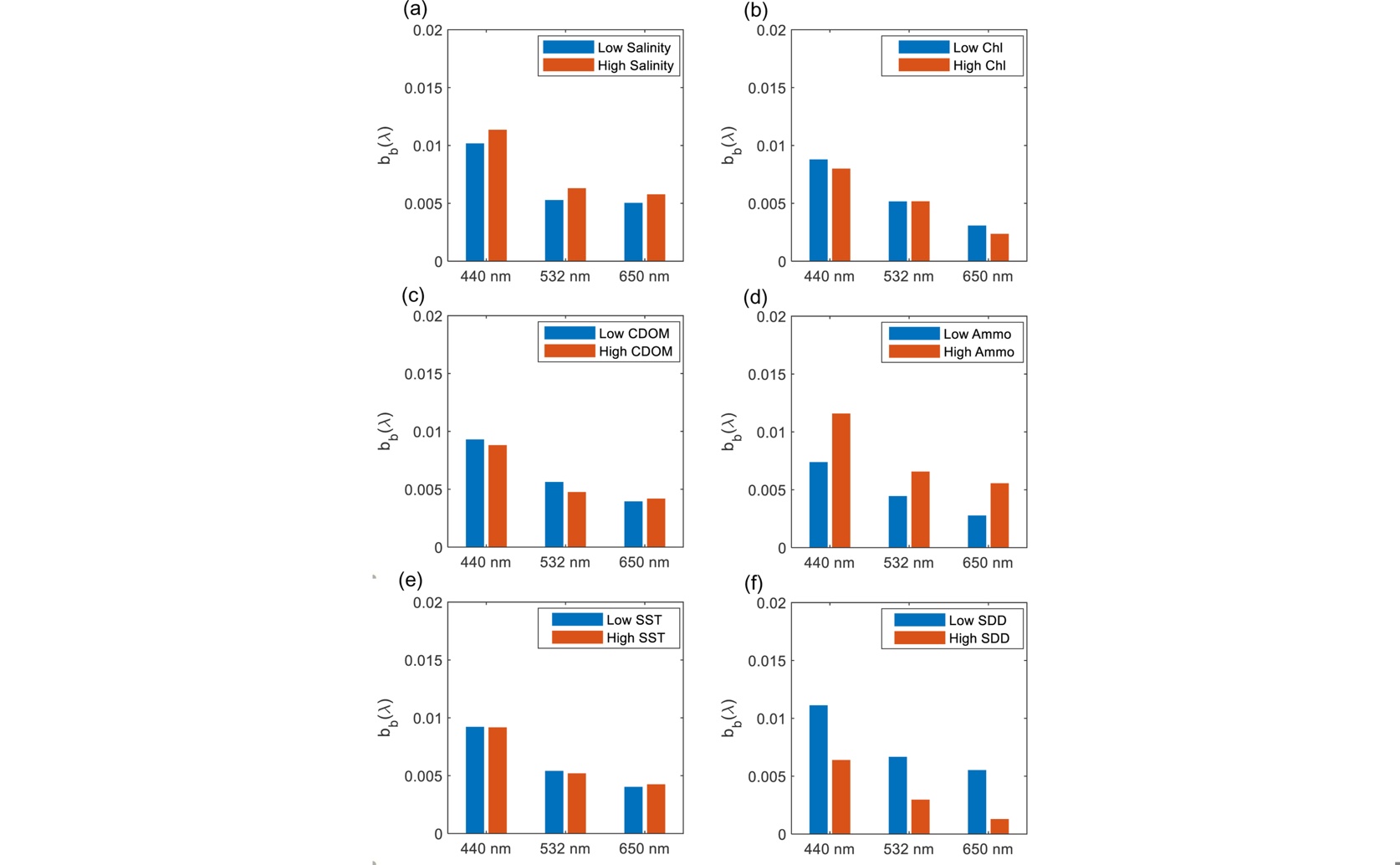
Depth-averaged backscattering shows that increased turbidity, ammonium, and salinity strongly enhance bb(λ), whereas higher chlorophyll‑a, CDOM, and temperature reduce or weakly affect it, confirming that particulate loading is the primary control on backscattering in hypersaline Arabian Gulf waters.
Key Findings
- Researchers in the Arabian Gulf found that cloudy water from suspended particles is the main factor reflecting light back, explaining most of the changes observed
- They also discovered that higher salt levels increase light reflection by up to 19% and that colder winter temperatures lead to more light being reflected due to increased sediment mixing
- Additionally, the study linked algae concentrations to light reflection, providing a way to monitor the health and productivity of marine ecosystems
References
Main Study
1) Seasonal optical backscattering in hypersaline waters: In-situ observations and data analysis
Published 7th March, 2025
https://doi.org/10.1371/journal.pone.0314567
Related Studies
2) Use of optical scattering to discriminate particle types in coastal waters.
Journal: Applied optics, Issue: Vol 44, Issue 9, Mar 2005
Related Articles
 1st March, 2024 | Greg Howard