Improving Papaya Quality Using Different Natural Sweeteners

Jim Crocker
14th October, 2024

Improving Papaya Quality Using Different Natural Sweeteners

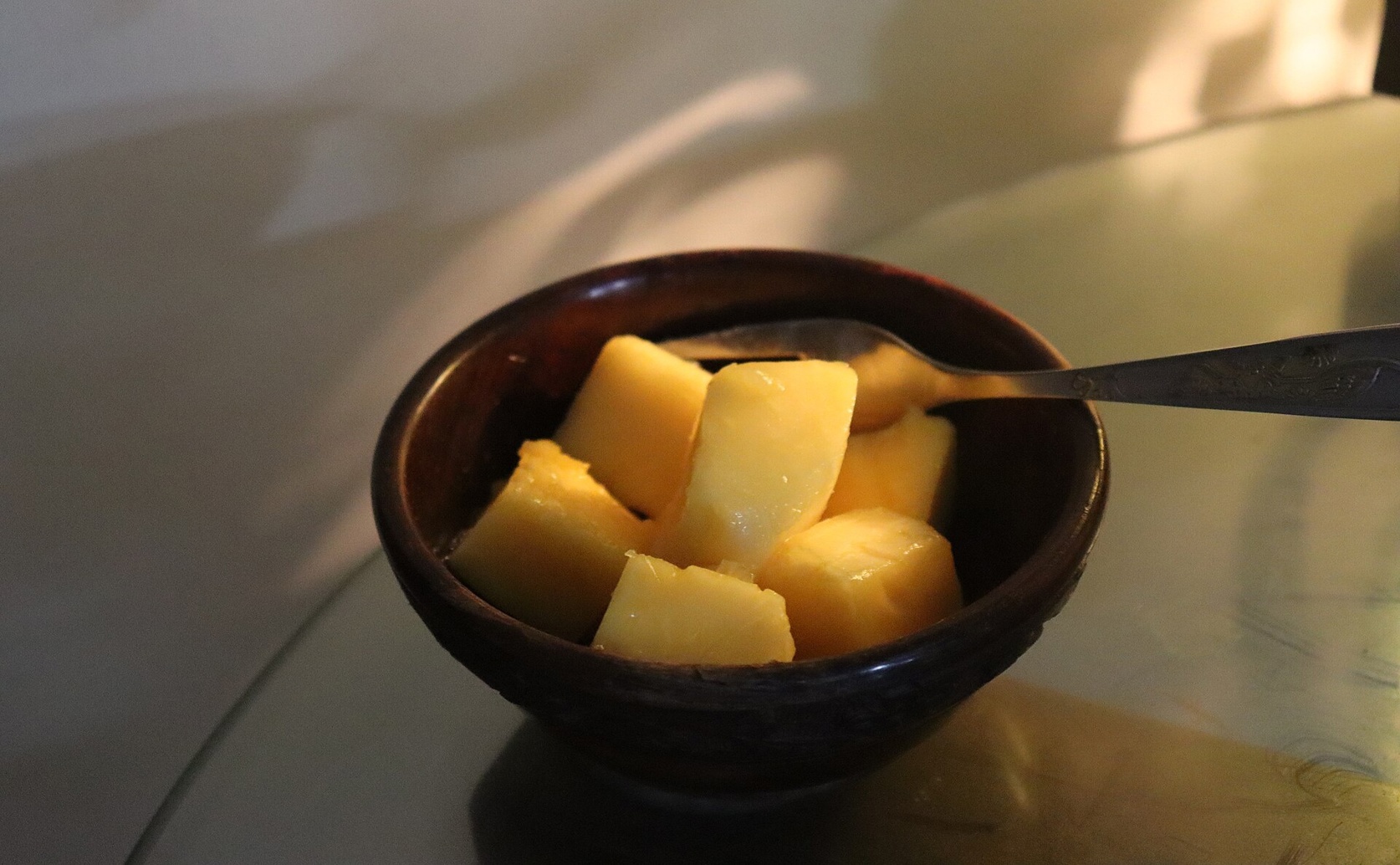
Papaya cubes.

Photo adapted from: Evening42, Wikimedia Commons / CC BY SA (Source)

Key Findings

  • The study from Punjab Agricultural University explored using natural sweeteners like jaggery and honey for osmotic dehydration of papaya cubes
  • Jaggery osmosed papaya cubes showed higher nutritional quality, retaining more phenolics and lycopene compared to honey osmosed cubes
  • Using jaggery as an osmotic agent not only reduces health risks associated with refined sugar but also enhances the nutritional profile of the papaya cubes
Osmotic processes are vital in developing high-quality intermediate moisture food products, which are foods with a reduced water content that still maintain some moisture. This study, conducted by Punjab Agricultural University, investigates the role of osmotic dehydration in reducing health risks associated with refined sugar by using natural sweeteners like jaggery and honey for the osmosis of papaya cubes[1]. Osmotic dehydration is a method used to extend the shelf life of fruits and vegetables by removing water through osmosis. This process not only retains essential vitamins, minerals, color, flavor, and taste but also reduces perishability[2]. Previous studies have optimized the conditions for osmotic dehydration of papaya cubes using refined sugar, achieving significant water loss and controlled sugar gain[3]. However, refined sugar poses health risks such as dental caries, overweight, and neurodevelopmental disorders in children due to its high sucrose content[4]. Therefore, the use of natural sweeteners like jaggery and honey, which offer additional nutritional benefits, is gaining interest[5]. In this study, a Box-Behnken design was employed to determine the optimal conditions for osmotic dehydration of papaya cubes using jaggery and honey. The parameters optimized included osmosis temperature (30, 40, 50 °C), osmotic solution concentration (40, 50, 60°Brix), and osmosis time (3, 4, 5 h). The responses measured were water loss, solid gain, weight reduction, color change, ascorbic acid content, lycopene content, and phenolic content. The optimized conditions for jaggery osmosed samples were identified as 49.46 °C, 40°Brix, and 5 h, while for honey osmosed samples, the conditions were 39.64 °C, 60°Brix, and 4.92 h. The results showed that jaggery osmosed papaya cubes had superior quality in terms of total phenolic content and lycopene content compared to honey osmosed papaya cubes after drying using an advanced domestic solar dryer. This study builds on previous research by demonstrating that natural sweeteners can be effective osmotic agents. For instance, earlier research highlighted the effectiveness of different osmotic agents over sucrose alone due to their combined properties[2]. The current study further supports this by showing that jaggery, a natural sweetener rich in essential amino acids, antioxidants, and minerals, can enhance the nutritional value of osmosed papaya cubes[5]. The findings suggest that jaggery not only serves as a healthier alternative to refined sugar but also improves the nutritional profile of osmosed papaya cubes. This is particularly important as refined sugar is associated with various health issues, and reducing its consumption is recommended[4]. By using jaggery, the osmosed papaya cubes retain more beneficial compounds like phenolics and lycopene, which have antioxidant properties and contribute to overall health. In conclusion, this study from Punjab Agricultural University highlights the potential of using natural sweeteners like jaggery and honey in osmotic dehydration processes to produce healthier and nutritionally superior intermediate moisture food products. The optimized conditions identified for jaggery and honey osmosed papaya cubes not only ensure effective water loss and solid gain but also enhance the nutritional quality of the final product. This research paves the way for further exploration of natural sweeteners in food preservation and processing, offering a healthier alternative to refined sugar.

FruitsNutritionBiochem

References

Main Study

1) Enhancing physicochemical properties of papaya through osmotic dehydration with various natural sweeteners.

Published 11th October, 2024

https://doi.org/10.1038/s41598-024-74605-z


Related Studies

2) Osmotic dehydration of fruits and vegetables: a review.

https://doi.org/10.1007/s13197-012-0659-2


3) Optimization of process parameters for osmotic dehydration of papaya cubes.

https://doi.org/10.1007/s13197-010-0161-7


4) Replacement of refined sugar by natural sweeteners: focus on potential health benefits.

https://doi.org/10.1016/j.heliyon.2022.e10711


5) Value Addition and Fortification in Non-Centrifugal Sugar (Jaggery): A Potential Source of Functional and Nutraceutical Foods.

https://doi.org/10.1007/s12355-021-01020-3


Related Articles

An unhandled error has occurred. Reload 🗙