
How Grapes, Oranges, and Corn Create a Sweet-Smelling Compound
Jenn Hoskins
9th July, 2024


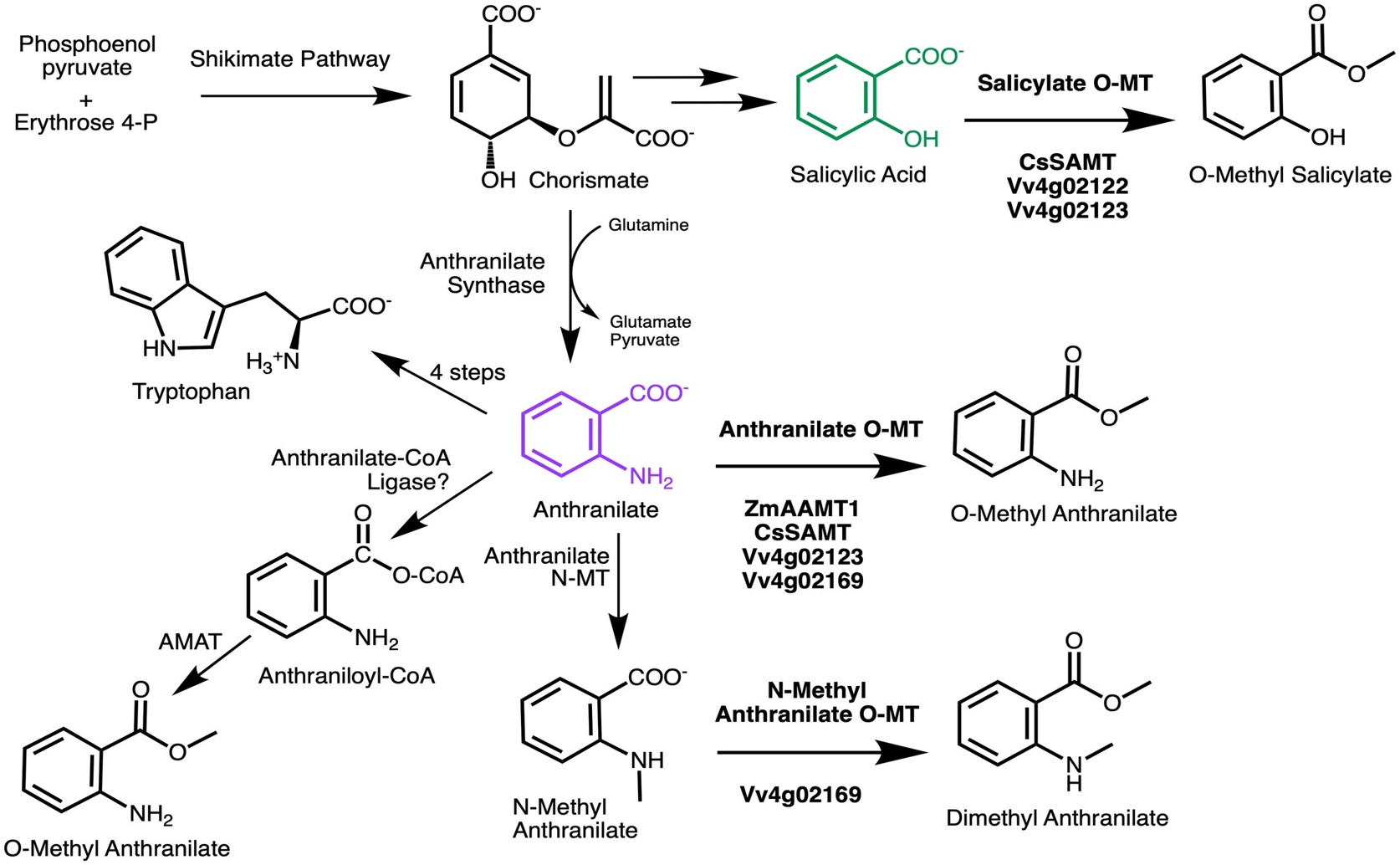
This diagram illustrates the metabolic pathways of anthranilate, highlighting the direct one-step methylation to produce methyl anthranilate by enzymes from sweet orange (Citrus sinensis), grapes (Vitis spp.), and maize (Zea mays) that this study investigates, in contrast to the previously proposed two-step pathway.
Key Findings
- The study from Williams College focused on the biosynthesis of methyl anthranilate (MeAA) in grapes
- Researchers discovered that grapes might use a one-step pathway for MeAA synthesis, contrary to the previously believed two-step process
- The study identified specific enzymes and mutations that enhance the activity of these enzymes, providing insights into the molecular mechanisms of MeAA production
References
Main Study
1) Molecular basis of one-step methyl anthranilate biosynthesis in grapes, sweet orange, and maize.
Published 8th July, 2024
https://doi.org/10.1111/tpj.16922
Related Studies
2) Comparative analysis of flower volatiles from nine citrus at three blooming stages.
3) The moderately efficient enzyme: evolutionary and physicochemical trends shaping enzyme parameters.
4) Positive selection for single amino acid change promotes substrate discrimination of a plant volatile-producing enzyme.
Journal: Molecular biology and evolution, Issue: Vol 24, Issue 6, Jun 2007
Related Articles
 30th May, 2024 | Jenn Hoskins