Unlocking the Design Secrets of Nature's Stingers

David Palenski
7th February, 2024

Unlocking the Design Secrets of Nature's Stingers

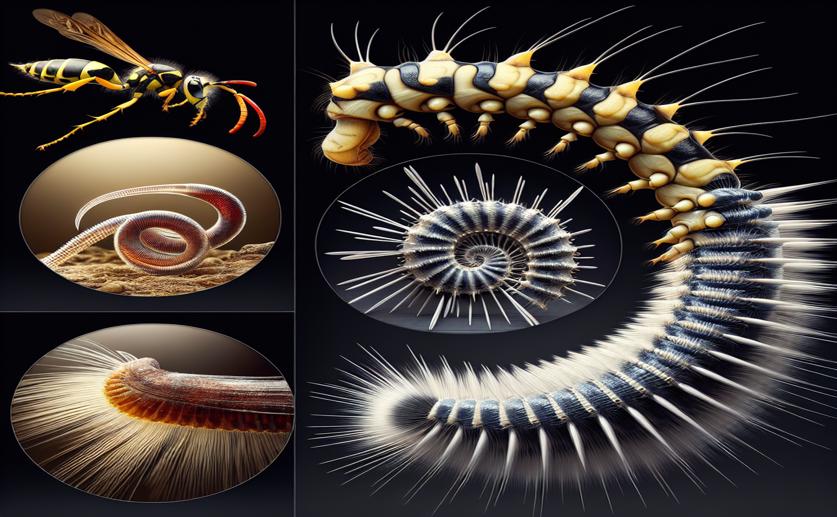
Velvet ant stinger pictured.

Public Domain Photograph
The ability to effectively penetrate a surface – whether for defense, attack, or even medical procedures – relies heavily on the shape and mechanical properties of the penetrating object. Across the natural world, a surprising number of organisms, from tiny radiolarians to large narwhals, have evolved structures designed for this purpose, collectively known as stingers. These structures, despite their vastly different sizes and evolutionary origins, share a common geometric feature. Researchers at Nanjing University[1] have recently investigated this shared characteristic, seeking to understand why this shape is so prevalent. The study focused on the geometry of the stinger tip. The researchers observed that, across a wide range of species, the diameter of the stinger increases from the tip outwards, following a specific mathematical relationship known as a power law. This means the diameter (d) changes with distance from the tip (x) according to the equation x∼dn, where ‘n’ is a value consistently found to be between 2 and 3. This consistent tapering isn’t random; it represents an optimal balance between two competing factors. If the tapering is too shallow (n less than 2), the stinger is prone to buckling – bending or collapsing under pressure – before it can effectively penetrate. Conversely, if the tapering is too steep (n greater than 3), it requires excessive force to push the stinger through the target material. The researchers demonstrated this using both mathematical modeling and physical experiments with 3D-printed stingers. They found that the power-law shape with an exponent between 2 and 3 minimizes both buckling and penetration force, regardless of the stinger’s overall size or shape. This finding builds upon earlier work examining the mechanics of penetration in various biological structures. For example, studies on porcupine quills[2] revealed that their barbed structure not only aids in adhesion to the target but also reduces the force needed for initial penetration, achieved through strategically placed stress concentrations. The Nanjing University study provides a broader context for understanding how these structures achieve such efficient penetration, highlighting the importance of the overall geometry. The research also connects to investigations of other animal weaponry. Studies on bee and wasp stings[3] showed how structural differences affect ease of removal, but didn’t focus on the initial penetration mechanics in the same way. Similarly, research on scorpion stingers[4] detailed their hierarchical structure and optimal penetration angle, but the current study offers a more generalized principle applicable across a wider range of organisms. The researchers also considered the materials that make up these stingers. Biological materials, like chitin, keratin, or dentine, have varying stiffness (measured as ‘modulus’). They found that the optimal tapering exponent becomes more critical as the sharpness of the stinger increases, ensuring it remains stable enough to penetrate skin-like tissues even when made from relatively flexible materials. This is relevant to understanding the mechanical properties of mineralized tissues, such as narwhal dentine[5], where off-axis loading significantly affects strength and modulus. The implications of this research extend beyond basic biology. Understanding the principles behind Nature’s efficient stingers could lead to the design of improved needles for medical injections, more effective tissue punches for biopsies, or even new types of fasteners and anchors. By mimicking the power-law geometry observed in these natural structures, engineers could create tools that penetrate surfaces with less force and greater precision.

WildlifeBiotech

References

Main Study

1) The shape of Nature's stingers revealed.

Published 6th February, 2024

https://doi.org/10.1073/pnas.2316320121


Related Studies

2) Microstructured barbs on the North American porcupine quill enable easy tissue penetration and difficult removal.

https://doi.org/10.1073/pnas.1216441109


3) Structures, properties, and functions of the stings of honey bees and paper wasps: a comparative study.

https://doi.org/10.1242/bio.012195


4) Study of biomechanical, anatomical, and physiological properties of scorpion stingers for developing biomimetic materials.

https://doi.org/10.1016/j.msec.2015.09.082


5) Dependence of mechanical properties on fibre angle in narwhal tusk, a highly oriented biological composite.

Journal: Journal of biomechanics, Issue: Vol 27, Issue 7, Jul 1994


Related Articles

An unhandled error has occurred. Reload 🗙