Exploring the Healing Powers of a Plant Extract and Its Silver Particles

David Palenski
25th January, 2024

Exploring the Healing Powers of a Plant Extract and Its Silver Particles

Verbascum sinaiticum, which is the focus of the research. Photo taken from study.

Image adapted from: Geyesa et al. / CC BY (Source)
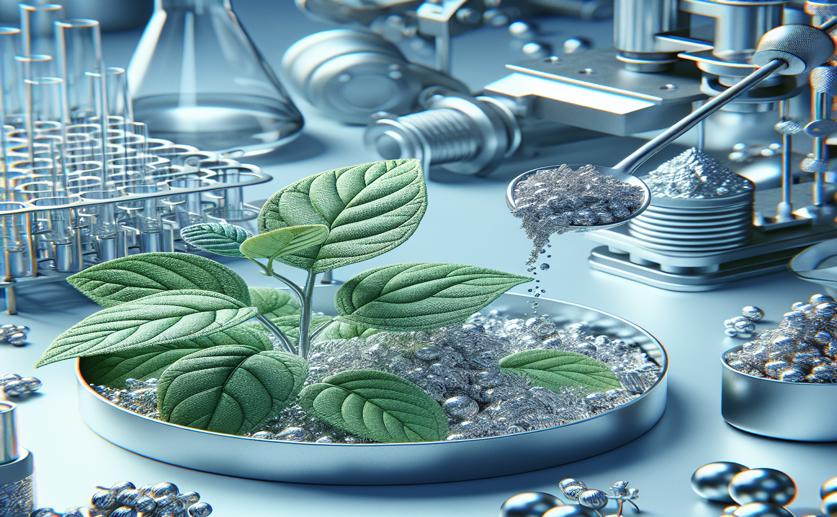
The increasing prevalence of antibiotic-resistant bacteria and the search for natural sources of antioxidants are significant challenges in modern medicine. Traditional medicinal plants offer a potential avenue for addressing these issues, providing compounds with antibacterial and antioxidant properties. Recent research from Addis Ababa Science and Technology University[1] investigates the potential of Verbascum sinaiticum, a plant used in Ethiopian traditional medicine, both in its natural form as a leaf extract and after being used to create silver nanoparticles. The study began by analyzing the chemical composition of the Verbascum sinaiticum leaf extract. Using LC-MS (Liquid Chromatography-Mass Spectrometry) and GC-MS (Gas Chromatography-Mass Spectrometry), researchers identified over 70 different compounds present in the extract, including glycosides, phenolic compounds, flavonoids, and fatty acids. These compounds are known for their potential biological activities, including antioxidant and antibacterial effects. This detailed chemical profiling builds on the broader understanding of plant extracts as valuable resources for synthesizing metal nanoparticles, as highlighted in previous work[2], where various plant extracts were examined for their ability to mediate the creation of metal-based nanoparticles. The researchers then synthesized silver nanoparticles (AgNPs) using the Verbascum sinaiticum leaf extract. The process involved allowing the plant extract to interact with silver nitrate, causing the silver ions to be reduced and form nanoparticles. The formation of these nanoparticles was confirmed by observing a specific light absorption peak at 408 nm using a technique called UV-Vis spectroscopy. The nanoparticles were found to be spherical in shape and ranged in size from 2 to 40 nanometers. A nanometer is an incredibly small unit of measurement – one billionth of a meter. The antibacterial properties of both the leaf extract and the synthesized AgNPs were then tested against a panel of bacteria, including Gram-positive (Staphylococcus aureus and Streptococcus agalactia) and Gram-negative (Acinetobacter baumannii and Pseudomonas aeruginosa) strains. The results showed that both the extract and the nanoparticles were more effective against Gram-positive bacteria than Gram-negative bacteria. Importantly, the silver nanoparticles exhibited stronger antibacterial activity than the leaf extract alone. This observation aligns with findings from other studies[3], which demonstrated that silver nanoparticles derived from plant extracts often possess enhanced biological activity compared to the extracts themselves. To assess antioxidant activity, researchers used a DPPH (2,2-diphenylpicrylhydrazyl) assay. This assay measures the ability of a substance to neutralize free radicals, which are unstable molecules that can damage cells and contribute to aging and disease. The leaf extract demonstrated a higher antioxidant capacity (IC50 value of 143 μg/ml) than the synthesized silver nanoparticles (IC50 value of 216 μg/ml). The IC50 value represents the concentration of a substance needed to inhibit 50% of free radical activity. This suggests that while the nanoparticles have antibacterial potential, the plant extract retains a greater capacity to combat oxidative stress. The study’s findings suggest that Verbascum sinaiticum holds promise as a source of both antibacterial and antioxidant compounds. The plant extract itself possesses significant antioxidant activity, while the silver nanoparticles synthesized from the extract demonstrate enhanced antibacterial properties. This approach – utilizing plant extracts for nanoparticle synthesis – is gaining traction as a more environmentally friendly alternative to traditional chemical methods[2]. The optimization of nanoparticle synthesis using methods like the Taguchi design, as seen in research utilizing Lythrum salicaria[4], could further enhance the effectiveness and reproducibility of this process.

HerbsMedicineBiochem

References

Main Study

1) Antibacterial and antioxidant potential analysis of Verbascum sinaiticum leaf extract and its synthesized silver nanoparticles.

Published 30th January, 2024 (future Journal edition)

https://doi.org/10.1016/j.heliyon.2024.e24215


Related Studies

2) Plant Extracts Mediated Metal-Based Nanoparticles: Synthesis and Biological Applications.

https://doi.org/10.3390/biom12050627


3) Synthesis of Silver Nanoparticles Using Odontosoria chinensis (L.) J. Sm. and Evaluation of their Biological Potentials.

https://doi.org/10.3390/ph13040066


4) Green Synthesis and Characterization of Silver Nanoparticles Using a Lythrum salicaria Extract and In Vitro Exploration of Their Biological Activities.

https://doi.org/10.3390/life12101643


Related Articles

An unhandled error has occurred. Reload 🗙