Exploring How Two Herbs Improve Blood Flow by Inhibiting Fat Conversion

David Palenski
24th January, 2024

Exploring How Two Herbs Improve Blood Flow by Inhibiting Fat Conversion

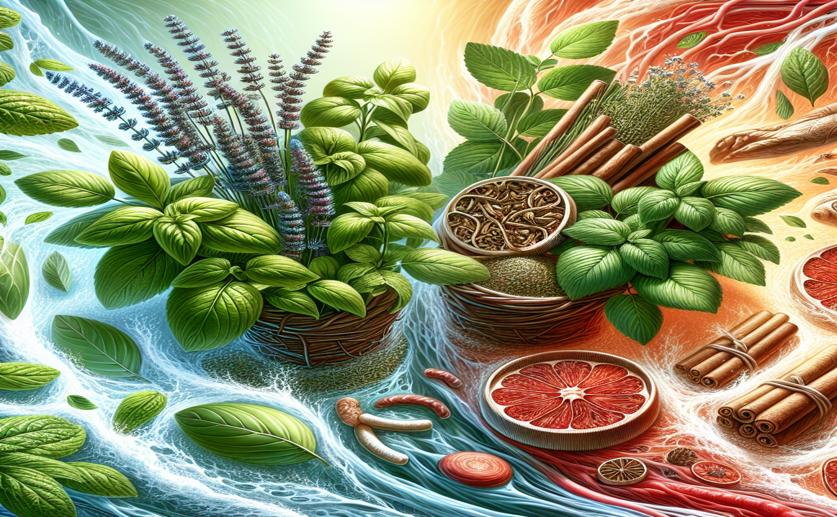
Panax notoginseng, one of the herbs used in the study.

Photographer: Fumikas Sagisavas
Traditional Chinese Medicine (TCM) has long recognized a condition called “blood stasis,” where blood flow is impaired, leading to pain and other health issues. While the concept has been central to TCM for centuries, understanding its biological basis and effective treatments has been a challenge for modern science. Conditions traditionally linked to blood stasis, such as pain, infertility, and cardiovascular disease, are widespread, motivating research into TCM approaches.[2] highlighted the potential for blood stasis treatments to reduce pain following traumatic injury, but the underlying mechanisms remained unclear. A key aspect of TCM treatment for blood stasis involves promoting blood circulation, often using herbal combinations. Researchers at Nanjing University of Traditional Chinese Medicine recently investigated the effects of a specific herbal pair – Panax notoginseng and Salvia miltiorrhiza (PS) – on traumatic blood stasis (TBS) in a rat model[1]. TBS was induced by injury to the hind limb, mimicking the effects of trauma. The rats were then given different ratios of the two herbs to determine the most effective combination. The study aimed to identify how PS influences the body’s metabolism to improve blood flow and alleviate stasis. The study involved a detailed analysis of blood and muscle tissue from the rats. Blood rheology, which examines blood flow characteristics like viscosity (thickness), was measured. Metabolomics, a technique that identifies and quantifies the small molecules (metabolites) present in a sample, was used to assess changes in the rats’ metabolism. Muscle tissue was examined under a microscope to assess swelling and damage. Additionally, the expression of specific genes was measured using q-PCR, a technique to quantify gene activity. The results showed that various ratios of PS reduced swelling and improved blood flow in the injured limbs. The most effective ratio was 3:1 (Panax notoginseng to Salvia miltiorrhiza), which also caused the most significant changes in the rats’ metabolism, influencing 17 different metabolites. Targeted metabolomics focused on specific compounds, revealing that the 3:1 PS ratio increased levels of arachidonic acid (AA) and decreased levels of prostaglandin F2-α (PGF2-α). Prostaglandins are hormone-like substances involved in inflammation and pain. The researchers found that PS altered the activity of enzymes involved in prostaglandin production. Specifically, it reduced the activity of Ptgs1 and Cbrl12, which contribute to PGF2-α synthesis, and increased the activity of Hpgd, which breaks down prostaglandins. This suggests that PS works by blocking the conversion of arachidonic acid into prostaglandins, thereby reducing inflammation and improving blood flow. These findings build upon earlier research attempting to define and diagnose blood stasis[3]. While a “gold standard” for diagnosing blood stasis remains elusive, the current study provides a biochemical mechanism that could potentially be used as a biomarker for assessing the effectiveness of treatments. Furthermore, the study supports the traditional TCM principle of “Huo xue li shui” – activating blood flow to resolve fluid retention – as demonstrated by the diuretic effects observed in rats treated with Lagopsis supina[4]. The observed effects of PS on blood viscosity align with previous findings that blood stasis treatment can enhance peripheral blood flow[2]. Interestingly, a previous study[5] noted that Korean medicine practitioners often prescribe treatments for blood stasis even without a definitive diagnosis, relying on symptoms associated with traumatic injury. The current study provides a potential biological basis for this practice, suggesting that addressing blood flow issues may be beneficial even in the absence of a clear-cut diagnosis of blood stasis syndrome.

HerbsMedicineBiochem

References

Main Study

1) Study on the mechanism of Panax notoginseng-Salvia miltiorrhiza herb pair on invigorating blood circulation and eliminating blood stasis by blocking the conversion of arachidonic acid to prostaglandin.

Published 23rd January, 2024

https://doi.org/10.1007/s11418-023-01773-z


Related Studies

2) Blood Stasis Therapy for Traumatic Injury: A Prospective, Single-Arm, Pre-Post Pilot Study.

https://doi.org/10.1089/acm.2018.0134


3) Expert opinions on the concept of blood stasis in China: An interview study.

Journal: Chinese journal of integrative medicine, Issue: Vol 22, Issue 11, Nov 2016


4) Lagopsis supina exerts its diuretic effect via inhibition of aquaporin-1, 2 and 3 expression in a rat model of traumatic blood stasis.

https://doi.org/10.1016/j.jep.2018.10.034


5) Recognition of Association Between Blood Stasis Syndrome and Traumatic Injury among Doctors of Korean Medicine: A Cross-Sectional Observation Study.

https://doi.org/10.1007/s11655-017-2788-y


Related Articles

An unhandled error has occurred. Reload 🗙