Turmeric Overuse Linked to Kidney Damage: A Case Study

David Palenski
16th January, 2024

Turmeric Overuse Linked to Kidney Damage: A Case Study
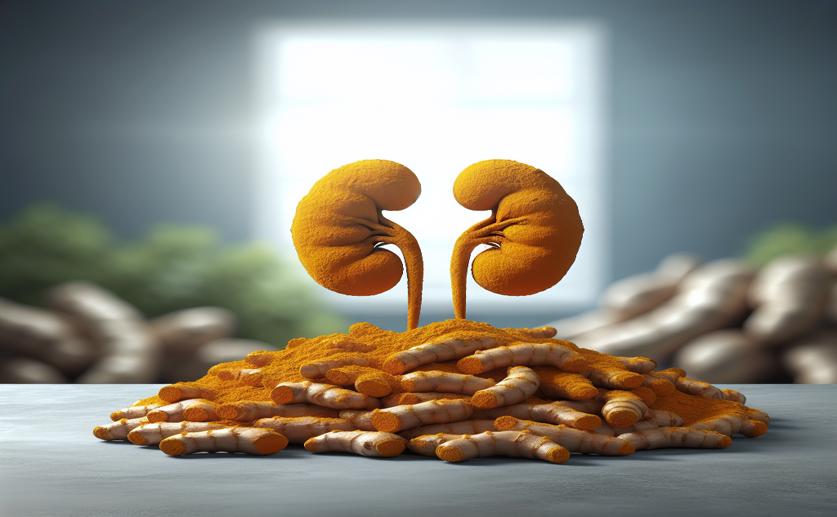
Image Source: © Natural Science News. This image is an artistic rendition.
Kidney problems are often linked to conditions like diabetes or high blood pressure, but sometimes the cause isn’t immediately clear. A recent case study from Brigham and Women’s Hospital[1] highlights an unusual, yet increasingly recognized, cause of kidney failure: oxalate nephropathy – kidney damage caused by a buildup of oxalate. Oxalate is a natural substance found in many foods, but it’s normally cleared from the body through the kidneys. Problems arise when oxalate levels become too high, leading to the formation of calcium oxalate crystals which can damage the kidneys. This condition, known as hyperoxaluria, can be ‘primary’ – caused by a genetic defect affecting oxalate metabolism[2] – or ‘secondary’ – resulting from other factors like diet or gut health. The case study focuses on a secondary form, triggered by a combination of turmeric supplementation and antibiotic use. The patient, a 69-year-old man, was found to have kidney failure during a routine check-up. Initially, his medical history didn’t offer any obvious clues. However, further investigation revealed he had been regularly taking turmeric supplements and had a history of prolonged antibiotic treatment, accompanied by diarrhea. The researchers discovered that this combination had led to oxalate building up in his kidneys, causing significant damage. The case is significant because oxalate nephropathy is often overlooked. Diagnosing it requires a high level of suspicion from doctors, as it doesn’t always present with typical symptoms. Standard kidney biopsies may also miss the problem if pathologists don’t specifically examine tissue samples under polarized light – a technique needed to identify the oxalate crystals, as common staining methods can actually dissolve them. The study emphasizes that even finding a single oxalate crystal in a kidney biopsy should be considered a potentially important finding. Interestingly, the patient’s case ties into previous research on the gut microbiome and kidney stones[3]. The study showed that antibiotics can disrupt the balance of bacteria in the gut, specifically reducing the levels of Oxalobacter formigenes. This bacterium is crucial because it breaks down oxalate in the gut, reducing the amount absorbed into the bloodstream and ultimately lessening the burden on the kidneys. The patient’s chronic antibiotic use and resulting diarrhea likely contributed to a decline in O. formigenes, increasing oxalate absorption. Furthermore, high doses of turmeric, while often touted for its health benefits, contain significant amounts of oxalate. Combining this with reduced oxalate breakdown in the gut created a ‘perfect storm’ for oxalate buildup in the kidneys. This highlights how seemingly harmless supplements can, in certain circumstances, contribute to kidney problems. The case also underscores the importance of a multidisciplinary approach to diagnosis. Effective identification of oxalate nephropathy requires close communication between pathologists – who need to be vigilant in examining biopsies – and treating physicians. While primary hyperoxaluria often requires specialized treatments like liver transplantation[4] or RNA interference therapy[4], this case demonstrates that secondary oxalate nephropathy can often be prevented or mitigated. Dietary changes to reduce oxalate intake, along with addressing underlying gut health issues, can be effective strategies. The study emphasizes the role of healthcare professionals, including surgeons and gastroenterologists, in providing patients with appropriate dietary guidance.

HerbsMedicineHealth

References

Main Study

1) Oxalate nephropathy and chronic turmeric supplementation: a case report.

Published 15th January, 2024

https://doi.org/10.1590/2175-8239-JBN-2023-0079en


Related Studies

2) Primary and secondary hyperoxaluria: Understanding the enigma.

https://doi.org/10.5527/wjn.v4.i2.235


3) The use of antibiotics and risk of kidney stones.

https://doi.org/10.1097/MNH.0000000000000510


4) Treatment of primary hyperoxaluria type 1.

https://doi.org/10.1093/ckj/sfab232


Related Articles

An unhandled error has occurred. Reload 🗙