Ingredients in Herbal IV Treatment Fight Blood Infection

Jim Crocker
25th January, 2024

Ingredients in Herbal IV Treatment Fight Blood Infection
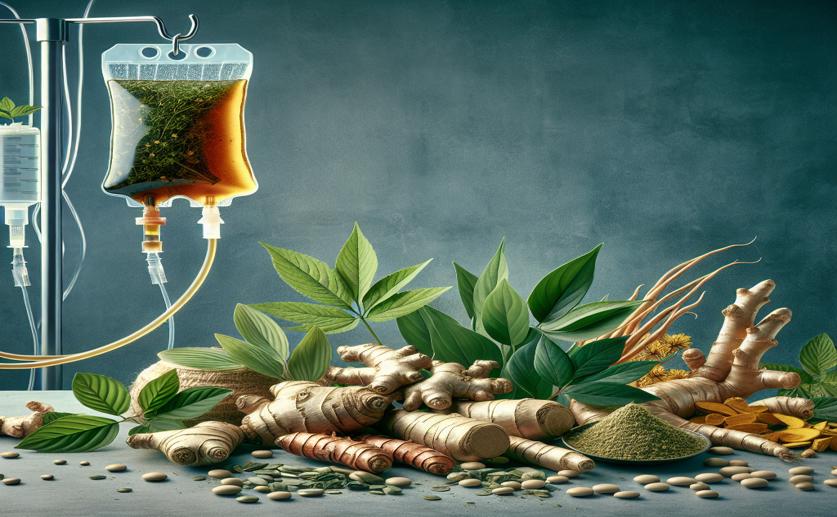
Image Source: © Natural Science News. This image is an artistic rendition.
Sepsis is a major global health concern, representing a life-threatening condition where the body’s response to an infection spirals out of control, leading to organ damage and potentially death. Despite being a leading cause of mortality, effective treatments remain limited, largely relying on intensive care unit (ICU) support[2]. Historically, sepsis was characterized by specific signs like fever and increased heart rate, but our understanding has evolved to recognize it as a complex dysregulation of the immune system causing widespread organ dysfunction[3][4]. This shift in understanding highlights the need for new therapeutic strategies that address the underlying causes of the illness, rather than simply managing the symptoms. Researchers at the Chinese Academy of Sciences, Shanghai Institute of Materia Medica, have been investigating XueBiJing, a traditional Chinese herbal medicine, and its potential to improve outcomes for patients with sepsis[1]. Previous studies have shown that combining XueBiJing with standard medical care can reduce mortality rates in critically ill patients, but the specific components responsible for this effect were unknown. The goal of this research was to identify the active ingredients within XueBiJing that contribute to its anti-sepsis properties. The study involved inducing sepsis in rats using a procedure called cecal ligation and puncture (CLP), which mimics the effects of a severe abdominal infection. The researchers then administered XueBiJing intravenously to these rats and analyzed their blood to identify which compounds from the herbal medicine were present at significant levels. They then tested these compounds individually to determine if they had anti-sepsis effects, focusing on their ability to regulate the immune system, reduce inflammation, stabilize blood clotting, and protect organ function. The research team identified 12 compounds from XueBiJing that circulated in the rats’ bloodstream after treatment. Of these, six – hydroxysafflor yellow A, paeoniflorin, oxypaeoniflorin, albiflorin, senkyunolide I, and tanshinol – demonstrated significant anti-sepsis activity. These compounds work through multiple pathways, addressing several key aspects of the septic response. For example, they help to modulate the immune system, preventing it from becoming overactive and causing further damage, and they also influence hemostasis, the body’s process of stopping bleeding, which is often disrupted in sepsis. To confirm that these six compounds were truly responsible for XueBiJing’s effects, the researchers created a combination of the compounds, using the same doses as found in the original herbal medicine. They then compared the effectiveness of this combination to XueBiJing itself in the CLP-induced sepsis model. The results showed that the combination of compounds had a similar survival rate and systemic exposure as the complete herbal medicine. Furthermore, the compounds interacted well with each other and with other substances circulating in the blood, indicating a high degree of compatibility. This study is significant because it moves beyond simply observing that XueBiJing works, to understanding how it works. The identification of these key compounds provides a scientific basis for the traditional use of this medicine and opens the door for the development of more targeted and effective sepsis treatments. The approach taken – identifying active constituents and then testing their combined effect – represents a “polypharmacology-based” strategy, recognizing that complex diseases like sepsis often require addressing multiple pathways simultaneously. This contrasts with earlier drug development efforts that primarily focused on controlling inflammation, which proved largely unsuccessful[2][5]. The findings also align with the growing understanding that sepsis involves a complex interplay between pro- and anti-inflammatory responses, and that restoring balance is crucial for recovery[5].

HerbsMedicineBiochem

References

Main Study

1) Pharmacologically significant constituents collectively responsible for anti-sepsis action of XueBiJing, a Chinese herb-based intravenous formulation.

Published 24th January, 2024

https://doi.org/10.1038/s41401-023-01224-1


Related Studies

2) Sepsis and septic shock.

https://doi.org/10.1038/nrdp.2016.45


3) The Third International Consensus Definitions for Sepsis and Septic Shock (Sepsis-3).

https://doi.org/10.1001/jama.2016.0287


4) The immunopathology of sepsis and potential therapeutic targets.

https://doi.org/10.1038/nri.2017.36


5) Sepsis: Inflammation Is a Necessary Evil.

https://doi.org/10.3389/fcell.2019.00108


Related Articles

An unhandled error has occurred. Reload 🗙