How Rosemary and Oregano Help Chickens Cope with Heat Stress

Jenn Hoskins
29th January, 2024

How Rosemary and Oregano Help Chickens Cope with Heat Stress

Domestic Chicken (Gallus gallus domesticus)

Photo adapted from: Damien Wallace / CC BY (Source)
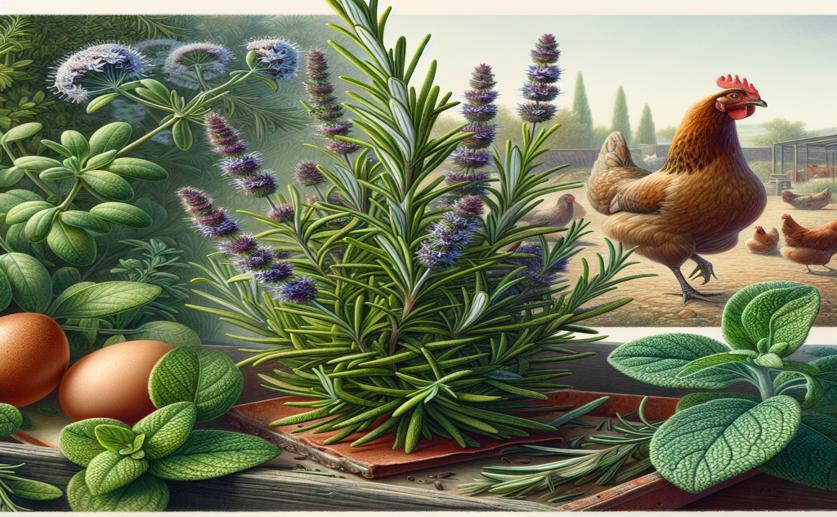
Heat stress is a significant challenge in poultry farming, negatively impacting growth, health, and ultimately, profitability. Chickens are particularly vulnerable as they lack efficient cooling mechanisms. This leads to oxidative stress, where harmful molecules damage cells, and a cascade of physiological problems. Researchers at the National Research Centre, Egypt, recently investigated whether adding rosemary and oregano – both known for their beneficial properties – to chicken feed could help mitigate these effects[1]. The study involved 150 one-day-old male Indian River chicks, divided into five groups. One group received a standard diet, while the others were fed the same diet supplemented with either 50 or 100 mg/kg of rosemary leaf extract (RLE) or oregano leaf extract (OLE). All birds were then exposed to a consistently warm environment of 32°C, simulating heat stress conditions. The goal was to observe how these plant extracts influenced growth, health indicators, and the expression of heat shock proteins – molecules produced by cells under stress to protect themselves. The findings revealed that the group receiving 50 mg/kg of oregano leaf extract (O1) exhibited the best growth performance, gaining the most weight with the most efficient feed conversion. This suggests that oregano, at this concentration, can effectively counteract the negative impacts of heat stress on growth. Interestingly, both rosemary (at 100mg/kg) and oregano (at 100mg/kg) supplementation led to reductions in plasma total lipids and LDL-cholesterol, indicating potential benefits for heart health. These results align with previous research highlighting the antioxidant capabilities of both rosemary and oregano[2]. Essential oils, derived from plants like these, contain compounds that can neutralize harmful free radicals, reducing oxidative stress. In fact, rosemary has been shown to possess potent antioxidant properties and even exhibit antidiabetogenic effects, potentially due to its ability to inhibit lipid peroxidation and activate antioxidant enzymes[3]. The study also examined the expression of heat shock proteins (HSPs), specifically hsp70 and hsp90A, in the chickens’ livers. HSPs are crucial for cellular protection during stress. The researchers found that both rosemary and oregano supplementation led to a downregulation of these HSPs, particularly in the O1 and R2 groups. While it might seem counterintuitive to reduce HSP expression, this suggests that the extracts were effectively lessening the overall stress response, meaning the chickens’ bodies didn’t need to produce as many protective HSPs. Furthermore, the rosemary groups (R1 and R2) showed improved total antioxidant capacity and increased levels of the T3 hormone, which plays a role in metabolism and growth. This builds on the understanding that essential oils can act as nutritional interventions to combat oxidative stress induced by heat[4]. The active components in the extracts, ferruginol in rosemary and thymol in oregano, are likely responsible for these beneficial effects, both demonstrating high antioxidant potential. The study’s conclusion emphasizes the potential of oregano leaf extract, specifically at a dosage of 50 mg/kg, as a dietary supplement to improve growth performance and physiological responses in heat-stressed broilers. This offers a promising alternative to relying solely on conventional methods for managing heat stress in poultry production.

HerbsNutrition

References

Main Study

1) Growth performance, blood biochemistry, and mRNA expression of hepatic heat shock proteins of heat-stressed broilers in response to rosemary and oregano extracts.

Published 26th January, 2024

https://doi.org/10.1016/j.jtherbio.2024.103791


Related Studies

2) Essential oils and their nanoemulsions as green alternatives to antibiotics in poultry nutrition: a comprehensive review.

https://doi.org/10.1016/j.psj.2021.101584


3) In vivo assessment of antidiabetic and antioxidant activities of rosemary (Rosmarinus officinalis) in alloxan-diabetic rabbits.

Journal: Journal of ethnopharmacology, Issue: Vol 116, Issue 1, Feb 2008


4) Gene expression of heat shock protein 70 and antioxidant enzymes, oxidative status, and meat oxidative stability of cyclically heat-challenged finishing broilers fed Origanum compactum and Curcuma xanthorrhiza essential oils.

https://doi.org/10.3382/ps.2014-03896


Related Articles

An unhandled error has occurred. Reload 🗙