How Foods Rich in Natural Plant Compounds Affect Gum Disease

Greg Howard
27th February, 2024

How Foods Rich in Natural Plant Compounds Affect Gum Disease
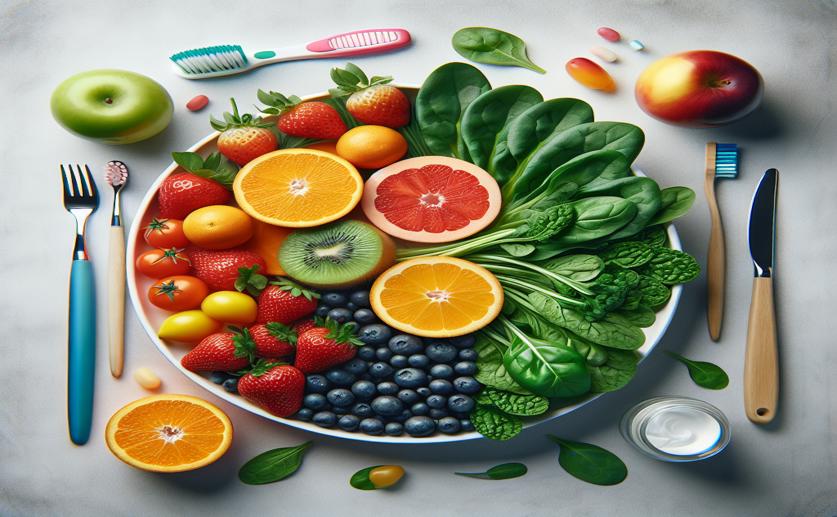
Image Source: © Natural Science News. This image is an artistic rendition.
Periodontal disease, commonly known as gum disease, affects a significant portion of the adult population. It’s an inflammatory condition impacting the tissues supporting the teeth, potentially leading to tooth loss and impacting overall health. Traditional treatments involve professional cleaning and, in some cases, surgery. However, increasing attention is being paid to preventative and adjunctive therapies, including dietary interventions. Researchers at Central South University recently investigated whether consuming foods rich in flavonoids – naturally occurring compounds found in many fruits and vegetables – could help protect against periodontal disease[1]. The study, a cross-sectional analysis of data from the US National Health and Nutrition Examination Survey 2009-2010, examined the periodontal health of over 3000 adults aged 30 to 80. Researchers looked at two key indicators of gum disease: periodontal pocket depth (PPD), which measures the space between the teeth and gums, and clinical attachment loss (CAL), which indicates how much the gums have receded from the teeth. They then correlated these measurements with participants’ reported dietary intake of flavonoids. The findings revealed a clear association between higher flavonoid intake and better periodontal health. Individuals in the middle and top thirds of flavonoid consumption exhibited reduced mean PPD and CAL compared to those with the lowest intake. Specifically, those consuming the most flavonoids had, on average, shallower pockets and less gum recession. Different types of flavonoids appeared to have varying effects; anthocyanidins, flavones, and flavonols were linked to reductions in both PPD and CAL, while flavanones were associated with reduced CAL alone. Interestingly, isoflavones and flavan_3_ols showed no significant link to CAL. These results build upon existing research highlighting the impact of periodontitis severity on quality of life and masticatory function[2]. That earlier study demonstrated that individuals with advanced stage IV periodontitis experienced greater functional impairment and reduced quality of life, emphasizing the importance of preventative measures and effective treatments. The current study suggests that dietary factors, specifically flavonoid intake, could be a valuable component of such preventative strategies. The inflammatory nature of periodontal disease is central to its progression[3]. The study by Central South University suggests that flavonoids may exert a protective effect by modulating this inflammation. While the exact mechanisms aren’t fully understood, flavonoids are known to possess antioxidant and anti-inflammatory properties, potentially reducing the tissue damage caused by the body’s immune response to bacterial infection. Furthermore, the benefits of dietary supplementation to improve periodontal outcomes have been previously demonstrated[4]. That study showed that juice powder concentrates improved initial pocket depth reductions, suggesting that targeted nutritional interventions can positively influence treatment results. The current research expands on this by identifying specific dietary components – flavonoids – that may contribute to improved periodontal health, and doesn’t rely on supplementation, but rather on naturally occurring dietary intake. The study also revealed some nuances regarding who benefits most from increased flavonoid intake. The positive effects were more pronounced in women, those who didn’t floss regularly, individuals who were overweight, and those without diabetes. This suggests that dietary flavonoids may be particularly beneficial for individuals at higher risk of periodontal disease or those with limited access to optimal oral hygiene practices. However, the lack of significant benefits observed in smokers and individuals with diabetes highlights the complex interplay between lifestyle factors and nutritional interventions.

NutritionHealth

References

Main Study

1) The relationship of dietary flavonoids and periodontitis in US population: a cross-sectional NHANES analysis.

Published 24th February, 2024

https://doi.org/10.1007/s00784-024-05561-1


Related Studies

2) Food intake, masticatory function, tooth mobility, loss of posterior support, and diminished quality of life are associated with more advanced periodontitis stage diagnosis.

https://doi.org/10.1111/jcpe.13588


3) Impact of health and lifestyle food supplements on periodontal tissues and health.

https://doi.org/10.1111/prd.12455


4) Adjunctive daily supplementation with encapsulated fruit, vegetable and berry juice powder concentrates and clinical periodontal outcomes: a double-blind RCT.

https://doi.org/10.1111/j.1600-051X.2011.01793.x


Related Articles

An unhandled error has occurred. Reload 🗙