
Tracing the Evolution of Complex Algae Forms
Jenn Hoskins
11th April, 2024


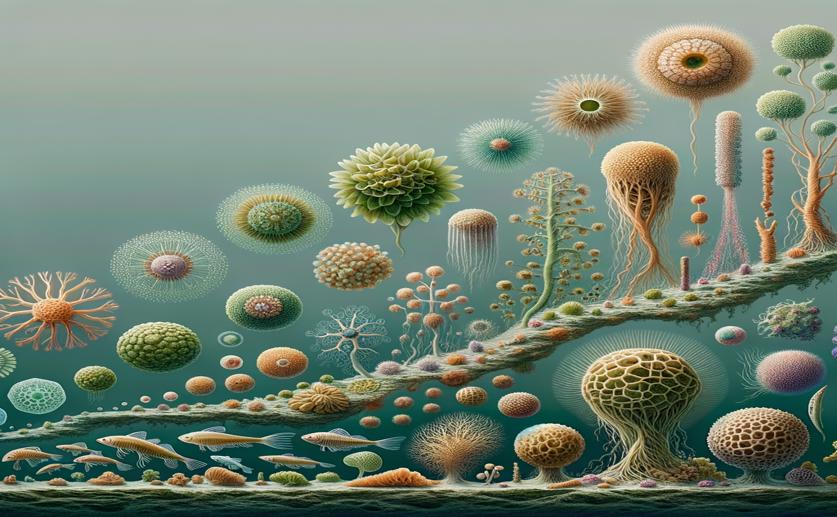
This phylogenetic analysis illustrates the evolutionary trajectory of volvocine algae, mapping the progressive emergence of multicellularity, anisogamy, and germ-soma differentiation across genera ranging from the unicellular Chlamydomonas reinhardtii (B) to complex forms like Volvox carteri (L).
Key Findings
- Researchers at the Georgia Institute of Technology studied the evolution of multicellularity in volvocine algae
- They found multicellularity and cell specialization, including male and female reproductive cells, evolved independently multiple times
- The study used genetic comparisons and fossil data to trace the timeline of these evolutionary developments
GeneticsPlant ScienceEvolution
References
Main Study
1) Fossil-calibrated molecular clock data enable reconstruction of steps leading to differentiated multicellularity and anisogamy in the Volvocine algae
Published 10th April, 2024
https://doi.org/10.1186/s12915-024-01878-1
Related Studies
2) Laser--Raman imagery of Earth's earliest fossils.
Journal: Nature, Issue: Vol 416, Issue 6876, Mar 2002
3) Evolution of multicellularity coincided with increased diversification of cyanobacteria and the Great Oxidation Event.
4) Experimental evolution of multicellularity.
Related Articles
 11th March, 2024 | Jim Crocker