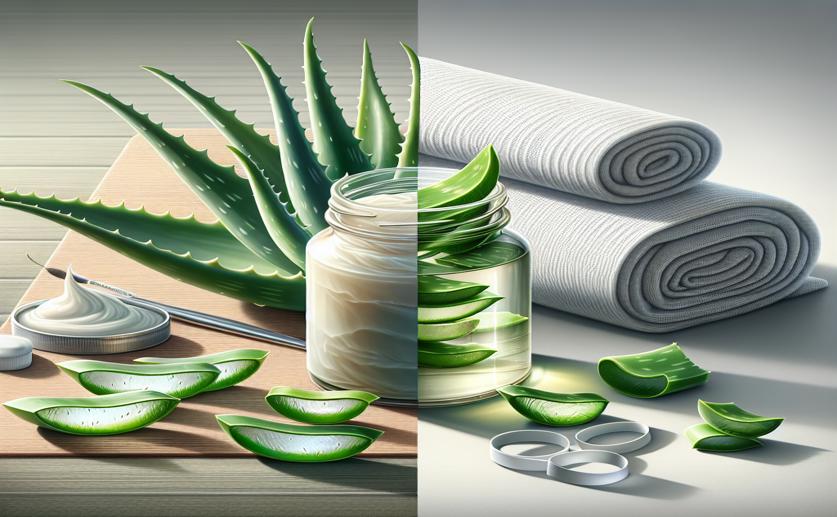
Aloe Vera Gel vs. Regular Bandages for Easing Bed Sore Pain

Phil Stevens
18th January, 2024

Aloe Vera Gel vs. Regular Bandages for Easing Bed Sore Pain

Aloe Vera

Photo adapted from: Jakob Horz / CC BY (Source)
Pressure ulcers, commonly known as bedsores, are injuries to the skin and underlying tissue, frequently occurring in individuals with limited mobility. These ulcers can cause significant pain and discomfort, substantially impacting a patient’s quality of life[2]. Managing this pain is a key challenge for healthcare professionals. Traditional treatments often involve regular wound cleaning and dressings, but finding methods to further alleviate pain remains a priority. A recent study conducted by researchers at Khomein University of Medical Sciences[1] investigated whether Aloe Vera gel could offer a more effective pain relief solution compared to standard saline dressings. The study, a double-blind randomized clinical trial carried out at Valiasr Hospital in Iran between May 2020 and April 2022, involved 64 patients diagnosed with pressure ulcers. Participants were divided into two groups: an experimental group treated with Aloe Vera gel, and a control group receiving standard saline dressings. Both groups first had their ulcers cleaned with saline to remove any dead tissue. The experimental group then had Aloe Vera gel applied directly to the ulcer, while the control group received a sterile cotton bandage. Pain levels were assessed using a visual pain scale, a common tool where patients rate their pain intensity. The researchers found that pain scores decreased in both groups, indicating that both Aloe Vera gel and saline dressings were effective in reducing pain. However, the Aloe Vera gel group experienced a significantly greater reduction in pain compared to the saline dressing group. This difference was statistically significant, meaning it was unlikely due to chance. The study demonstrated that Aloe Vera gel is a preferable option for reducing pain during dressing changes for patients with pressure ulcers. Understanding the impact of pressure ulcers on patients’ lives is crucial. Previous research has highlighted the complex, biopsychosocial nature of pain associated with these ulcers, encompassing not only physical sensations but also emotional and psychological factors[2]. Effective pain management requires addressing all these aspects. While the study focuses specifically on pain reduction, it contributes to the broader goal of improving patient well-being. The findings align with the known properties of Aloe Vera, which possesses analgesic (pain-relieving) and anti-inflammatory effects. This suggests that Aloe Vera’s mechanism of action in pressure ulcer pain relief may involve reducing inflammation and directly soothing nerve endings. This is particularly relevant when considering that pressure ulcers can cause considerable pain and discomfort[2], and finding effective, accessible treatments is vital. Interestingly, other approaches to pressure ulcer treatment have also explored combining traditional remedies with modern medicine. For example, a study investigating the use of Ma Yinglong Shexiang Hemorrhoids Cream combined with pearl powder found that this combination was more effective than either treatment alone in reducing pain and complications associated with severe pressure ulcers[3]. While the mechanisms differ, both studies point to the potential benefits of incorporating natural substances into pressure ulcer care. Furthermore, the importance of standardized assessment tools for pressure ulcers is well-established. The PU-QOL-P instrument, designed to assess symptoms and functional outcomes in patients at risk of developing pressure ulcers, provides a valuable method for quantifying the benefits of interventions like Aloe Vera gel[4]. Using such tools allows healthcare professionals to objectively measure pain levels and track treatment effectiveness, ultimately leading to better patient care.

MedicineHealth

References

Main Study

1) Comparison of aloe vera gel dressing with conventional dressing on pressure ulcer pain reduction: a clinical trial.

Published 16th January, 2024

https://doi.org/10.1186/s13104-023-06682-8


Related Studies

2) Patient-reported pressure ulcer pain: a mixed-methods systematic review.

https://doi.org/10.1016/j.jpainsymman.2010.11.016


3) Effect of Ma Yinglong Shexiang hemorrhoids cream combined with pearl powder on the pain and complications of severe pressure ulcer patients.

https://doi.org/10.1097/MD.0000000000026767


4) A patient-reported pressure ulcer health-related quality of life instrument for use in prevention trials (PU-QOL-P): psychometric evaluation.

https://doi.org/10.1186/s12955-018-1049-x


Related Articles

An unhandled error has occurred. Reload 🗙