Exploring Healing Plants Used by the Yi Community in Mile

Jenn Hoskins
25th February, 2024

Exploring Healing Plants Used by the Yi Community in Mile

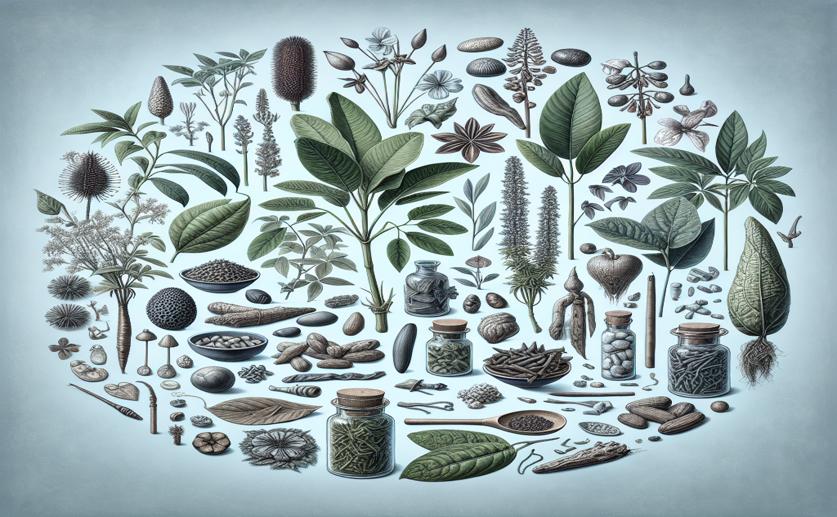
Selected medicinal plants in the study area A) Zingiber officinale, B) Lycopodium japonicum, C) Panax notoginseng, D) Cyathula officinalis, E) Dipsacus asper, F) Leonurus japonicas

Image adapted from: Li et al. / CC BY (Source)
Medicinal plants have long been a primary source of healthcare for many cultures, particularly in regions where access to modern medicine is limited or where traditional practices are deeply ingrained. Understanding how different communities utilize these plants is crucial, not only for healthcare purposes but also for preserving valuable knowledge that could be lost with changing times. A recent study by researchers at Yunnan Minzu University[1] focused on documenting the medicinal plant knowledge of the Yi people in Mile City, Yunnan Province, China. The Yi people, like many ethnic groups in southwest China, have a long history of relying on medicinal plants. However, systematic documentation of their practices has been scarce. This research aimed to address this gap, providing a foundational dataset for both the development of ethnomedicine – the study of traditional medical practices – and the conservation of the Yi people’s traditional knowledge. The study, conducted between 2020 and 2022, involved interviewing 114 informants across five townships in Mile. Researchers used a combination of methods: semi-structured interviews to gather detailed information, key informant interviews with individuals possessing specialized knowledge, and participatory observation to witness practices firsthand. Plant specimens were collected and identified using established botanical methods, then preserved for future reference. The data was then analyzed using several techniques, including the informant consensus factor (ICF), which measures the agreement among informants regarding the use of plants for specific ailments, relative frequency of citation, and fidelity level, which indicates how consistently a plant is used for a particular condition. The results revealed that the Yi people utilize an impressive 267 species of medicinal plants, spanning 232 genera and 104 families. The most frequently used plant families were Asteraceae, Lamiaceae, and Fabaceae. Herbs were the most common plant form used, with whole plants and roots being the preferred parts for medicinal purposes. Decoction – boiling plant material in water to extract its properties – was the most prevalent method of preparation. The Yi people employ these plants to treat 49 different diseases. Respiratory illnesses, rheumatism, traumatic injuries, fractures, and digestive system problems were the most common conditions addressed. This aligns with findings from other ethnobotanical studies in the region. For example, research on the Bulang people also highlighted the importance of plants in treating digestive system ailments[2]. Similarly, a study documenting medicinal plants used in the Arjan Parishan protected area in Iran found a high prevalence of plants used for intestinal digestive issues[3]. The current study identified several key plants, including Zingiber officinale (ginger), Lycopodium japonicum, Aconitum carmichaelii, Panax notoginseng, Cyathula officinalis, and Leonurus japonicus, as particularly important for disease prevention and treatment. Zingiber officinale’s prominence is notable, as it was also identified as having a high ‘use value’ in the Bulang study[2]. The research also emphasized the cultural context of this knowledge. Traditional healing practices are deeply embedded in Yi society, with local healers possessing unique skills and methods. However, this knowledge is under threat. The study identified several challenges, including a declining number of healers, an aging healer population, a lack of younger individuals taking up the practice, and unsustainable harvesting of medicinal plants. This mirrors concerns raised in a study of the Buyi people, where researchers noted that ethnomedicinal knowledge is at risk due to modernization and the increasing use of Western medicine[4]. The findings from Yunnan Minzu University provide a valuable resource for the sustainable use and protection of medicinal plants in the Mile region and for preserving the Yi people’s traditional medical knowledge. The documentation of these practices is a crucial step towards ensuring that this knowledge is not lost, and that the potential benefits of these plants can be explored for future healthcare applications.

MedicinePlant Science

References

Main Study

1) Ethnobotanical study of medicinal plants used by the Yi people in Mile, Yunnan, China.

Published 23rd February, 2024

https://doi.org/10.1186/s13002-024-00656-1


Related Studies

2) Ethnobotanical study on medicinal plants used by Bulang people in Yunnan, China.

https://doi.org/10.1186/s13002-023-00609-0


3) Ethnobotanical study of medicinal plants used in Arjan - Parishan protected area in Fars Province of Iran.

Journal: Avicenna journal of phytomedicine, Issue: Vol 4, Issue 6, Nov 2014


4) Ethnobotany and diversity of medicinal plants used by the Buyi in eastern Yunnan, China.

https://doi.org/10.1016/j.pld.2020.09.004


Related Articles

An unhandled error has occurred. Reload 🗙