How Covering Soil Affects Tomato Growth in Greenhouses

Jim Crocker
24th February, 2024

How Covering Soil Affects Tomato Growth in Greenhouses

Experimental field layout and setup of various experimental devices in the greenhouse, from study.

Image adapted from: Dai et al. / CC BY (Source)
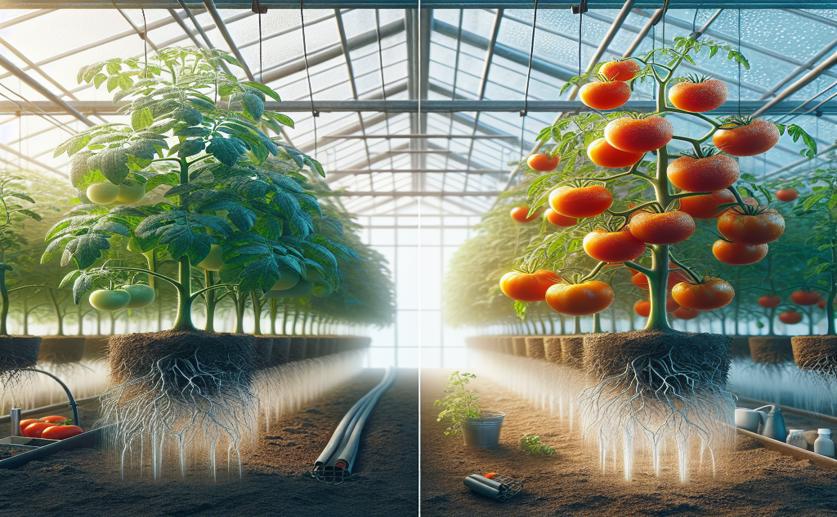
Maintaining consistent soil conditions is crucial for successful agriculture, particularly in challenging climates. Fluctuations in soil temperature and moisture can significantly impact plant growth and yield. Researchers at Taiyuan Normal University[1] recently investigated how different types of plastic mulching affect these conditions and tomato production in a cold region of China. The goal was to identify mulching strategies that could improve water use, increase yields, and reduce water loss in unheated greenhouses. The study involved growing tomato plants under six different conditions: no mulch (control), white plastic film, black plastic film, white film with holes, black film with holes, and a “snake skin” patterned plastic bag. These mulches were used to cover the soil around the tomato plants. The researchers then monitored soil temperature, soil moisture, water use, and ultimately, the amount of tomatoes produced. The results showed that any form of plastic mulching significantly improved soil temperature and moisture levels compared to the unmulched control group. All mulching treatments led to more stable soil temperatures, with daily variations ranging from 1.95 to 2.20°C – a substantial improvement over the 3.42°C variation observed in the control group. Soil moisture was also notably higher with mulching, with the “snake skin” mulch performing best at 23.37%, followed closely by the black film with holes (22.55%) and white film with holes (22.08%). Interestingly, the mulches with holes – white hole and black hole – proved particularly effective at balancing temperature and moisture. This suggests that while plastic film generally helps retain moisture, allowing some air exchange through holes can prevent excessive heat buildup or overly saturated conditions. This finding aligns with previous research demonstrating the benefits of mulching on soil properties and plant growth[2]. For example, a study on taro found that biodegradable films influenced soil nutrient content and promoted plant development, with PCO2 film notably increasing plant height and yield[2]. While the current study focuses on inorganic mulches, the underlying principle of modifying the soil environment to benefit plant growth remains consistent. The improved soil conditions directly translated into increased tomato yields. All mulching treatments resulted in higher yields compared to the control, and water use efficiency was also improved, meaning more tomatoes were produced per unit of water used. This is particularly important in regions where water resources are limited. The study also found that mulching reduced overall soil water consumption. The findings build upon earlier work highlighting the importance of root-shoot ratios in mulched crops[3]. While this study didn’t directly measure root-shoot ratios, the improved growth and yield observed with mulching suggest a positive impact on belowground development, potentially enhancing nutrient uptake and overall plant health. The increased soil nitrate concentrations observed in maize with mulching[3] could be a similar mechanism at play in the tomato study, facilitating better nutrient availability for plant growth. The research demonstrates that selecting the right type of mulch can significantly enhance tomato production in cold regions. The “snake skin” and hole-based mulching techniques appear to offer the best combination of temperature regulation, moisture retention, and yield improvement.

VegetablesAgricultureEnvironment

References

Main Study

1) Effects of inorganic mulching on soil hydrothermal environment and tomato characters in the presence of unheated greenhouse cultivation.

Published 22nd February, 2024

https://doi.org/10.1038/s41598-024-54896-y


Related Studies

2) Degradation characteristics of biodegradable film and its effects on soil nutrients in tillage layer, growth and development of taro and yield formation.

https://doi.org/10.1186/s13568-022-01420-y


3) Plastic film mulching stimulates brace root emergence and soil nutrient absorption of maize in an arid environment.

https://doi.org/10.1002/jsfa.10036


Related Articles

An unhandled error has occurred. Reload 🗙