Combating Farmland Salt Buildup with Nature and Bio-Tech Solutions

Mary Jones
16th February, 2024

Combating Farmland Salt Buildup with Nature and Bio-Tech Solutions

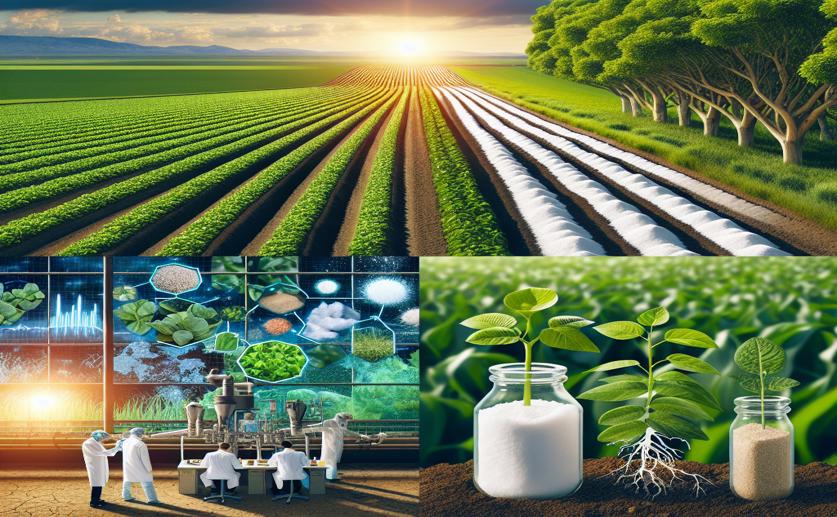
Conceptual framework from study illustrating sustainable solutions discussed in this paper, to mitigate soil salinization in agriculture

Image adapted from: Tarolli et al. / CC BY (Source)
Soil salinization, the build-up of salts in the soil, poses a significant and growing threat to global food production. This occurs naturally in arid and semi-arid regions, but is increasingly worsened by human activities like irrigation and fertilizer use, alongside the impacts of climate change – particularly prolonged droughts and increased evaporation[2]. Excess salt damages soil structure, hinders plant growth, and reduces crop yields, impacting agricultural productivity and food security. Researchers at the University of Padova[1] have recently examined potential solutions, focusing on ‘nature-based solutions’ (NBS) and their limitations. The study explores how NBS – approaches that work with nature rather than against it – can help combat soil salinization. These include strategies like restoring natural vegetation, improving water management to prevent waterlogging, and utilizing biological processes to remove or tolerate salt. The core argument is that while NBS offer a sustainable path towards revitalizing ecosystems and improving soil health, they may not be sufficient on their own to address global hunger, particularly in the most vulnerable regions. A key driver of increasing salinization, particularly in regions like the Mekong Delta, is a combination of factors including upstream dam construction, land subsidence (sinking land), sea-level rise, and riverbed sand mining[3][4]. These factors exacerbate the intrusion of saltwater into agricultural lands, damaging crops and reducing productivity. The research highlights that simply relying on NBS in areas already severely affected by these issues may not yield sufficient results. The study builds on previous work that has identified effective mitigation strategies, such as applying soil amendments, cultivating salt-tolerant plant varieties, and implementing improved irrigation and drainage systems[2]. However, it goes further by acknowledging the scale of the problem and the need for more comprehensive approaches. The researchers suggest that combining NBS with advancements in bioengineering – specifically, the development of crops genetically engineered to tolerate high salt concentrations – could offer a more robust solution. The challenge with relying solely on NBS, the researchers argue, is that they often require significant time and resources to implement and may not deliver immediate results. This is particularly problematic in regions facing acute food shortages. Bioengineering offers the potential to rapidly deploy salt-tolerant crops, providing a more immediate boost to agricultural production. The study also acknowledges the complexities of dryland ecosystems and the need for integrated approaches to development[5]. While not directly focused on drylands, the principles of the Drylands Development Paradigm – a framework for navigating the challenges of desertification and promoting sustainable development – are relevant to the broader context of soil salinization. The researchers emphasize that successful solutions must consider not only the environmental aspects but also the social and economic needs of local communities. The perspective piece from the University of Padova doesn’t offer a single, simple answer. Instead, it proposes a pragmatic approach that combines the long-term benefits of NBS with the potential for rapid gains offered by bioengineering. It’s a recognition that achieving the Sustainable Development Goal of Zero Hunger requires a multifaceted strategy that leverages the best available science and technology, while also respecting the limits of natural ecosystems.

AgricultureSustainability

References

Main Study

1) Soil salinization in agriculture: Mitigation and adaptation strategies combining nature-based solutions and bioengineering.

Published 16th February, 2024

https://doi.org/10.1016/j.isci.2024.108830


Related Studies

2) Soil salinity under climate change: Challenges for sustainable agriculture and food security.

https://doi.org/10.1016/j.jenvman.2020.111736


3) How the saline water intrusion has reshaped the agricultural landscape of the Vietnamese Mekong Delta, a review.

https://doi.org/10.1016/j.scitotenv.2021.148651


4) The worst 2020 saline water intrusion disaster of the past century in the Mekong Delta: Impacts, causes, and management implications.

https://doi.org/10.1007/s13280-021-01577-z


5) Global desertification: building a science for dryland development.

Journal: Science (New York, N.Y.), Issue: Vol 316, Issue 5826, May 2007


Related Articles

An unhandled error has occurred. Reload 🗙