How Jackbean Leaf Extract Protects Copper from Acid Corrosion

Jenn Hoskins
7th February, 2024

How Jackbean Leaf Extract Protects Copper from Acid Corrosion

Sword Bean (Canavalia gladiata) plant.

Photo adapted from: Dinesh Valke / CC BY SA (Source)
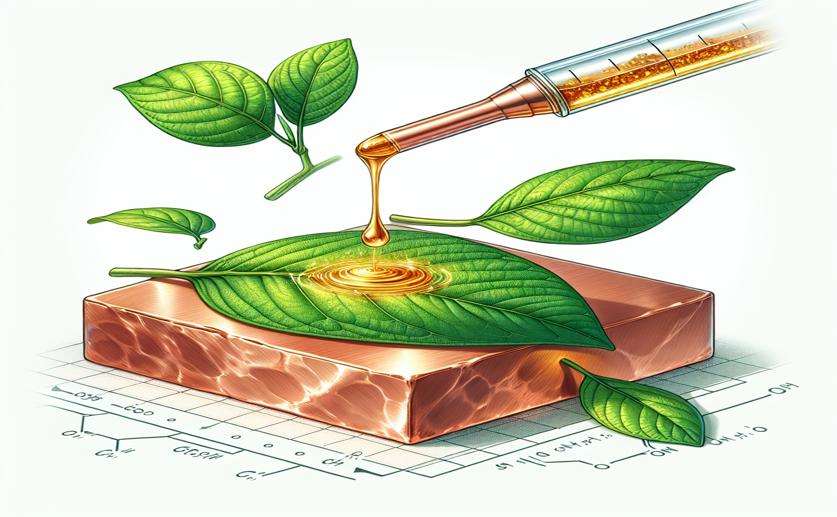
Corrosion is a significant problem across many industries, leading to the degradation of metals and substantial economic losses. Traditional methods to prevent corrosion often rely on toxic chemicals, raising environmental concerns. Consequently, research is increasingly focused on finding environmentally friendly, or ‘green’, alternatives. Researchers at Ningbo University of Technology[1] have recently investigated the potential of an extract from the Canavalia gladiata plant – a common crop waste product – as a corrosion inhibitor for copper. The study focused on copper’s corrosion in sulfuric acid (H2SO4) solutions, a common corrosive environment. The researchers extracted compounds from the Canavalia gladiata leaves using a simple water decoction method – essentially, boiling the leaves in water. They then tested the ability of this extract, known as CGLE, to protect copper from corrosion at different concentrations and temperatures. The results were highly promising. At a concentration of 800 mg/L, CGLE achieved a corrosion inhibition efficiency (IE) of 96.8% at 298 K (approximately room temperature). Importantly, even as the temperature increased, the IE remained above 95%, demonstrating the extract’s effectiveness across a range of conditions. Corrosion inhibition efficiency is a measure of how well a substance prevents corrosion; a higher percentage indicates better protection. The effectiveness of CGLE aligns with findings from other studies exploring natural plant extracts as corrosion inhibitors. For example, research has shown that extracts from Solanum lyratum leaves can inhibit copper corrosion in sulfuric acid with efficiencies exceeding 90%[2]. Both studies highlight the potential of utilizing readily available plant materials to combat corrosion. The high inhibition efficiencies observed in both cases suggest that the active compounds within these plant extracts strongly adhere to the metal surface, creating a protective barrier. To understand how CGLE protects copper, the researchers employed several analytical techniques. They found that the protection is primarily due to ‘chemisorption’ – a process where the molecules in the extract form a chemical bond with the copper surface. This strong bonding explains why the extract remains effective even at higher temperatures. The adsorption of CGLE onto the copper surface followed a pattern consistent with the Langmuir adsorption model, a theoretical framework describing how molecules attach to a surface. Surface analysis confirmed a significant reduction in corrosion when CGLE was present. This was supported by quantum chemical calculations, which provided insights into the interaction between the extract’s molecules and the copper surface at a molecular level. These calculations help to explain the observed chemisorption and the resulting protective effect. The search for eco-friendly corrosion inhibitors is driven by the need to replace hazardous substances like chromates, lead compounds, and azole derivatives[3]. These traditional inhibitors, while effective, pose significant risks to human health and the environment. The use of plant extracts like CGLE offers a sustainable and less toxic alternative. Furthermore, the fact that CGLE is derived from crop waste adds to its appeal, promoting a circular economy approach. The findings from this study, and others like it[2], demonstrate that naturally occurring compounds can provide robust corrosion protection. While self-assembled monolayers offer precise control over surface modification[4], the simplicity and cost-effectiveness of using plant extracts make them an attractive option for a wide range of applications. The research at Ningbo University of Technology provides a valuable contribution to the development of greener and more sustainable corrosion control strategies.

EnvironmentBiochemPlant Science

References

Main Study

1) Insights into the Corrosion Inhibition Mechanism of Canavalia gladiata Leaf Extract for Copper in Sulfuric Acid Medium.

Published 6th February, 2024

https://doi.org/10.1021/acs.langmuir.3c03124


Related Studies

2) Insights into the Anticorrosion Performance of Solanum lyratum Leaf Extract for Copper in Sulfuric Acid Medium.

https://doi.org/10.1021/acs.langmuir.2c03396


3) A green assisted route for the fabrication of a high-efficiency self-healing anti-corrosion coating through graphene oxide nanoplatform reduction by Tamarindus indiaca extract.

https://doi.org/10.1016/j.jhazmat.2020.122147


4) Nanomechanical Stability of Laterally Heterogeneous Films of Corrosion Inhibitor Molecules Obtained by Microcontact Printing on Au Model Substrates.

https://doi.org/10.1021/acs.langmuir.2c02276


Related Articles

An unhandled error has occurred. Reload 🗙