
How Microplastics Affect Fungicide Build-Up in Corn
Jim Crocker
22nd May, 2024


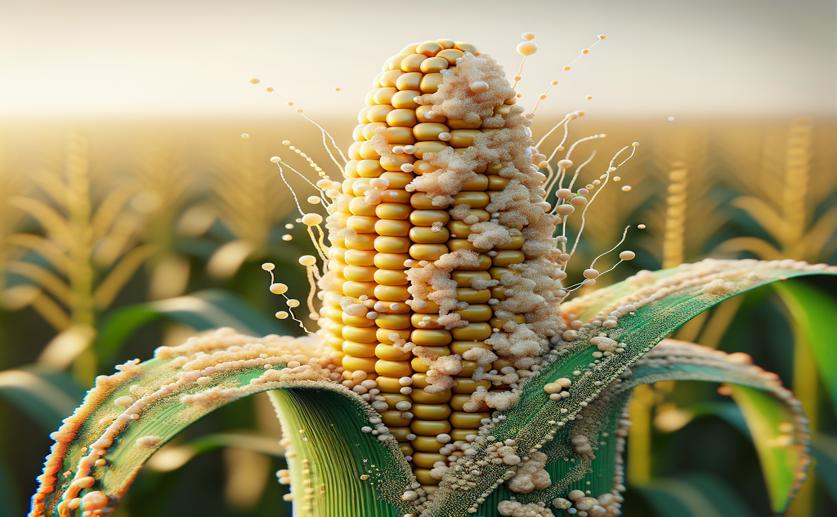
Polyethylene microplastics significantly increase the soil's capacity to adsorb the hydrophobic fungicides azoxystrobin and tebuconazole (b) due to their strong affinity for the microplastics themselves (a), while having a negligible effect on the more water-soluble fungicide metalaxyl.
Key Findings
- The study by Zhejiang University examined how polyethylene microplastics (PE-MPs) affect the behavior of three fungicides in soil and maize plants
- PE-MPs increased the adsorption of hydrophobic fungicides azoxystrobin and tebuconazole to soil, reducing their bioavailability
- The presence of PE-MPs prolonged the persistence of azoxystrobin and tebuconazole in soil and decreased their accumulation in maize plants
AgricultureEnvironmentPlant Science
References
Main Study
1) Different effects of polyethylene microplastics on bioaccumulation of three fungicides in maize (Zea mays L.)
Published 21st May, 2024
https://doi.org/10.1007/s44297-024-00028-x
Related Studies
2) Spatial Distributions, Compositional Profiles, Potential Sources, and Intfluencing Factors of Microplastics in Soils from Different Agricultural Farmlands in China: A National Perspective.
3) Microplastics in agricultural soils on the coastal plain of Hangzhou Bay, east China: Multiple sources other than plastic mulching film.
4) Abundance and morphology of microplastics in an agricultural soil following long-term repeated application of pig manure.
Related Articles
 4th May, 2024 | Greg Howard