How nanoparticles help black cumin plants resist drought and metal toxicity

Jim Crocker
25th January, 2024

How nanoparticles help black cumin plants resist drought and metal toxicity

Nigella (Nigella sativa), source of black cumin.

Photo adapted from: Conrad Altmann / CC BY (Source)
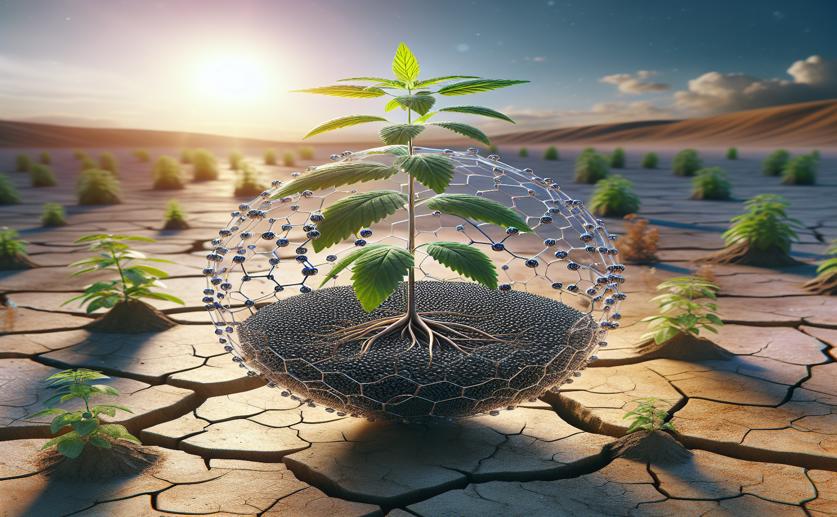
Environmental stresses like drought and heavy metal contamination pose significant challenges to plant growth and, consequently, food security. Chromium (Cr), a toxic heavy metal released through industrial processes and mining, accumulates in soil and can be absorbed by plants, causing harm. Simultaneously, increasing periods of drought, exacerbated by climate change, limit water availability for crops. Researchers at Xinyang Normal University recently investigated whether applying tiny particles of silicon dioxide (SiO2) and titanium dioxide (TiO2) – known as nanoparticles (NPs) – could help black cumin plants withstand both drought and Cr toxicity[1]. The study focused on black cumin (Nigella sativa L.), a plant with medicinal properties and oil-rich seeds. Plants were subjected to drought conditions (reduced soil moisture) and Cr toxicity (introduced via potassium dichromate) and then treated with foliar sprays of either SiO2 NPs, TiO2 NPs, or a combination of both. The researchers then measured various indicators of plant health, including growth parameters, chlorophyll levels, signs of cellular damage, antioxidant enzyme activity, and the composition of fatty acids within the plant tissues. Chlorophyll, the green pigment essential for photosynthesis, decreased under both drought and Cr stress, indicating impaired photosynthetic capacity. Simultaneously, the researchers observed increased levels of malondialdehyde (MDA) and electrolyte leakage (EL). MDA is a marker of lipid peroxidation – a process where cell membranes are damaged by reactive oxygen species (ROS). Electrolyte leakage indicates cell membrane instability. Both are indicators of stress-induced cellular damage. Plants responded to these stresses by increasing the activity of antioxidant enzymes like catalase (CAT) and superoxide dismutase (SOD), which are designed to neutralize ROS and limit damage. The application of NPs, particularly SiO2 NPs, showed a protective effect. SiO2 NPs boosted growth, increased chlorophyll content, and reduced MDA and EL levels, effectively mitigating the damage caused by both drought and Cr. Specifically, SiO2 NPs increased shoot and root weight, and seed yield by significant percentages. The reduction in antioxidant enzyme activity with SiO2 NP treatment suggests that the NPs were helping to prevent the initial build-up of damaging ROS, lessening the need for the plant to activate its defense mechanisms. These findings align with previous research demonstrating the beneficial effects of silicon on plant stress tolerance[2][3]. Studies have shown that silicon can enhance water retention, improve nutrient uptake, and strengthen plant cell walls, all contributing to increased resilience against drought. The observed improvements in chlorophyll content are also consistent with earlier findings, where silicon applications helped maintain photosynthetic efficiency under stress[2][3]. The study also examined the fatty acid profile of the black cumin seeds. Abiotic stresses like drought and Cr toxicity altered the composition of fatty acids, increasing polyunsaturated fatty acids (PUFAs) and decreasing monounsaturated fatty acids (MUFAs). The researchers found a correlation between plant weight, seed yield, chlorophyll content, and oleic acid (a MUFA) with levels of MDA, EL, antioxidant enzymes, and linoleic acid (a PUFA). This suggests that a healthier plant, with higher chlorophyll and better growth, exhibits a more desirable fatty acid profile. Interestingly, while both SiO2 and TiO2 NPs showed some positive effects, SiO2 NPs consistently outperformed TiO2 NPs in mitigating the combined stresses. This suggests that silicon may be more effective than titanium in addressing the specific mechanisms of drought and Cr toxicity in black cumin. Similar to previous work on maize[3], this study highlights the potential of nanoparticle applications to alleviate abiotic stress in plants. However, unlike the maize study which focused on kaolin and SiO2 nanoparticles, this research specifically investigates the synergistic effect of drought and Cr toxicity, and the role of SiO2 and TiO2 nanoparticles in mitigating these combined stresses. Furthermore, research on soybean demonstrated that combining nitric oxide and spermine could alleviate Cr toxicity[4], suggesting that multiple approaches may be needed to fully protect plants from complex environmental challenges.

AgricultureBiochemPlant Science

References

Main Study

1) Silicon and titanium nanoparticles modulated drought and chromium toxicity by adjusting physio-biochemical attributes and fatty acid profiles of black cumin (Nigella sativa L.).

Published 23rd January, 2024

https://doi.org/10.1007/s11356-024-32045-2


Related Studies

2) Evaluation of Silicon and Proline Application on the Oxidative Machinery in Drought-Stressed Sugar Beet.

https://doi.org/10.3390/antiox10030398


3) Synergistic Effects of Kaolin and Silicon Nanoparticles for Ameliorating Deficit Irrigation Stress in Maize Plants by Upregulating Antioxidant Defense Systems.

https://doi.org/10.3390/plants12112221


4) Nitric oxide and spermine revealed positive defense interplay for the regulation of the chromium toxicity in soybean (Glycine max L.).

https://doi.org/10.1016/j.envpol.2022.119602


Related Articles

An unhandled error has occurred. Reload 🗙