
Using Mushroom Waste to Clean Up Tiny Pollutants
Greg Howard
20th April, 2024


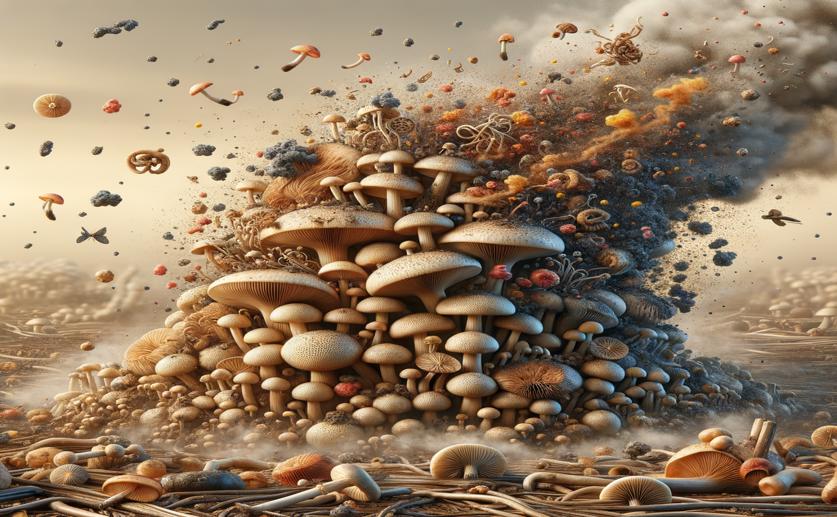
Spent mushroom substrate (SMS) from Agaricus bisporus is significantly more effective at removing various organic micropollutants from water than its liquid tea extract (a–c), a process involving both chemical conversion and physical sorption to the solid particles (d).
Key Findings
- Study at Utrecht University found mushroom waste can reduce water pollutants by 10-90%
- Mushroom "tea" also cut down pollutants, though less effectively, by up to 26%
- The process works through natural enzymes and chemical reactions, not just physical absorption
References
Main Study
1) Enzymatic and non-enzymatic removal of organic micropollutants with spent mushroom substrate of Agaricus bisporus.
Published 19th April, 2024
https://doi.org/10.1007/s00253-024-13132-3
Related Studies
2) A comparative genomic analysis of the oxidative enzymes potentially involved in lignin degradation by Agaricus bisporus.
3) Implications of polluted soil biostimulation and bioaugmentation with spent mushroom substrate (Agaricus bisporus) on the microbial community and polycyclic aromatic hydrocarbons biodegradation.
4) Purification of polluted water with spent mushroom (Agaricus bisporus) substrate: from agricultural waste to biosorbent of phenanthrene, Cd and Pb.
5) A Review of the Environmental Fate and Effects of Acesulfame-Potassium.
Related Articles
 11th April, 2024 | Greg Howard